

Awards
Georg Büchner Preis
Description
History and Origins
The Georg Büchner Prize, established in 1923 by the city of Darmstadt, Germany, in honor of the playwright and writer Georg Büchner (1813-1837), is one of the most important and respected literary awards in the German language. Initially, the prize was awarded at irregular intervals, but since 1951 it has been presented annually by the Deutsche Akademie für Sprache und Dichtung (German Academy for Language and Poetry). The aim of the prize is to recognize and honor writers who, through their work, have significantly contributed to German literature, demonstrating innovation, artistic depth, and a critical view of society.
Award Criteria
The criteria for awarding the Georg Büchner Prize are broad, but focus on literary excellence, originality of language and style, thematic depth, and the cultural and social relevance of the author's work. It is not limited to a specific genre and can be awarded to novelists, poets, playwrights, essayists, or translators. The academy values the consistency of an author's work over time, as well as their ability to innovate and influence the literary landscape.
Relevance in the Literary Scene
The relevance of the Georg Büchner Prize in the literary scene is immense. Its award is seen as a high-caliber recognition that confers international prestige on the laureate and draws attention to their work. Many of the winners have become central figures in world literature, and the prize has often served as a springboard for global recognition.
Distinguished Laureates
The list of recipients includes some of the most influential names in 20th and 21st-century German literature, such as Bertolt Brecht, Heinrich Böll, Günter Grass, Christa Wolf, Elfriede Jelinek, Herta Müller, Peter Handke, and, more recently, Anne Carson (although Carson is Canadian, the prize was awarded to her for being a German-language writer, demonstrating the prize's flexibility and reach).
Curiosities and Ceremony
Curiosities about the prize include the fact that it was interrupted during the Nazi era and resumed after World War II, reflecting its importance in the cultural reconstruction of Germany. The monetary value of the prize, while significant, is not the main factor of prestige; it is the honor and artistic recognition that make it so coveted. The award ceremony, held in Darmstadt, is an important cultural event, bringing together prominent figures from the world of arts, politics, and academia, and serving as a platform for discussion on the state of literature and the German language. The selection of laureates is made by a specialized jury from the Academy, ensuring a rigorous selection process based on literary merit.
Winners

Ursula Krechel


Oswald Egger

Oswald Egger is an Austrian writer known for his literary work. His writing frequently explores complex themes and features a unique style that captivates readers. He stands out in contemporary literature for his ability to create engaging and reflective narratives. As an author, Egger has contributed to the literary scene with his publications, demonstrating a deep understanding of the human condition and the nuances of society. His work is recognized for its originality and literary quality, establishing him as an important voice in his field.

Lutz Seiler
Lutz Seiler is a German poet and novelist, known for his work that frequently evokes landscapes and memories of former East Germany. His writing is marked by precise and atmospheric language, exploring themes such as the search for identity, the passage of time, and the complexity of human relationships. Seiler stands out for his ability to create engaging narratives that blend the personal with the historical, offering a sensitive and insightful look at the human experience in specific contexts. His work has been widely awarded and recognized.

Emine Sevgi Özdamar

Clemens J. Setz

Elke Erb

Lukas Bärfuss


Terézia Mora

Jan Wagner

Marcel Beyer

Rainald Goetz

Jürgen Becker

Sibylle Lewitscharoff

Felicitas Hoppe

Friedrich Christian Delius

Reinhard Jirgl

Walter Kappacher

Josef Winkler

Martin Mosebach

Oskar Pastior

Brigitte Kronauer

Wilhelm Genazino

Alexander Kluge

Wolfgang Hilbig

Friederike Mayröcker

Volker Braun

Arnold Stadler
Arnold Stadler is a German writer and poet known for his lyrical and introspective prose. His work often explores memory, identity, and the search for a place in the world, often set in rural landscapes and with a keen eye for the nuances of everyday life. He is a sensitive observer of the human condition.
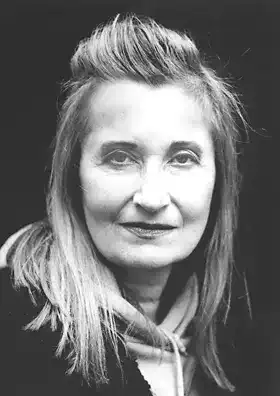
Elfriede Jelinek
Elfriede Jelinek is an Austrian writer awarded the Nobel Prize in Literature in 2004. Her work is known for its critical exploration of power structures, sexuality, politics, and for its use of transgressive and fragmented language. Jelinek addresses themes such as fascism, patriarchy, and consumer society in her works.
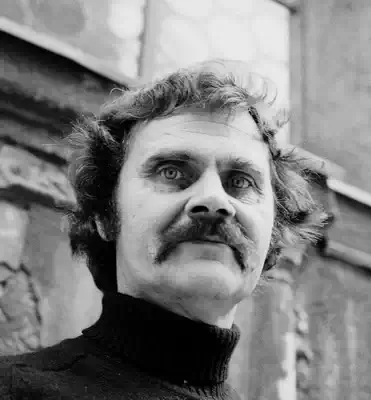
H.C. Artmann
Hans Carl Artmann was an influential Austrian poet, playwright, and translator, known for his linguistic experimentation and for being a central figure in post-war German-language literature. His work encompasses poetry, prose, drama, and essays, innovatively exploring the possibilities of language and challenging literary conventions. Artmann is often associated with the "Wiener Gruppe" (Vienna Group), a collective of artists who explored concrete poetry and performance, seeking new forms of artistic expression. His writing is characterized by the subversion of grammar, the creation of neologisms, and the use of dialects, reflecting a critical and playful view of society and language itself.

Sarah Kirsch

Durs Grünbein

Adolf Muschg

Peter Rühmkorf

George Tabori

Wolf Biermann

Tankred Dorst

Botho Strauß

Albert Drach
Albert Drach was an Austrian writer, known for his dense and experimental prose. His work frequently explored language and perception, challenging traditional narrative conventions. He stood out in 20th-century German-language literature. His writing is characterized by a deep reflection on existence and the human condition, often in urban and introspective settings. Drach left a legacy as a singular and intellectually rigorous author.
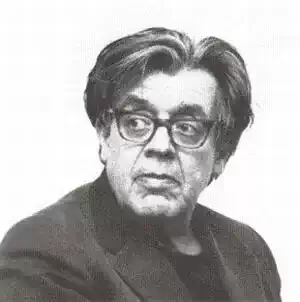
Erich Fried
Erich Fried was an Austrian poet, writer, and critic, whose work is characterized by social and political depth, combined with a remarkable lyrical sensibility. Exiled to England during the Nazi period, his life experience profoundly marked his writing, giving him a unique perspective on themes such as war, oppression, love, and justice. Fried is recognized for his direct and accessible language, yet loaded with meaning, and for his ability to address complex issues with clarity and empathy. His often engaged poetry invites critical reflection and transformative action.
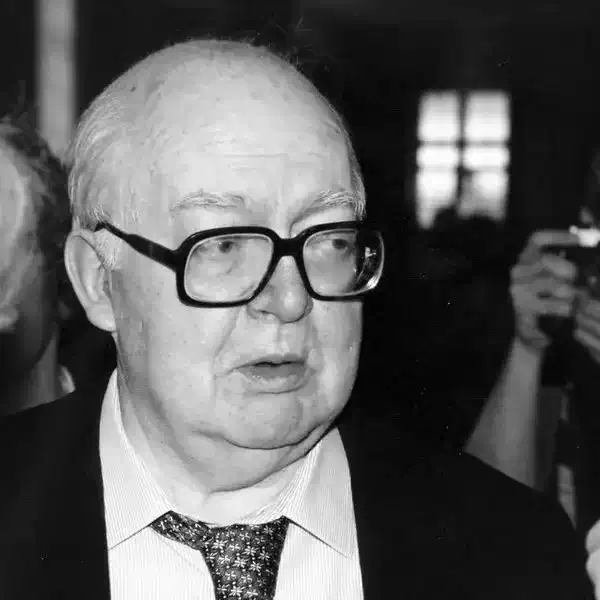
Friedrich Dürrenmatt
Friedrich Dürrenmatt was a prominent Swiss playwright, novelist, and essayist, known for his grotesque and philosophical plays that explore the complexities of the human condition, justice, and morality. He often used elements of black humor, satire, and the absurd to question reality and society. His plays, such as "The Visit" and "The Physicists," achieved international recognition.
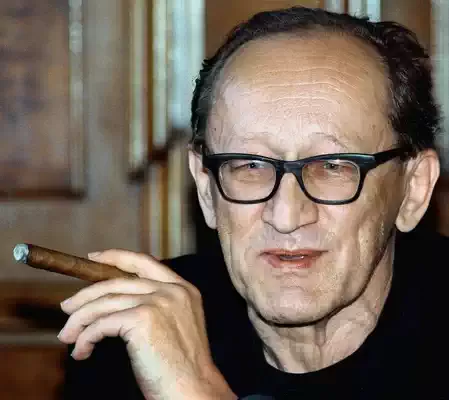
Heiner Müller
Heiner Müller was a prominent German playwright, theater director, and writer, a central figure of post-war theater, known for his radical and experimental approach. His work is characterized by the deconstruction of language, the exploration of myths, and the confrontation with history and identity, especially in the context of divided and reunified Germany. Müller challenged theatrical conventions, creating fragmented and visual texts that provoke and question the spectator about the human condition, violence, and collective memory.

Ernst Jandl
Ernst Jandl was an Austrian poet, a pioneer of experimental and concrete poetry in the German language. His work is known for its playful exploration of language, its use of neologisms, unusual sounds and rhythms, challenging traditional poetic conventions and opening new paths for lyrical expression.

Wolfdietrich Schnurre

Peter Weiss

Martin Walser
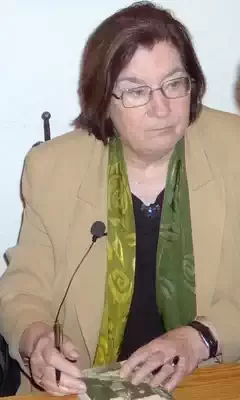
Christa Wolf

Ernst Meister

Hermann Lenz

Reiner Kunze

Heinz Piontek

Manès Sperber

Hermann Kesten

Peter Handke
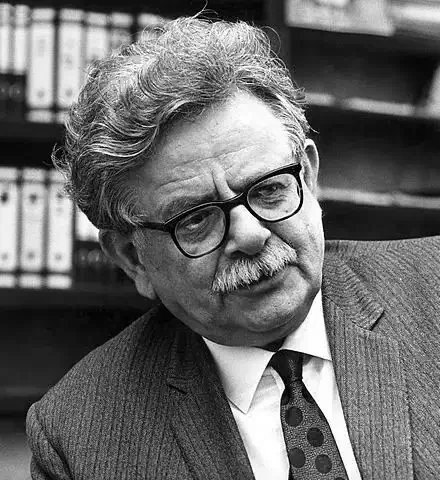
Elias Canetti

Uwe Johnson

Thomas Bernhard
Helmut Heissenbüttel
Helmut Heissenbüttel was a German writer, a pioneer of concrete and experimental poetry in Germany. His work explored the potentialities of language and poetic form, challenging traditional literary conventions. Heissenbüttel is recognized for his avant-garde approach, which significantly influenced contemporary German-language poetry, opening new paths for linguistic and aesthetic experimentation.

Golo Mann
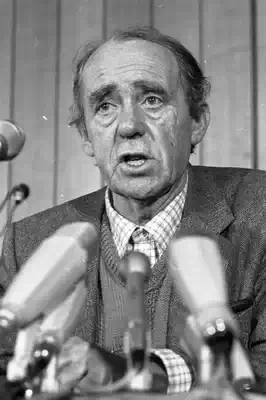
Heinrich Böll
Heinrich Böll was a prominent German writer, awarded the Nobel Prize in Literature in 1972. His work is known for its strong social and political engagement, criticizing militarism, nationalism, and the hypocrisy of post-World War II German society. He addressed themes such as guilt, memory, and the reconstruction of Germany. Böll explored the lives of ordinary people, the marginalized, and the victims of war, giving voice to those who were silenced. His writing is characterized by clarity, humanism, and a deep empathy with his characters. He was an important figure in German literature and an active defender of human rights.

Wolfgang Hildesheimer
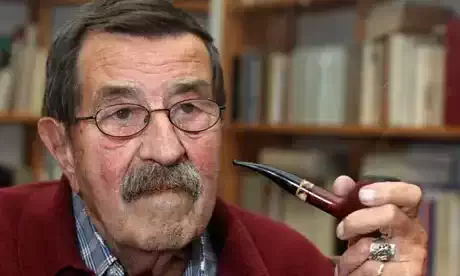
Günter Grass
Günter Grass was a German writer, born in 1927 and died in 2015, winner of the Nobel Prize in Literature in 1999. He is one of the most influential and recognized German-language authors of the post-war period, known for his works that address German history, guilt, and collective memory.
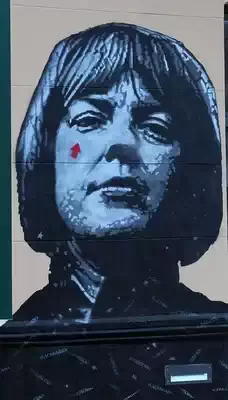
Ingeborg Bachmann
Ingeborg Bachmann was a prominent Austrian poet and writer, known for her lyrical work and social criticism. Her poetry explores themes such as guilt, identity, love, and disillusionment, often in a confessional and reflective tone. Bachmann also distinguished herself as a playwright and essayist, addressing existential and political issues of her time. Her writing is marked by intense language and a deep sensitivity to the complexities of the human condition, leaving a significant legacy in German-language literature.

Hans Magnus Enzensberger
Hans Magnus Enzensberger was a prominent German poet, writer, editor, and political activist. His work is known for its intelligence, irony, and social and political engagement. He addressed a wide range of themes, from criticism of consumer society to the analysis of the complexities of international politics. Throughout his career, Enzensberger explored various literary genres, including poetry, essays, fiction, and documentaries. His writing frequently challenged conventions and provoked critical thinking. He was an influential figure in German and international literature, receiving numerous awards for his literary and intellectual contributions.

Wolfgang Koeppen

Hans Erich Nossack
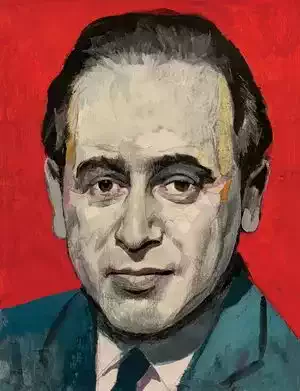
Paul Celan
Paul Celan was a prominent German-language poet, widely regarded as one of the most significant European poets of the 20th century. His work is deeply marked by his experiences during the Holocaust and the loss of his parents, leading to themes of memory, trauma, and the unspeakable nature of suffering. Celan's poetry is characterized by its linguistic innovation, fragmented syntax, and a profound engagement with silence and the limits of language to express profound grief. His work continues to be studied for its unique contribution to post-war literature and its exploration of human resilience and despair.

Günter Eich
Günter Eich was a German poet, playwright, and radio dramatist, a central figure in post-war German literature. His poetry is known for linguistic experimentation, dreamlike atmosphere, and reflection on language and the human condition in times of crisis. As a pioneer of radio drama in Germany, Eich innovated in form and content, exploring the sonic and narrative possibilities of the medium. His literary work, in both poetry and prose, is marked by a search for authenticity and a critical view of society.
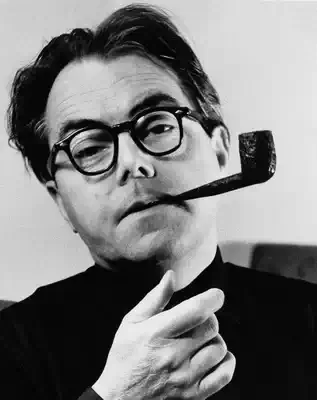
Max Frisch

Erich Kästner

Karl Krolow

Marie Luise Kaschnitz
Marie Luise Kaschnitz was a prominent German writer, poet, and essayist, whose work is recognized for its lyrical depth and exploration of existential and social themes. Her poetry is marked by precise and evocative language, which moves between the personal and the universal, addressing nature, memory, the passage of time, and the human condition. Kaschnitz also stood out in prose, with short stories and novels that investigate female experiences, the consequences of war, and the search for identity in a changing world. Her writing, often imbued with subtle melancholy and sharp perception of reality, established her as one of the most important literary voices in 20th-century Germany.

Martin Kessel

Ernst Kreuder

Gottfried Benn
Gottfried Benn was a German physician and poet, a prominent figure of German Expressionism. His poetic work, marked by a strong existential charge and the exploration of the body, illness, and death, often challenged the aesthetic and moral conventions of his time. Benn went through various stylistic phases, from the dark and fragmented lyricism of his early poems to a more philosophical and hermetic poetry. His literary career was interrupted and reoriented several times due to political and personal upheavals, but his legacy as one of the most important and controversial poets of the 20th century in Germany is undeniable.