
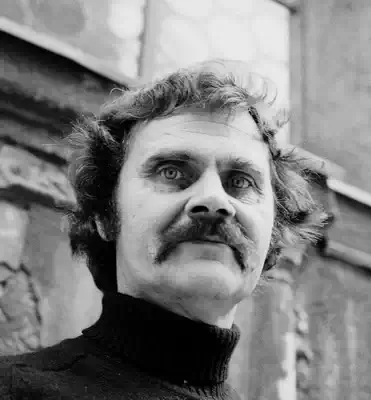
H.C. Artmann
 AT
AT
Hans Carl Artmann was an influential Austrian poet, playwright, and translator, known for his linguistic experimentation and for being a central figure in post-war German-language literature. His work encompasses poetry, prose, drama, and essays, innovatively exploring the possibilities of language and challenging literary conventions. Artmann is often associated with the "Wiener Gruppe" (Vienna Group), a collective of artists who explored concrete poetry and performance, seeking new forms of artistic expression. His writing is characterized by the subversion of grammar, the creation of neologisms, and the use of dialects, reflecting a critical and playful view of society and language itself.
n. 1921-06-12, Viena · m. 2000-12-04, Viena
Bio
Identification and Basic Context
Hans Carl Artmann, better known as H.C. Artmann, was a prominent Austrian poet, playwright, writer, and translator. He was born in Vienna on June 12, 1921, and died in the same city on November 4, 2001. His work is predominantly within German-language literature.Childhood and Education
Artmann grew up in a working-class environment in Vienna. World War II had a significant impact on his youth. His literary education was marked by a strong inclination for experimentation and the absorption of various influences, including concrete poetry, surrealism, and avant-garde movements.Literary Career
Artmann began writing poetry in his adolescence. He gained notoriety as a founding member of the "Wiener Gruppe" (Vienna Group) in the 1950s, a collective of artists and writers who sought to break away from traditional forms of literature and art. The group was known for its poetic performances, concrete poetry, and linguistic experiments.Work, Style, and Literary Characteristics
H.C. Artmann's work is vast and diverse, including poetry, prose, plays, and translations. His poetry is marked by profound linguistic experimentation, subverting the grammar, syntax, and spelling of the German language. He created neologisms, used Viennese dialects, and explored the sonic and visual potential of words. Themes such as language, identity, the city (especially Vienna), social criticism, and the human condition are recurrent. His style is often described as playful, ironic, and subversive. He challenged literary conventions and sought new forms of expression, influenced by concrete poetry and performance. The musicality and rhythm of language were central to his writing. Among his most important works are "med ana schwoazzn Schlog" (poetry in Viennese dialect), "very simple songs", "Achtundsechzig Gedichte aus dem Nachlaß", and "Der Turm des F Luhmann".Cultural and Historical Context
Artmann lived and produced his work in the context of post-war Austria, a period of cultural and political reconstruction after Nazism. He was a central figure in the renewal of Austrian literature, engaging with other writers and artists of his generation and from other countries. The "Wiener Gruppe" represented an important avant-garde movement.Personal Life
Artmann's personal experiences, including his involvement with the Vienna Group and his life in different cities, influenced his work. He was married to the actress and writer Hanne Hiob.Recognition and Reception
Artmann received several literary awards throughout his career, including the Georg Büchner Prize in 1977 and the Grand Austrian State Prize for Literature in 1981. His work was widely recognized for its originality and importance to German-language literature.Influences and Legacy
Artmann was influenced by avant-garde poets and concrete poetry. His legacy lies in his radical linguistic experimentation and the way he expanded the boundaries of German-language poetry. He influenced later generations of poets and writers to explore new possibilities in language.Interpretation and Critical Analysis
Artmann's work is often analyzed from the perspective of language deconstruction and criticism of social and grammatical order. His poetry is seen as a reflection of the fragmentation and complexity of the modern world, as well as a playful celebration of the creative power of words.Curiosities and Lesser-Known Aspects
Artmann was known for his eccentric personality and his strong sense of humor. His experimental approach to language was seen by some as provocative and by others as genius.Death and Memory
H.C. Artmann passed away in 2001, but his work continues to be studied and celebrated. Posthumous publications and complete editions of his works keep his memory alive in literature.Poems
0No poems found
Comments (0)
No comments yet. Be the first to comment.