
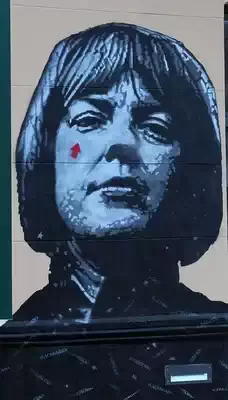
Ingeborg Bachmann
1926–1973
· lived 47 years
 AT
AT
AT
Ingeborg Bachmann was a prominent Austrian poet and writer, known for her lyrical work and social criticism. Her poetry explores themes such as guilt, identity, love, and disillusionment, often in a confessional and reflective tone. Bachmann also distinguished herself as a playwright and essayist, addressing existential and political issues of her time. Her writing is marked by intense language and a deep sensitivity to the complexities of the human condition, leaving a significant legacy in German-language literature.
n. 1926-06-25, Klagenfurt · m. 1973-10-17, Roma
64
Views
Bio
Identification and basic context
Ingeborg Bachmann was one of the most important German-language female poets and prose writers of the 20th century. She was born in Klagenfurt, Carinthia, Austria. Pseudonyms or heteronyms are not prominent in her work.Childhood and education
Bachmann's childhood was marked by the difficulties of the post-war period and the political atmosphere of Austria at the time. She attended the University of Vienna, where she studied German literature, philosophy, archaeology, and psychology, earning her doctorate in 1945 with a thesis on the poetry of Martin Heidegger. Her early readings included authors from classical and modern German literature, as well as philosophers like Heidegger and Wittgenstein. The cultural and political atmosphere of post-war Austria, with its period of occupation and subsequent neutrality, influenced her worldview and writing.Literary career
Bachmann began her literary career at a young age, gaining recognition for her poetry. In 1952, she presented her famous poem "An die Sonne" (To the Sun) at the literary group "Gruppe 47", a crucial event that launched her into the German-language literary scene. She published several poetry collections, such as "Die gestundete Zeit" (The Postponed Time, 1953) and "Anrufung des Großen Bären" (Invocation of the Great Bear, 1956), which earned her important awards. In addition to poetry, she wrote radio plays, such as "Der gute Gott von Manhattan" (The Good God of Manhattan, 1958), and prose, including the unfinished novel "Malina" (1971) and short stories.Work, style, and literary characteristics
Central themes in Bachmann's work include guilt, memory, history, disillusionment after Nazism, language as a means and limit of communication, love, death, and the female condition. Her poetry is characterized by intense lyricism, but also by a strong critical and reflective component. She frequently uses metaphor, alliteration, and rhythm to create a unique musicality. Her language is dense, often ambiguous, and seeks to uncover the hidden truths beneath the surface of reality. Bachmann was associated with post-war German-language literature and, although not strictly adhering to a movement, her work engages with existentialism and symbolism.Work, style, and literary characteristics
Cultural and historical context Bachmann lived in a period of great turbulence in Europe, with World War II, the Holocaust, and the Cold War shaping her time. Her work is profoundly marked by the need to confront the Nazi past and its consequences. She was part of a circle of intellectuals and artists who discussed the ethical and political issues of the time, and her writing reflected the tensions and disillusionments of the post-war era. Her German-language literary generation sought to find new forms of expression after the trauma of war and dictatorship.Work, style, and literary characteristics
Personal life Bachmann's personal life was marked by intense and sometimes turbulent relationships, notably her relationship with fellow writer Max Frisch. Her experience of living in different cities, such as Vienna, Rome, and Berlin, also influenced her perspective. Bachmann was known for her sharp intellect and her incessant search for truth and authenticity, which was reflected in her confessional and questioning poetry.Work, style, and literary characteristics
Recognition and reception Ingeborg Bachmann was widely recognized during her lifetime, receiving important literary awards, such as the Georg Büchner Prize in 1964. Her work quickly became part of the German-language literary canon and is studied in universities worldwide. She is considered one of the most important poetic voices of the 20th century.Work, style, and literary characteristics
Influences and legacy Bachmann was influenced by poets such as Rilke and by the philosophy of Heidegger. Her legacy lies in her ability to explore the depths of human experience with powerful and innovative language. She influenced later generations of poets and writers, particularly through her feminist approach and her critique of power structures and oppression.Work, style, and literary characteristics
Interpretation and critical analysis Bachmann's work has been the subject of extensive critical analysis, exploring her relationship with history, language, and identity. Her explorations of guilt and responsibility, as well as her critique of the superficiality of communication, continue to resonate. Her approach to writing as an act of resistance and a search for truth is a recurring theme.Work, style, and literary characteristics
Curiosities and lesser-known aspects Bachmann was known for her strong personality and her dedication to writing. Her search for a poetic language that could express truth, even when it was painful, is a central aspect of her profile.Work, style, and literary characteristics
Death and memory Ingeborg Bachmann died prematurely in Rome in 1973, due to a fire. Posthumous publications continued to expand the knowledge of her work.Poems
0No poems found
Comments (0)
Log in
to post a comment.
No comments yet. Be the first to comment.