
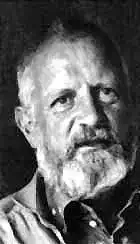
Helmut Heissenbüttel
1921–1996
· lived 75 years
 DE
DE
DE
Helmut Heissenbüttel was a German writer, a pioneer of concrete and experimental poetry in Germany. His work explored the potentialities of language and poetic form, challenging traditional literary conventions. Heissenbüttel is recognized for his avant-garde approach, which significantly influenced contemporary German-language poetry, opening new paths for linguistic and aesthetic experimentation.
n. 1921-06-21, Wilhelmshaven · m. 1996-09-19, Glückstadt
44
Views
Bio
Identification and Basic Context
Helmut Heissenbüttel was a German poet, essayist, and translator. He was born on June 21, 1921, in Wilhelmshaven, Germany, and died on September 20, 1991, in Gladbeck, Germany. He was the son of Heinrich Heissenbüttel and Clara Heissenbüttel (née Bömers). Heissenbüttel held German nationality and wrote in German.Childhood and Education
Heissenbüttel's childhood and education were marked by the rise of the Nazi regime and World War II. He served as a soldier in the Wehrmacht during the war, an experience that, as with many other German writers of his generation, left deep marks and influenced his critical view of society and language. After the war, he studied literature, history, and philosophy in Hamburg and Göttingen.Literary Career
Heissenbüttel is considered one of the main representatives of concrete and experimental poetry in Germany. His literary career began to gain prominence in the post-war period, with a strong affiliation to avant-garde movements. He was a co-founder of the literary magazine "text + kritik" and an active member of Group 47, an influential circle of German writers. He translated important works, such as James Joyce's "Finnegans Wake," and his activity as an essayist and literary critic was also significant.Work, Style, and Literary Characteristics
Heissenbüttel's work is characterized by radical experimentation with language. He explored the materiality of the word, deconstructing syntax and using collages, lists, and word sequences to create new meanings. Recurring themes include criticism of consumer society, the manipulation of language by the media and politics, and the very nature of communication. His style is marked by objectivity, fragmentation, and irony. His poetry often transcends genre boundaries, approaching prose and visual art. Notable works include "Topographien" (1956), "Syndikat" (1958), "Kombinationen" (1959), and "Projekt "Lyrik um h.h."(1975).Cultural and Historical Context
Heissenbüttel emerged as a writer in a period of deep reconstruction and re-evaluation in post-World War II Germany. He reacted to the need to redefine German culture and language after the catastrophe of Nazism. His work engages with international currents of concrete poetry and experimentalism, positioning him at the forefront of German and European literature. He was critical of the use of language in political and social contexts.Personal Life
Little is disclosed about Helmut Heissenbüttel's personal life. It is known that his dedication to writing and linguistic experimentation was central to his life. His wartime experience and his subsequent involvement in intellectual and artistic circles shaped his perspective on society and language.Recognition and Reception
Helmut Heissenbüttel was one of the most influential poets of his generation in Germany. He received several awards, such as the Georg Büchner Prize in 1989. His work was recognized for its originality and its contribution to the renewal of German poetry. His influence extends to younger poets who continue to explore linguistic experimentation.Influences and Legacy
Heissenbüttel was influenced by authors such as Kurt Schwitters and by movements such as Dadaism and international concretism. In turn, he influenced generations of German and European poets interested in textual experimentation and language criticism. His legacy lies in his boldness in challenging literary norms and in his contribution to poetry as a field of linguistic and conceptual exploration.Interpretation and Critical Analysis
Heissenbüttel's work is often analyzed from the perspective of language deconstruction and social criticism. His "concrete texts" invite a reading that goes beyond semantic content, focusing on the form, structure, and materiality of the word. His work is seen as a reflection of the complexity and ambiguities of modern communication.Curiosities and Lesser-Known Aspects
Helmut Heissenbüttel was known for his discipline and rigor in experimentation. His translation of "Finnegans Wake" is a testament to his deep understanding and dedication to exploring the boundaries of language. He advocated the idea that poetry should be a means to analyze and understand the world, using language as a critical tool.Death and Memory
Helmut Heissenbüttel passed away in 1991, leaving behind a body of work that continues to be studied and valued. His memory is celebrated through the ongoing publication of his works and his recognition as one of the pioneers of German experimental poetry.Poems
0No poems found
Comments (0)
Log in
to post a comment.
No comments yet. Be the first to comment.