
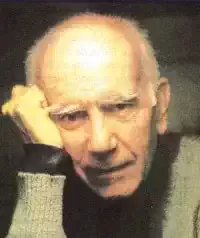
Érico Veríssimo
 BR
BR
Érico Veríssimo was one of the most important Brazilian novelists, known for his vast work that portrays Gaucho society and national identity. With an engaging narrative and memorable characters, he addressed themes such as urban life, family relationships, social conflicts, and the search for a place in the world. His accessible yet profound writing won a broad audience, making him one of Brazil's most widely read and translated authors. Érico Veríssimo left a significant literary legacy, with works that remain relevant and continue to inspire readers and writers through his ability to capture the essence of the human experience. His style is marked by narrative fluidity, psychological realism, and a humanistic vision, which established him as a master of Brazilian prose. Through his stories, Érico Veríssimo offered a rich and multifaceted panorama of Brazil, especially of Rio Grande do Sul.
n. 1905-12-17, Cruz Alta · m. 1975-11-28, Porto Alegre
Bio
Identification and basic context
Érico Veríssimo was a prominent Brazilian novelist, short story writer, and translator. He was born in Cruz Alta, Rio Grande do Sul, on December 17, 1905, and passed away in Rio de Janeiro on November 28, 1975. He had a deep connection with Gaucho culture, which frequently permeates his work. He wrote in Portuguese.Childhood and education
Érico Veríssimo was born into a middle-class family. His father, Sebastião Veríssimo, was a small rural landowner, and his mother, Verônica Alves Veríssimo, was of Portuguese descent. His childhood in Cruz Alta and later his move to Porto Alegre marked his early development. At the age of 11, he began working in his father's store, which gave him early exposure to practical life and people. He received a formal education, which, however, was interrupted by the need to work and help the family. He was self-taught, developing a love for reading from an early age.Literary career
Érico Veríssimo's literary career began with the publication of short stories in newspapers and magazines in Porto Alegre. His first novel, 'O Ursinho', was published in 1920, but the work that brought him national recognition was 'O Assassino', in 1931, winner of the Novel Contest organized by the magazine 'O Emílio'. From then on, his literary production was intense and diverse, exploring different genres and themes. He went through a phase of more urban and psychological short stories and novels, and later dedicated himself to epic works like the trilogy 'O Tempo e o Vento', which narrates the saga of a family and the formation of Rio Grande do Sul. He also worked as a columnist and translator.Work, style, and literary characteristics
Work, style, and literary characteristics Érico Veríssimo's main works include: 'O Ursinho' (1920), 'O Assassino' (1931), 'Caminhos Cruzados' (1935), 'Clarissa' (1937), 'Um Lugar na Aldeia' (1945), 'O Tempo e o Vento' (trilogy, 1949-1962), 'O Retrato' (1951), 'O Senhor Embaixador' (1965), 'Incidente em Antares' (1971). His work is known for portraying life in Rio Grande do Sul, the formation of Gaucho society, family relationships, social conflicts, the human condition, love, death, and the passage of time. Veríssimo's style is characterized by psychological realism, narrative fluidity, and the creation of complex and believable characters. He uses accessible language, yet rich in detail and sensitivity, with a rhythm that captivates the reader. The tone varies between the lyrical, the dramatic, and the reflective, always with a humanistic vision. He innovated by constructing epic narratives that span generations, as in 'O Tempo e o Vento', and by portraying the psychology of his characters with depth. He is associated with Brazilian Modernism, particularly its more realistic and regionalist strand.Work, style, and literary characteristics
Cultural and historical context Érico Veríssimo lived in a period of great transformations in Brazil, from the First Republic to the Military Dictatorship. His work reflects the social, political, and cultural changes in the country, with special attention to the particularities of Rio Grande do Sul. He maintained relationships with other writers of his time and engaged with the literary trends of Modernism. His political stance was that of a liberal intellectual, concerned with social justice and democracy.Work, style, and literary characteristics
Personal life Érico Veríssimo was married to Mafalda Lúcia Tanzi Veríssimo, with whom he had two children: Luís Fernando Veríssimo, also a writer, and Clara Veríssimo. His personal life was marked by dedication to writing and a passion for Rio Grande do Sul. He worked as a teacher and civil servant in Porto Alegre, and also served as director of the State Public Library. His involvement in public life and his defense of democratic values were also important aspects of his life.Work, style, and literary characteristics
Recognition and reception Érico Veríssimo achieved enormous success with the public and critics, becoming one of the most widely read and translated Brazilian authors abroad. He received numerous literary awards throughout his career and was recognized as one of the great names in national literature. His work is studied in schools and universities, consolidating his place in the Brazilian literary canon.Work, style, and literary characteristics
Influences and legacy Veríssimo was influenced by writers such as Eça de Queirós, Machado de Assis, and by authors of European realism and naturalism. His legacy is immense, with 'O Tempo e o Vento' considered one of the masterpieces of Brazilian literature, an epic that shaped the understanding of Gaucho history. He influenced generations of writers with his narrative mastery and the way he portrayed the soul of the Brazilian people. His work continues to be adapted for cinema, television, and theater.Work, style, and literary characteristics
Interpretation and critical analysis Érico Veríssimo's work has been the subject of numerous critical analyses that highlight his ability to construct complex narratives, the psychological depth of his characters, and the faithful portrayal of Brazilian society. Themes such as the formation of identity, the tension between the individual and the collective, and the struggle for freedom are central to his work.Work, style, and literary characteristics
Curiosities and lesser-known aspects Érico Veríssimo was known for his good humor and simplicity. He spent a period in New York, where he worked as a translator and observer of American life, experiences that were also reflected in his writings. His house in Porto Alegre, Casa de Erico Verissimo, is now a museum that preserves his memory and work.Work, style, and literary characteristics
Death and memory Érico Veríssimo died in 1975, victim of a heart attack. His death was felt as a great loss to Brazilian literature. He left behind a vast and influential body of work, which ensures his immortality in Brazil's cultural memory, being celebrated for his contribution to the country's identity and narrative.Poems
0No poems found
Comments (0)
No comments yet. Be the first to comment.