Poems List

Na Audiart

Na Audiart

Though thou well dost wish me ill
Audiart, Audiart,
Where thy bodice laces start
As ivy fingers clutching through
Its crevices,
Audiart, Audiart,
Stately, tall and lovely tender
Who shall render
Audiart, Audiart,
Praises meet unto thy fashion?
Here a word kiss !
Pass I on
Unto Lady ‘Miels-de-Ben’,
Having praised thy girdle's scope
How the stays ply back from it;
I breath no hope
That thou shouldst . . .
Nay no whit
Bespeak thyself for anything.
Just a word in thy praise, girl,
Just for the swirl
Thy satins make upon the stair,
'Cause never a flaw was there
Where thy torse and limbs are met
Though thou hate me, read it set
In rose and gold.
Or when the minstrel, tale half told,
Shall burst to lilting at the praise
'Audiart, Audiart' . .
Bertrans, master of his lays,
Bertrans of Aultaforte thy praise
Sets forth, and though thou hate me well,
Yea though thou wish me ill,
Audiart, Audiart.
Thy loveliness is here writ till,
Audiart,
Oh, till thou come again.
And being bent and wrinkled, in a form
That hath no perfect limning, when the warm
Youth dew is cold
Upon thy hands, and thy old soul
Scorning a new, wry'd casement,
Churlish at seemed misplacement,
Finds the earth as bitter
As now seems it sweet,
Being so young and fair
As then only in dreams,
Being then young and wry'd,
Broken of ancient pride,
Thou shalt then soften,
Knowing, I know not how,
Thou wert once she


Audiart, Audiart
For whose fairness one forgave
Audiart,
Audiart
Que be-m vols mal.
520

Mr. Nixon

Mr. Nixon

In the cream gilded cabin of his steam yacht
Mr. Nixon advised me kindly, to advance with fewer
Dangers of delay. 'Consider
Carefully the reviewer.


'I was as poor as you are;
'When I began I got, of course,
'Advance on royalties, fifty at first,' said Mr. Nixon,
'Follow me, and take a column,
'Even if you have to work free.


'Butter reviewers. From fifty to three hundred
'I rose in eighteen months;
'The hardest nut I had to crack
'Was Dr. Dundas.


'I never mentioned a man but with the view
'Of selling my own works.
'The tip's a good one, as for literature
'It gives no man a sinecure.


'And no one knows, at sight, a masterpiece.
'And give up verse, my boy,
'There's nothing in it.'


Likewise a friend of Bloughram's once advised me:
Don't kick against the pricks,
Accept opinion. The 'Nineties' tried your game
And died, there's nothing in it.


X
Beneath the sagging roof
The stylist has taken shelter,
Unpaid, uncelebrated,
At last from the world's welter


Nature receives him;
With a placid and uneducated mistress
He exercises his talents
And the soil meets his distress.


The haven from sophistications and contentions
Leaks through its thatch;
He offers succulent cooking;
The door has a creaking latch.


XI
Conservatrix of Milésien'
Habits of mind and feeling,
Possibly. But in Ealing
With the most bank-clerkly of Englishmen ?


No, 'Milésian' is an exaggeration.
No instinct has survived in her
Older than those her grandmother
Told her would fit her station.


XII
‘Daphne with her thighs in bark
Stretches toward me her leafy hands,'
Subjectively. In the stuffed-satin drawing-room
I await The Lady Valentine's commands,


Knowing my coat has never been
Of precisely the fashion
To stimulate, in her,
A durable passion;


Doubtful, somewhat, of the value
Of well-gowned approbation
Of literary effort,
But never of The Lady Valentine's vocation:


Poetry, her border of ideas,
The edge, uncertain, but a means of blending
With other strata
Where the lower and higher have ending;


A hook to catch the Lady Jane's attention,
A modulation toward the theatre,
Also, in the case of revolution,
A possible friend and comforter.


Conduct, on the other hand, the soul
‘Which the highest cultures have nourished'
To Fleet St. where
Dr. Johnson flourished;


Beside this thoroughfare
The sale of half-hose has
Long since superseded the cultivation
Of Pierian roses.
503

Monumentum Aere, Etc.

Monumentum Aere, Etc.

You say that I take a good deal upon myself;
That I strut in the robes of assumption.


In a few years no one will remember the buffo,
No one will remember the trivial parts of me,
The comic detail will be absent.
As for you, you will rot in the earth,
And it is doubtful if even your manure will be rich
enough


To keep grass
Over your grave.
460

Middle-Aged

Middle-Aged


‘Tis but a vague, invarious delight
As gold that rains about some buried king.


As the fine flakes,
When tourists frolicking
Stamp on his roof or in the glazing light
Try photographs, wolf down their ale and cakes
And start to inspect some further pyramid;


As the fine dust, in the hid cell
Beneath their transitory step and merriment,
Drifts through the air, and the sarcophagus
Gains yet another crust
Of useless riches for the occupant,
So I, the fires that lit once dreams
Now over and spent,
Lie dead within four walls
And so now love
Rains down and so enriches some stiff case,
And strews a mind with precious metaphors,


And so the space
Of my still consciousness
Is full of gilded snow,


The which, no cat has eyes enough
To see the brightness of.
424

Meditatio

Meditatio


When I carefully consider the curious habits of dogs
I am compelled to conclude
That man is the superior animal.


When I consider the curious habits of man
I confess, my friend, I am puzzled.
499

Mauberley

Mauberley


I
Turned from the 'eau-forte
Par Jaquemart'
To the strait head
Of Messalina:


'His true Penelope
Was Flaubert,'
And his tool
The engraver's.


Firmness,
Not the full smile,
His art, but an art
In profile;


Colourless
Pier Francesca,
Pisanello lacking the skill
To forge Achaia.


II
For three years, diabolus in the scale,
He drank ambrosia,
All passes, ANANGKE prevails,
Came end, at last, to that Arcadia.


He had moved amid her phantasmagoria,
Amid her galaxies,
NUKTIS 'AGALMA


Drifted . . . drifted precipitate,
Asking time to be rid of ...
Of his bewilderment; to designate
His new found orchid. . . .


To be certain . . . certain . . .
(Amid aerial flowers) . . . time for arrangements-
Drifted on
To the final estrangement;


Unable in the supervening blankness
To sift TO AGATHON from the chaff
Until he found his sieve . . .
Ultimately, his seismograph:


Given that is his 'fundamental passion',
This urge to convey the relation
Of eye-lid and cheek-bone
By verbal manifestations;
To present the series
Of curious heads in medallion


He had passed, inconscient, full gaze,
The wide-branded irides
And botticellian sprays implied
In their diastasis;


Which ansethesis, noted a year late,
And weighed, revealed his great affect,
(Orchid), mandate
Of Eros, a retrospect.


Mouths biting empty air,
The still stone dogs,
Caught in metamorphosis, were
Left him as epilogues.
435

Liu Ch'e

Liu Ch'e

The rustling of the silk is discontinued,
Dust drifts over the court-yard,
There is no sound of foot-fall, and the leaves
Scurry into heaps and lie still,
And she the rejoicer of the heart is beneath them:


A wet leaf that clings to the threshold.
425

Marvoil

Marvoil


A poor clerk I, 'Arnaut the less' they call me,
And because I have small mind to sit
Day long, long day cooped on a stool
A-jumbling o' figures for Maitre Jacques Polin,
I ha' taken to rambling the South here.


The Vicomte of Beziers's not such a bad lot.
I made rimes to his lady this three year:
Vers and canzone, till that damn'd son of Aragon,
Alfonso the half-bald, took to hanging
His helmet at Beziers.
Then came what might come, to wit: three men and one woman,
Beziers off at Mont-Ausier, I and his lady
Singing the stars in the turrets of Beziers,
And one lean Aragonese cursing the seneschal
To the end that you see, friends:


Aragon cursing in Aragon, Beziers busy at Beziers
Bored to an inch of extinction,
Tibors all tongue and temper at Mont-Ausier,
Me! in this damn'd inn of Avignon,
Stringing long verse for the Burlatz;
All for one half-bald, knock-knee'd king of the Aragonese,
Alfonso, Quattro, poke-nose.


And if when I am dead
They take the trouble to tear out this wall here,
They'11 know more of Arnaut of Marvoil
Than half his canzoni say of him.
As for will and testament I leave none,
Save this: ‘Vers and canzone to the Countess of Beziers
In return for the first kiss she gave me.'
May her eyes and her cheek be fair
To all men except the King of Aragon,
And may I come'speedily to Beziers
Whither my desire and my dream have preceded me.


O hole in the wall here! be thou my jongleur
As ne'er had I other, and when the wind blows,
Sing thou the grace of the Lady of Beziers,
For even as thou art hollow before I fill thee with this parchment,
So is my heart hollow when she filleth not mine eyes,
And so were my mind hollow, did she not fill utterly my thought.


Wherefore, O hole in the wall here,
When the wind blows sigh thou for my sorrow
That I have not the Countess of Beziers
Close in my arms here.
Even as thou shalt soon have this parchment.


O hole in the wall here, be thou my jongleur,
And though thou sighest my sorrow in the wind,


Keep yet my secret in thy breast here;
Even as I keep her image in my heart here.
493

Les Millwin

Les Millwin

The little Millwins attend the Russian Ballet.
The mauve and greenish souls of the little Millwins
Were seen lying along the upper seats
Like so many unused boas.


The turbulent and undisciplined host of art students-
The rigorous deputation from ‘Slade’-
Was before them.


With arms exalted, with fore-arms
Crossed in great futuristic X's, the art students
Exulted, they beheld the splendours of Cleopatra


And the little Millwins beheld these things;
With their large and anaemic eyes they looked out upon
this configuration.


Let us therefore mention the fact,
For it seems to us worthy of record.
420

L'Art

L'Art


Green arsenic smeared on an egg-white cloth,
Crushed strawberries! Come, let us feast our eyes.
436

Comments (0)

Log in to post a comment.

NoComments

Identification and basic context

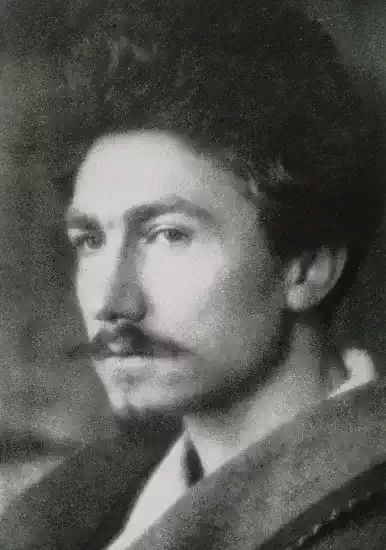
Ezra Weston Loomis Pound was an American expatriate poet, critic, musician, and translator. He is widely considered one of the most influential figures of literary modernism. Pound was instrumental in the development of two significant movements: Imagism and Vorticism. His work is marked by a profound engagement with history, economics, art, and diverse cultural traditions, often employing a complex, allusive style. He wrote primarily in English, but his work is characterized by its multilingualism and extensive use of foreign language quotations. He spent most of his adult life as an expatriate, living in Italy, France, and England.

Childhood and education

Pound was born in Hailey, Idaho, but his family soon moved to Philadelphia, where he spent his formative years. His father worked as a registrar at the Philadelphia Mint. Pound displayed an early interest in languages and literature. He attended Hamilton College and the University of Pennsylvania, where he studied Romance languages and literature. His early education instilled in him a deep appreciation for classical literature and languages, which would profoundly shape his poetic sensibilities. He was also exposed to various cultural and philosophical ideas that fueled his intellectual curiosity.

Literary trajectory

Pound's literary career began with the publication of his first collection of poems, "A Lume Spento," in Venice in 1908. He quickly became a central figure in the burgeoning modernist literary scene, first in London and later in Paris. He was a key proponent of the Imagist movement, advocating for clarity, precision, and economy of language. He later founded Vorticism, a more aggressive and dynamic movement. Pound was a tireless promoter of other artists, notably T.S. Eliot, James Joyce, and Ernest Hemingway, providing critical support, introductions, and financial assistance. His most ambitious and sprawling work is "The Cantos," an epic poem in progress that occupied him for much of his life.

Works, style, and literary characteristics

Pound's major works include "Personae" (1909), "Ripostes" (1912), "Hugh Selwyn Mauberley" (1920), and the monumental "The Cantos" (published in stages from the 1920s until his death). His style evolved over time, but consistently featured a demand for precision in language, a rejection of vague sentimentality, and an interest in juxtaposing diverse historical and cultural elements. Themes in his work often include the decline of civilization, the nature of beauty, the corrupting influence of usury, and the search for order. He experimented with form, incorporating elements of free verse, classical meters, and polyphonic structures. His poetic voice could be lyrical, scholarly, prophetic, or polemical. Pound's language was rich with allusions to mythology, history, and literature from various cultures, often weaving together multiple languages and dialects.

Cultural and historical context

Pound lived through periods of immense global upheaval, including World War I and World War II. His political views became increasingly controversial, particularly his espousal of fascism and his antisemitic radio broadcasts during World War II, for which he was charged with treason. He was deeply involved with literary circles in London and Paris, where he interacted with many of the leading figures of modernism. His generation of writers grappled with the fragmentation of modern society and sought new forms to express contemporary experience. Pound's engagement with economics, particularly his interest in Social Credit theory, significantly influenced his later work and political outlook.

Personal life

Pound's personal life was marked by complex relationships. He had a long-term relationship with the painter Dorothy Shakespear, whom he married, and also maintained a significant relationship with the violinist Olga Rudge, with whom he had a daughter. His expatriate lifestyle led to periods of financial instability, which he navigated through his promotional activities for other artists and his own writing. His intellectual and political obsessions often dominated his personal interactions, sometimes straining relationships.

Recognition and reception

Pound's initial reception was that of a revolutionary poet and a champion of modernist literature. However, his wartime broadcasts and fascist sympathies led to widespread condemnation and legal repercussions, including his arrest and indictment for treason. He spent years in an psychiatric hospital in Washington D.C. While his literary influence remained undeniable, his public image was severely tarnished. Posthumously, there has been a renewed critical interest in separating his literary achievements from his political views, though this remains a complex and contentious issue.

Influences and legacy

Pound was influenced by classical poets such as Homer and Ovid, as well as by medieval troubadours and Chinese poetry (especially the work of Confucius). His legacy is immense; he was a catalyst for many of the most important writers of the 20th century, including T.S. Eliot, whose "The Waste Land" he significantly edited. He is credited with introducing key ideas of Imagism and Vorticism and shaping the course of modernist poetry. His experimental approach to form, language, and subject matter has had a lasting impact on subsequent generations of poets. His work continues to be studied, translated, and debated worldwide.

Interpretation and critical analysis

Critical analysis of Pound's work often grapples with the tension between his innovative poetic technique and his deeply problematic political and social views. "The Cantos," in particular, has been subject to extensive scholarly interpretation, with critics exploring its epic scope, its engagement with historical figures, and its fragmentation. Debates often center on whether his artistic merit can be separated from his ideological commitments, and how to approach his antisemitism and fascist sympathies within an analysis of his poetry.

Curiosities and lesser-known aspects

Pound was known for his eccentric personality and his fervent pronouncements. He was a prolific correspondent and actively engaged in promoting his contemporaries through letters and introductions. His interest in economics was not merely theoretical; he believed that usury was a primary cause of societal ills and actively campaigned for economic reforms. His habit of collecting and translating diverse literary traditions reflects his lifelong project of weaving a new epic for the modern age.

Death and memory

Pound died in Venice in 1972. His death marked the end of a tumultuous but profoundly influential literary life. His memory remains complex, celebrated for his revolutionary contributions to poetry and modernism, yet shadowed by his wartime political activities. His works continue to be read and studied, ensuring his place as a pivotal, albeit controversial, figure in 20th-century literature.