
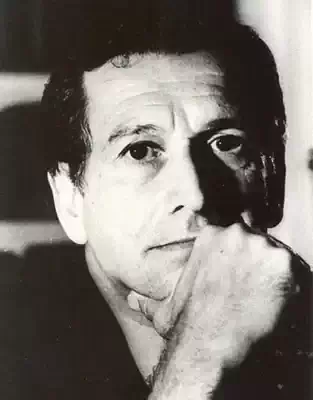
Fernando Sabino
1923–2004
· lived 81 years
 BR
BR
BR
Fernando Sabino was a prominent Brazilian writer and journalist, known for his work that spans chronicles, novels, and fiction. His writing is marked by keen observation of daily life, subtle humor, and profound humanity, addressing themes such as human relationships, the passage of time, and childhood memories.
n. 1923-10-12, Belo Horizonte · m. 2004-10-11, Rio de Janeiro
57
Views
Bio
Identification and basic context
Fernando Sabino was a Brazilian writer and journalist, author of acclaimed works such as "O Encontro Marcado" and "O Menino no Espelho". He was born in Rio de Janeiro and lived much of his life in Belo Horizonte, Minas Gerais, a city that frequently appears as a backdrop in his writings.Childhood and education
Sabino had a childhood marked by the city of Belo Horizonte, which he portrayed with affection and nostalgia in his work.Literary career
He began his career as a journalist, working for various media outlets. In parallel, he developed his literary career, publishing novels and chronicles that established his fame.Work, style, and literary characteristics
His work is known for its accessible language, fine humor, and ability to capture the nuances of the human soul. Themes such as memory, friendship, love, and the city of Belo Horizonte are recurrent. "O Encontro Marcado", published in 1963, is considered a landmark in his career, addressing friendship and the passage of time.Cultural and historical context
Sabino wrote during a period of great social and political transformations in Brazil, and his work subtly reflects the spirit of his time.Personal life
Fernando Sabino maintained a discreet life, dedicated to writing and journalism.Recognition and reception
He was one of the most read and beloved authors of his generation, with works translated and adapted for other media.Influences and legacy
His work continues to be read and appreciated, influencing generations of writers with its sensitivity and mastery of language.Interpretation and critical analysis
Sabino's work is often praised for its ability to touch the reader on a personal and emotional level, using humor as a tool to explore deep themes.Curiosities and lesser-known aspects
Sabino was known for his simple lifestyle and his passion for Minas Gerais.Death and memory
He passed away in Belo Horizonte, leaving an important literary legacy in Brazilian culture.Poems
0No poems found
Comments (0)
Log in
to post a comment.
No comments yet. Be the first to comment.