
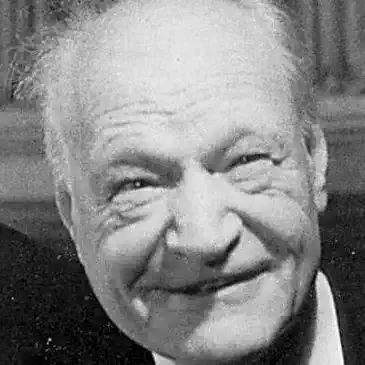
Giuseppe Ungaretti
 IT
IT
Giuseppe Ungaretti was an Italian poet, considered one of the most important representatives of Hermeticism and a central figure in 20th-century Italian poetry. His work is marked by the search for the essential word, lyrical intensity, and reflection on the fragility of human existence, especially in times of war. His poetry, concise and profound, explores themes such as solitude, death, memory, and the quest for redemption. With a purified language and fragmented rhythm, Ungaretti innovated poetic form, using short verses and free verse to express the intensity of his emotions and the universality of the human condition. His experience in World War I had a profound impact on his writing, giving it a tone of urgency and a search for a greater meaning in life.
n. 1888-02-08, Alexandria · m. 1970-06-01, Milão
Bio
Identification and Basic Context
Giuseppe Ungaretti was born in Alexandria, Egypt, on February 8, 1888, and died in Milan, Italy, on June 1, 1970. He was one of the most prominent Italian poets of the 20th century, a key figure in the Hermetic movement. He wrote in Italian.Childhood and Education
Ungaretti spent his childhood and youth in Alexandria, where he came into contact with diverse cultures. His education was marked by literary and philosophical studies, absorbing influences from French Symbolist poetry, thinkers like Nietzsche, and existentialist philosophers. The experience of Egyptian cosmopolitanism contributed to his worldview.Literary Career
The beginning of his literary activity occurred with the publication of poems in Parisian journals. His major work, 'Il porto sepolto' (The Buried Port), published in 1916, marked the beginning of his Hermetic aesthetic. Throughout his career, his poetry evolved, maintaining the search for the essential word but integrating broader reflections on life and the human condition.Work, Style, and Literary Characteristics
Ungaretti's main works include 'Il porto sepolto' (1916), 'Allegria di naufragi' (Joy of Shipwrecks, 1919, later reissued as 'L'Allegria'), 'Sentimento del Tempo' (Feeling of Time, 1933), and 'Il Dolore' (The Pain, 1947). The central themes of his work are solitude, death, memory, the fragility of life, pain, and the search for redemption or transcendent meaning. His style is characterized by conciseness, the search for the 'pure' or 'essential' word, the use of free verse, fragmentation, and musicality. Ungaretti innovated Italian poetry by purifying language and giving new intensity to verse, breaking with traditional rhetoric. He is often associated with Hermeticism.Cultural and Historical Context
Ungaretti lived through the turbulent events of the 20th century, including World War I, in which he participated as a soldier, and the rise of fascism. His war experience, lived in the trenches, profoundly marked his poetry, giving it a tone of desolation and profound humanity. He was a contemporary of other great Italian poets such as Eugenio Montale and Salvatore Quasimodo.Personal Life
Ungaretti's life was marked by personal losses, including the death of a son, which affected him deeply and was reflected in his work, as in 'Il Dolore'. His experience as a soldier in World War I was a decisive turning point. He also held a university professorship in Italian literature.Recognition and Reception
Giuseppe Ungaretti is widely recognized as one of the greatest Italian poets of the 20th century. He received several literary awards, and his work is studied in universities worldwide. His poetry is valued for its existential depth and formal innovation.Influences and Legacy
Ungaretti was influenced by French Symbolism and poets like Leopardi. In turn, he influenced later generations of Italian and European poets with his search for the essential word and his approach to existential themes. His work is fundamental to understanding modern poetry.Interpretation and Critical Analysis
Ungaretti's work is often analyzed from an existentialist perspective, exploring the human condition in the face of finitude and suffering. His poetry is seen as an attempt to find light and meaning amidst the darkness of existence.Curiosities and Lesser-Known Aspects
Ungaretti spent much of his youth in Egypt, an experience that shaped his cosmopolitan outlook and his sensitivity towards the 'other.' His 'fragment-poetry' technique, with isolated and short verses, was a radical innovation.Death and Memory
Giuseppe Ungaretti died in 1970, leaving an immense poetic legacy. After his death, studies and critical editions of his work continued to emerge, consolidating his memory as one of the pillars of Italian literature.Poems
0No poems found
Quotes
1No poems found
Comments (0)
No comments yet. Be the first to comment.