
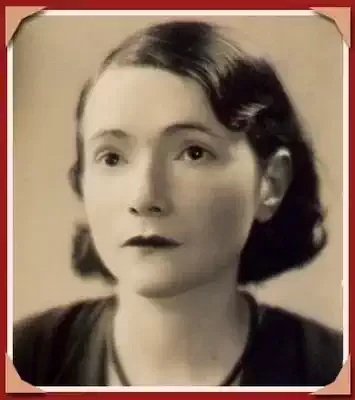
Henriqueta Lisboa
1901–1985
· lived 84 years
 BR
BR
BR
Henrieta Lisboa was a notable Portuguese poet, translator, and essayist, based in Brazil. Her poetic work, deeply lyrical and reflective, explores universal themes such as nature, time, memory, and spirituality with a refined language and a unique sensibility. She is considered one of the most important voices in modern Portuguese-language poetry.
n. 1901-01-01, Lambari · m. 1985-10-09, Belo Horizonte
58
Views
Bio
Identification and basic context
Henrieta de Almeida Santos Lisboa, known as Henrieta Lisboa, was a Portuguese poet, translator, and essayist. She was born in Coimbra, Portugal, and lived most of her adult life in Brazil, where she moved in 1923. Her work is written in Portuguese.Childhood and education
Henrieta Lisboa was born into a wealthy and cultured family. She studied in boarding schools in Portugal, where she developed an early taste for reading and writing. Her intellectual formation was marked by profound erudition and contact with classical and contemporary literature. The move to Brazil, accompanying her husband, the engineer and professor Fernando de Castro Lisboa, represented a new phase in her life and literary production.Literary career
The beginning of her literary career in Brazil was discreet, with contributions to cultural newspapers and magazines. Her poetic work began to gain notoriety from the 1930s onwards. She published her first poetry books in the 1940s, such as "Poemas" (1940) and "Vou-me Embora, Vou" (1942). She also dedicated herself to translating important works of English and French literature, demonstrating her versatility and profound literary knowledge. Her activity as a literary critic and essayist contributed to the cultural debate of the period.Work, style, and literary characteristics
Henrieta Lisboa's poetry is recognized for its delicacy, introspection, and philosophical depth. Her recurring themes include nature, time, the transience of life, longing, memory, and the search for the transcendent. She uses precise, musical, and imagistic language, with a confessional and lyrical tone. The poetic form in her work varies, but there is a predilection for verses that evoke a soft musicality and an introspective rhythm. "O Segundo Nome" (1945), "Maré Alta" (1950), and "A Sombra" (1959) are examples of her production, where an evolution in thematic and stylistic maturity is observed, but always maintaining the coherence of her poetic voice. Her poetry dialogues with symbolism and modernism, but possesses a unique originality.Work, style, and literary characteristics
Cultural and historical context Henrieta Lisboa lived in a period of great social and cultural transformations in Brazil and the world. Her work, although often focused on universal and internal themes, subtly reflects the Brazilian intellectual environment of the 1940s to 1960s. She maintained contact with important writers and artists of her time, participating in the literary and cultural circuit, especially in Rio de Janeiro. Her status as a Portuguese immigrant in Brazil may also have influenced her perspective on identity and belonging.Work, style, and literary characteristics
Personal life Her personal life was linked to her family and her intellectual circles. Married to Fernando de Castro Lisboa, her life was marked by discretion and dedication to literature. The longing for her homeland, Portugal, is a sentiment that permeates part of her work, but her adaptation and contribution to Brazilian culture were significant. Her literary production is, in large part, a reflection of her inner life and profound sensibility.Work, style, and literary characteristics
Recognition and reception Although her work was published and admired by a select circle of critics and readers in her time, broader recognition of Henrieta Lisboa's importance as a poet came mainly after her death. Today, she is considered one of the most relevant female voices in 20th-century Brazilian poetry, with academic studies dedicated to analyzing her work and her place in literature.Work, style, and literary characteristics
Influences and legacy Henrieta Lisboa's influences include poets such as Fernando Pessoa, Cecília Meireles, and authors from the Portuguese and English lyrical tradition. Her legacy lies in the purity of her language, the depth of her themes, and her ability to evoke universal emotions with a singular voice. She paved the way for women's poetry in Brazil, influencing subsequent generations of writers.Work, style, and literary characteristics
Interpretation and critical analysis Literary criticism has explored the philosophical and existential dimension of Henrieta Lisboa's poetry, highlighting her ability to address profound themes with lightness and subtlety. Her reflections on time and memory are frequently analyzed in relation to the human condition.Work, style, and literary characteristics
Curiosities and lesser-known aspects Henrieta Lisboa was known for her shyness and reclusiveness, dedicating herself intensely to her studies and writing. Her house in Petrópolis was a refuge where she received friends and discussed art and literature. Her skill with multiple languages gave her privileged access to works from different cultures.Work, style, and literary characteristics
Death and memory Henrieta Lisboa passed away in Rio de Janeiro. Her work, however, continued to be reissued and studied, ensuring her permanence in the canon of Portuguese-language literature. Posthumous publications of her writings and correspondence helped deepen knowledge of her life and work.Poems
0No poems found
Comments (0)
Log in
to post a comment.
No comments yet. Be the first to comment.