
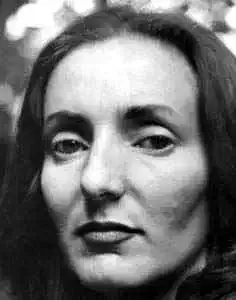
Idea Vilariño
1920–2009
· lived 88 years
 UY
UY
UY
Idea Vilariño was a Uruguayan poet, essayist, translator, and literary critic, a prominent figure in Latin American literature. She stood out for her engaged poetry and for exploring themes such as love, death, identity, and the female condition, with direct and powerful language. Her work, marked by deep social and existential reflection, established her as one of the most important voices in Spanish-language poetry.
n. 1920-08-18, Montevidéu · m. 2009-04-28, Montevidéu
59
Views
Bio
Identification and basic context
Idea Vilariño was a Uruguayan poet, essayist, translator, literary critic, and professor. She was born in Montevideo, Uruguay, on August 18, 1920, and passed away in the same city on April 15, 2015. Her work is fundamental to 20th-century Uruguayan and Latin American literature, noted for its lyrical depth, social engagement, and exploration of universal themes.Childhood and education
Vilariño was born into a middle-class family and had a childhood marked by reading and the cultural influence of Montevideo. She was largely self-taught in many aspects of her education, developing an early interest in literature and writing. Reading classic and contemporary authors, as well as absorbing literary and philosophical movements of her time, shaped her worldview and her future poetic output.Literary career
Her literary career began with the publication of her first poems, and she quickly gained prominence. Throughout her career, her work evolved, exploring different thematic and stylistic facets. She actively participated in the literary life of her country, contributing to various magazines and anthologies. In addition to being a poet, Vilariño was a prolific translator, rendering works by authors such as Shakespeare, Edgar Allan Poe, and Walt Whitman into Spanish. She also worked as a literary critic, analyzing the work of her contemporaries.Work, style, and literary characteristics
Among her most significant poetic works are "La sucursal por dentro" (1949), "Por la vez primera" (1953), "Canto diario" (1970), and "Nocturnos" (1993). Her recurring themes include love in its multiple facets, death, time, loneliness, the condition of women, and social criticism. In terms of form, she used both free verse and more traditional forms, always with a notable mastery of meter and rhythm. Her language is characterized by precision, expressive force, and the ability to evoke vivid images and deep emotions. The tone of her poetry can range from lyrical to ironic, from confessional to reflective. Vilariño is often associated with the modernist and postmodernist movements in her literature, with a strong influence of existentialism and social poetry. Her work stands out for its innovation in approaching feminine themes and for its critique of social structures.Cultural and historical context
Idea Vilariño lived during periods of great cultural and political effervescence in Uruguay and Latin America. Her work reflects the social, political, and existential tensions of her time. She was a contemporary of important Latin American writers, with whom she engaged in dialogues and debates. Her generation, often associated with poetry of a social and existential nature, sought to renew the forms and themes of Spanish-language poetry. Her intellectual stance and her engagement with the issues of her time marked her production.Personal life
Vilariño dedicated her life to literature and thought. Her personal relationships, although often kept more private, undoubtedly influenced her worldview and her poetic expression. Her dedication to writing and translation was a constant throughout her life. It is believed that her political and philosophical convictions, aligned with a critical view of society, permeated her work and her intellectual activity.Recognition and reception
Idea Vilariño is widely recognized as one of the most important voices in Uruguayan and Latin American poetry. She received various awards and distinctions throughout her career, solidifying her position in the literary canon. Her work has been the subject of academic study, and its critical reception has been consistently positive, both during her life and after her death.Influences and legacy
Among the authors who influenced her are classic and modern poets, as well as philosophers and thinkers who shaped 20th-century literature. Idea Vilariño's legacy lies in her innovative poetry, her commitment to the word, and her ability to express the complexities of the human condition. She influenced later generations of poets, both in Uruguay and elsewhere, with her lyrical strength and critical thinking.Interpretation and critical analysis
Vilariño's work has been the subject of numerous critical analyses, exploring its multiple layers of meaning. Her poems invite reflection on themes such as love, the ephemerality of life, the search for meaning, and social oppression. Interpretations of her work often highlight the universality of her feelings and the depth of her worldview.Curiosities and lesser-known aspects
Vilariño was known for her discretion and the intensity of her intellectual work. Her rigor with language and her deep dedication to the art of translation are aspects that reveal her commitment to the word. Her house in Montevideo was a refuge for work and reflection, where she dedicated herself to writing and study.Death and memory
Idea Vilariño passed away in Montevideo in 2015, leaving an invaluable literary legacy. Her work continues to be published, studied, and admired, ensuring her permanence in the cultural and literary memory of her country and the world.Poems
0No poems found
Comments (0)
Log in
to post a comment.
No comments yet. Be the first to comment.