

Awards
Premio de Poesía José Lezama Lima
Premio Lezama Lima Poesía
Description
Origin and Honoree
The Premio de Poesía José Lezama Lima is a literary distinction of great prestige in Cuba, dedicated to recognizing and promoting the poetic work of Cuban authors. Created in homage to José Lezama Lima (1910-1977), a central figure in Cuban and Latin American literature, known for his exuberant prose, prodigious imagination, and profound reflection on Cuban culture and identity, the prize aims to perpetuate his legacy and stimulate contemporary poetic creation.
Selection Process
The prize is generally awarded to poetry books published in the year prior to its attribution, although specific rules may vary slightly between editions. The selection of the winners is carried out by a jury composed of renowned poets, literary critics, and academics, who evaluate the originality, aesthetic quality, thematic depth, and relevance of the presented work. The competition is fierce, reflecting the vitality of the Cuban poetic scene.
Importance and Cultural Impact
Over the years, the Premio de Poesía José Lezama Lima has been a springboard for many poets, helping to give visibility to emerging voices and consolidate the careers of already established authors. Its importance lies not only in individual recognition but also in its contribution to the preservation and development of the Cuban poetic tradition, which has in Lezama Lima one of its fundamental pillars. The award ceremony, often held in Havana, is a significant cultural event, bringing together the literary community and celebrating the art of the word.
Lezama Lima, with his monumental work such as "Paradiso", is an icon of the literature of the "Latin American Boom", and this prize is a way to keep alive his influence and his innovative spirit in poetry.
Evaluation Criteria and International Relevance
The evaluation criteria tend to value formal experimentation, vocabulary richness, the ability to evoke powerful images, and the exploration of universal themes through a unique Cuban perspective. The relevance of the prize transcends the borders of Cuba, being followed by critics and readers interested in literary production in Spanish. Its attribution is seen as a seal of quality and an indicator of the strength and diversity of contemporary Cuban poetry, which continues to dialogue with the heritage of masters such as Lezama Lima himself, exploring new languages and sensibilities.
Winners

Gustavo Pereira

Gustavo Pereira is a contemporary Brazilian writer whose works explore the nuances of the human condition and the social complexities of Brazil. His writing, often marked by poignant realism and multifaceted characters, seeks to give voice to often-neglected realities. As a keen observer of society, Pereira uses literature as a tool to provoke reflection and debate on relevant themes, consolidating his presence on the national literary scene.

Jorge Boccanera


José María Memet

José María Memet is a Spanish poet whose work is distinguished by the lyrical exploration of themes such as memory, time, and landscape. His poetry is marked by a careful and introspective language, which invites reflection on the human experience and the passage of life. With a consolidated career in the Spanish literary scene, Memet has been recognized for his authentic voice and his ability to evoke sensations and emotions through verses that resonate with depth.

José Antonio Mazzotti


Raúl Vallejo


Eduardo Langagne


Tamara Kamenszain
Tamara Kamenszain (1947-2021) was a renowned Argentine poet, essayist, and professor, internationally recognized for her lyrical and essayistic work of profound originality and intellectual rigor. Her poetry is marked by a constant exploration of the limits of language, memory, identity, and the feminine experience, often engaging with other arts and with the social and political context. Kamenszain stood out not only as a creator but also as an important critical and theoretical voice, dedicating herself to the study of poetry and the dissemination of culture. Her work, permeated by a fine irony and acute sensibility, left a lasting legacy in the Spanish-language literature, influencing generations of writers and readers.

Piedad Bonnett

Rafael Courtoisie


Humberto Vinueza
Humberto Vinueza is an Ecuadorian poet and playwright, whose work is characterized by the exploration of social and existential themes with an often incisive and provocative language. His writing seeks to reflect the complexities of contemporary life, social tensions, and the search for meaning in a constantly changing world. With a trajectory marked by experimentation and social criticism, Vinueza has established himself as a relevant voice in Ecuadorian literature. His poems and plays invite reflection and questioning, using the power of language to illuminate often-overlooked aspects of the human experience.

Kamau Brathwaite

Edward Kamau Brathwaite was a Barbadian poet, historian, and educator, widely regarded as one of the most important voices in Caribbean and post-colonial poetry. His work explores themes of identity, history, culture, and the African diaspora, with a strong emphasis on musicality and the fusion of languages and traditions. Brathwaite is known for his formal innovation, particularly for the development of the "tri-continental" and the "Antillean rhythm," incorporating elements of orality, calypso, and jazz into his poetry. He sought to create an authentic voice that reflected the complexity and richness of the Caribbean experience, challenging colonial structures of language and thought.

Manuel Orestes Nieto


Carlos Germán Belli

Peruvian poet, one of the most unique and enigmatic voices in 20th-century Spanish-language poetry. His work, marked by an elaborate language and a profound reflection on existence, time, and memory, is characterized by its formal rigor and its often dark and existential tone. Throughout his career, Belli has explored the depths of the human condition, the transience of life, and the persistence of memory, using a poetics that combines tradition with a contemporary and personal vision. He is recognized for the demands of his writing and the intensity of his verses.

Óscar Hahn
Óscar Hahn is a Chilean poet, literary critic, and academic, recognized for his existentialist poetry and his exploration of the human condition, death, love, and identity. His work is characterized by deep philosophical reflection and formal mastery, often tinged with irony and a lucid tone. With a consolidated career, Hahn has been an influential voice in Chilean and Latin American poetry, exploring the tensions between life and death, transcendence and immanence, and the search for meaning in an often chaotic world. His poetry invites deep meditation on existence.

Juan Manuel Roca


Raúl Zurita
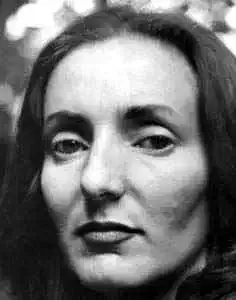
Idea Vilariño
Idea Vilariño was a Uruguayan poet, essayist, translator, and literary critic, a prominent figure in Latin American literature. She stood out for her engaged poetry and for exploring themes such as love, death, identity, and the female condition, with direct and powerful language. Her work, marked by deep social and existential reflection, established her as one of the most important voices in Spanish-language poetry.

Juan Bañuelos
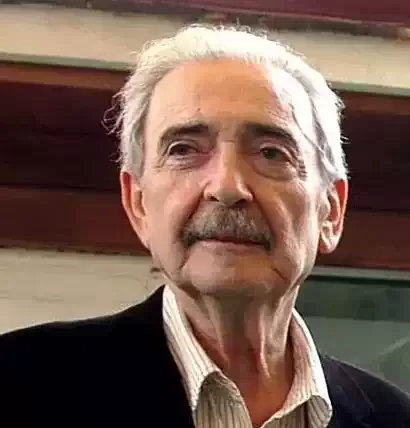
Juan Gelman
Juan Gelman was one of the most important Argentine poets of the 20th and 21st centuries, known for his dense, political, and profoundly human work. His poetry, marked by an incessant search for language and reflection on memory, loss, and justice, traversed different phases, from initial lyricism to a more engaged and philosophical expression. Gelman was also a journalist and translator, and his life was intrinsically linked to the political upheavals in Argentina and Latin America.

José Watanabe

