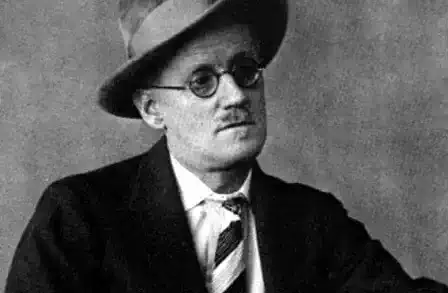
Identification and basic context
James Joyce, an Irish novelist, short story writer, poet, and literary critic, is renowned for his experimental works, particularly his stream-of-consciousness technique. His most famous works include *Dubliners* (1914), *A Portrait of the Artist as a Young Man* (1916), the collection of short stories *Exiles* (1918), and the revolutionary novels *Ulysses* (1922) and *Finnegans Wake* (1939). He was born in Rathgar, Dublin, Ireland, on February 2, 1882, and died in Zurich, Switzerland, on January 13, 1941. Joyce's family background was middle-class Catholic, and he maintained a complex relationship with his Irish heritage and Catholic upbringing throughout his life. He wrote primarily in English.
Childhood and education
Joyce was born into a rapidly changing Ireland, marked by the decline of Catholic political dominance and the rise of Irish nationalism. His father, John Stanislaus Joyce, was a medical graduate and civil servant, but later faced financial difficulties. Joyce received a rigorous Catholic education, attending the Jesuit-run Belvedere College and subsequently University College Dublin, where he studied modern languages. Despite his academic prowess, he often clashed with the strictures of the Irish Catholic educational system. His early intellectual development was shaped by his extensive reading in Irish and European literature, philosophy, and theology.
Literary trajectory
Joyce's literary career began in his youth with poetry and critical essays. His early prose, such as *A Portrait of the Artist as a Young Man*, charts the spiritual and intellectual awakening of a fictional alter ego, Stephen Dedalus. The collection *Dubliners* offered a starkly realistic portrayal of urban life in Dublin, focusing on themes of paralysis and disillusionment. *Ulysses* marked a significant departure, employing a complex structure and stream-of-consciousness technique to chronicle a single day in the lives of Leopold Bloom and Stephen Dedalus, mirroring Homer's *Odyssey*. His final work, *Finnegans Wake*, is known for its extreme linguistic experimentation and dense, multilingual wordplay.
Works, style, and literary characteristics
Joyce's major works include *Dubliners* (1914), *A Portrait of the Artist as a Young Man* (1916), *Ulysses* (1922), and *Finnegans Wake* (1939). His dominant themes often revolve around Irish identity, the city of Dublin, exile, paralysis, consciousness, and the human condition. He is most famous for his stream-of-consciousness technique, which attempts to represent the flow of thoughts, feelings, and sensations in the mind. Joyce experimented extensively with form and structure, often challenging traditional narrative conventions. His language is characterized by its density, allusiveness, and innovative use of neologisms and multilingual puns. He embraced both tradition, as seen in his engagement with classical mythology in *Ulysses*, and radical modernity in his linguistic and structural experiments.
Cultural and historical context
Joyce lived through a period of immense social and political upheaval in Ireland, including the Irish Home Rule crisis, the Easter Rising of 1916, and the subsequent War of Independence and Civil War. His work reflects this turbulent context, often offering critiques of Irish nationalism and clericalism. He was part of a generation of Irish writers, including W. B. Yeats and Lady Gregory, who sought to forge a distinct Irish literary identity, though Joyce's exile positioned him somewhat apart from the mainstream. His writings were often controversial and faced censorship due to their perceived obscenity and challenging themes.
Personal life
Joyce's personal life was deeply intertwined with his artistic endeavors. His relationship with Nora Barnacle, whom he met in 1904, was central to his life and work; she became his lifelong partner and muse. They lived in continental Europe for most of their adult lives, in cities like Trieste, Zurich, and Paris, largely by choice, though often in financial hardship. This self-imposed exile profoundly influenced his perspective on Ireland. He struggled with eye diseases for much of his adult life, undergoing numerous surgeries. His relationships with his children, Giorgio and Lucia, were also complex and often fraught.
Recognition and reception
Joyce's work was met with considerable controversy and censorship during his lifetime, particularly *Ulysses*. However, it gradually gained international acclaim and critical recognition. He is now considered one of the most important literary figures of the 20th century. His influence on subsequent generations of writers is immense, and his works are subjects of constant academic study and debate. While popular recognition might be limited by the demanding nature of his later works, his academic and critical standing is unparalleled.
Influences and legacy
Joyce was influenced by a wide range of authors, including Dante Alighieri, Giambattista Vico, Homer, and Henrik Ibsen. His experimental techniques, particularly stream of consciousness, have had a profound impact on modern literature worldwide. He is credited with revolutionizing the novel form and pushing the boundaries of literary expression. His legacy lies in his radical innovation, his intricate explorations of human consciousness, and his enduring fascination with the city of Dublin.
Interpretation and critical analysis
Joyce's works are subjects of continuous critical interpretation. His use of myth, symbolism, and complex narrative structures invites multiple readings. The philosophical and existential themes in his work, such as the nature of identity, the search for meaning, and the experience of exile, continue to be analyzed. Debates often center on the accessibility and ultimate meaning of his most experimental texts, particularly *Finnegans Wake*.
Curiosities and lesser-known aspects
Joyce had a remarkable memory for detail and a keen interest in languages. He was also a talented singer with a baritone voice. His writing habits were intense and disciplined, often involving meticulous research and planning. The sheer linguistic density of *Finnegans Wake* has led to countless attempts at decipherment and interpretation, a testament to its unique and challenging nature.
Death and memory
James Joyce died in Zurich, Switzerland, in 1941, following complications from surgery. His legacy is cemented in literary history, with his works studied extensively and his name synonymous with literary modernism and innovation. Dublin, the city he immortalized, continues to be a pilgrimage site for Joycean scholars and enthusiasts.