Poems List

The Shepherds Calendar - April

The Shepherds Calendar - April

The infant april joins the spring
And views its watery skye
As youngling linnet trys its wing
And fears at first to flye
With timid step she ventures on
And hardly dares to smile
The blossoms open one by one
And sunny hours beguile

But finer days approacheth yet
With scenes more sweet to charm
And suns arrive that rise and set
Bright strangers to a storm
And as the birds with louder song
Each mornings glory cheers
With bolder step she speeds along
And looses all her fears
In wanton gambols like a child
She tends her early toils
And seeks the buds along the wild
That blossom while she smiles
And laughing on with nought to chide
She races with the hours
Or sports by natures lovley side
And fills her lap with flowers

Tho at her birth north cutting gales
Her beautys oft disguise
And hopfull blossoms turning pales
Upon her bosom dies
Yet ere she seeks another place
And ends her reign in this
She leaves us with as fair a face
As ere gave birth to bliss

And fairey month of waking mirth
From whom our joys ensue
Thou early gladder of the earth
Thrice welcom here anew
With thee the bud unfolds to leaves
The grass greens on the lea
And flowers their tender boon recieves
To bloom and smile with thee

The shepherds on thy pasture walks
The first fair cowslip finds
Whose tufted flowers on slender stalks
Keep nodding to the winds
And tho thy thorns withold the may
Their shades the violets bring
Which childern stoop for in their play
As tokens of the spring


The time when daiseys bloom divine
With thy calm hours begun
And crowflowers blazing blooms are thine
Bright childern of the sun
Along thy woodlands shaded nooks
The primrose wanly comes
And shining in thy pebley brooks
The horse bleb gaily blooms

The long lost charm of sparkling dew
Thy gentle birth recieves
And on thy wreathing locks we view
The first infolding leaves
And seeking firstling buds and flowers
The trials of thy skill
Were pastimes of my infant hours
And so they haunt me still

To see thy first broad arum leaves
I lovd them from a child
And where thy woodbines sprouting weaves
I joyd to trace the wild
And jocund as thy lambs at play
I met the wanton wind
With feelings that have passd away
Whose shadows cling behind

Those joys which childhood claims its own
Woud they were kin to men
Those treasures to the world unknown
When known-was witherd then
But hovering round our growing years
To gild cares sable shroud
Their spirit thro the gloom appears
As suns behind a cloud

As thou first met my infant eyes
When thro thy fields I flew
Whose distance where they meet the skyes
Was all the worlds I knew
That warmth of fancys wildest hours
Which made things kin to life
That heard a voice in trees and flowers
Has swoond in reasons strife

Sweet month thy pleasures bids thee be
The fairest child of spring
And every hour that comes with thee
Comes some new joy to bring
The trees still deepen in their bloom
Crass greens the meadow lands


And flowers with every morning come
As dropt by fairey hands

The field and gardens lovley hours
Begin and end with thee
For whats so sweet as peeping flowers
And bursting buds to see
What time the dews unsullied drops
In burnishd gold distills
On crocus flowers unclosing tops
And drooping daffodills

Each day with added glorys come
And as they leave the night
Put on the roseys lovley bloom
And blushes with delight
And suns that wait their welcome birth
With earlier haste pursue
Their journeys to this lower earth
To free their steps from dew

To see thee come all hearts rejoice
And warms with feelings strong
With thee all nature finds a voice
And hums a waking song
The lover views thy welcome hours
And thinks of summer come
And takes the maid thy early flowers
To tempt her steps from home

Along each hedge and sprouting bush
The singing birds are blest
And linnet green and speckld thrush
Prepare their mossy nest
On the warm bed thy plain supplys
The young lambs find repose
And mid thy green hills basking lies
Like spots of lingering snows

Young things of tender life again
Enjoys thy sunny hours
And gosslings waddle ocr the plain
As yellow as its flowers
Or swim the pond in wild delight
To catch the water flye
Where hissing geese in ceasless spite
Make childern scamper bye

Again the fairey tribes pursue
Their pleasures on the plain
And brightend with the morning dew
Black circles shine again


And on its superstitious ground
Where flowers seem loath to dwell
The toadstools fuzzy balls abound
And mushrooms yearly swell

The seasons beautys all are thine
That visit with the year
Beautys that poets think divine
And all delight to hear
Thy latter days a pleasure brings
That gladden every heart
Pleasures that come like lovley things
But like to shades depart

Thy opend leaves and ripend buds
The cuckoo makes his choice
And shepherds in thy greening woods
First hears the cheering voice
And to thy ripend blooming bowers
The nightingale belongs
And singing to thy parting hours
Keeps night awake with songs

With thee the swallow dares to come
And primes his sutty wings
And urgd to seek their yearly home
Thy suns the Martin brings
And lovley month be leisure mine
Thy yearly mate to be
Tho may day scenes may brighter shine
Their birth belongs to thee

I waked me with thy rising sun
And thy first glorys viewd
And as thy welcome hours begun
Their sunny steps pursued
And now thy sun is on the set
Like to a lovley eve
I view thy parting with regret
And linger loath to leave

Thou lovley april fare thee well
Thou early child of spring
Tho born where storms too often dwell
Thy parents news to bring
Yet what thy parting youth supplys
No other months excell
Thou first for flowers and sunny skyes
Sweet april fare thee well.
396

The Peasant Poet

The Peasant Poet

He loved the brook's soft sound,
The swallow swimming by.
He loved the daisy-covered ground,
The cloud-bedappled sky.
To him the dismal storm appeared
The very voice of God;
And when the evening rack was reared
Stood Moses with his rod.
And everything his eyes surveyed,
The insects in the brake,
Were creatures God Almighty made,
He loved them for His sake--
A silent man in life's affairs,
A thinker from a boy,
A peasant in his daily cares,
A poet in his joy.
434

The Sailor-Boy

The Sailor-Boy

Tis three years and a quarter since I left my own fireside
To go aboard a ship through love, and plough the ocean wide.
I crossed my native fields, where the scarlet poppies grew,
And the groundlark left his nest like a neighbour which I knew.


The pigeons from the dove cote cooed over the old lane,
The crow flocks from the oakwood went flopping oer the grain;
Like lots of dear old neighbours whom I shall see no more
They greeted me that morning I left the English shore.


The sun was just a-rising above the heath of furze,
And the shadows grow to giants; that bright ball never stirs:
There the shepherds lay with their dogs by their side,
And they started up and barked as my shadow they espied.


A maid of early morning twirled her mop upon the moor;
I wished her my farewell before she closed the door.
My friends I left behind me for other places new,
Crows and pigeons all were strangers as oer my head they flew.


Trees and bushes were all strangers, the hedges and the lanes,
The steeples and the houses and broad untrodden plains.
I passed the pretty milkmaid with her red and rosy face;
I knew not where I met her, I was strange to the place.


At last I saw the ocean, a pleasing sight to me:
I stood upon the shore of a mighty glorious sea.
The waves in easy motion went rolling on their way,
English colours were a-flying where the British squadron lay.


I left my honest parents, the church clock and the village;
I left the lads and lasses, the labour and the tillage;
To plough the briny ocean, which soon became my joy--
I sat and sang among the shrouds, a lonely sailor-boy.
437

The Old Cottagers

The Old Cottagers

The little cottage stood alone, the pride
Of solitude surrounded every side.
Bean fields in blossom almost reached the wall;
A garden with its hawthorn hedge was all
The space between.--Green light did pass
Through one small window, where a looking-glass
Placed in the parlour, richly there revealed
A spacious landscape and a blooming field.
The pasture cows that herded on the moor
Printed their footsteps to the very door,
Where little summer flowers with seasons blow
And scarcely gave the eldern leave to grow.
The cuckoo that one listens far away
Sung in the orchard trees for half the day;
And where the robin lives, the village guest,
In the old weedy hedge the leafy nest
Of the coy nightingale was yearly found,
Safe from all eyes as in the loneliest ground;
And little chats that in bean stalks will lie
A nest with cobwebs there will build, and fly
Upon the kidney bean that twines and towers
Up little poles in wreaths of scarlet flowers.


There a lone couple lived, secluded there
From all the world considers joy or care,
Lived to themselves, a long lone journey trod,
And through their Bible talked aloud to God;
While one small close and cow their wants maintained,
But little needing, and but little gained.
Their neighbour's name was peace, with her they went,
With tottering age, and dignified content,
Through a rich length of years and quiet days,
And filled the neighbouring village with their praise.
354

The Mores

The Mores

Far spread the moorey ground a level scene
Bespread with rush and one eternal green
That never felt the rage of blundering plough
Though centurys wreathed spring's blossoms on its brow
Still meeting plains that stretched them far away
In uncheckt shadows of green brown, and grey
Unbounded freedom ruled the wandering scene
Nor fence of ownership crept in between
To hide the prospect of the following eye
Its only bondage was the circling sky
One mighty flat undwarfed by bush and tree
Spread its faint shadow of immensity
And lost itself, which seemed to eke its bounds
In the blue mist the horizon's edge surrounds
Now this sweet vision of my boyish hours
Free as spring clouds and wild as summer flowers
Is faded all - a hope that blossomed free,
And hath been once, no more shall ever be
Inclosure came and trampled on the grave
Of labour's rights and left the poor a slave
And memory's pride ere want to wealth did bow
Is both the shadow and the substance now
The sheep and cows were free to range as then
Where change might prompt nor felt the bonds of men
Cows went and came, with evening morn and night,
To the wild pasture as their common right
And sheep, unfolded with the rising sun
Heard the swains shout and felt their freedom won
Tracked the red fallow field and heath and plain
Then met the brook and drank and roamed again
The brook that dribbled on as clear as glass
Beneath the roots they hid among the grass
While the glad shepherd traced their tracks along
Free as the lark and happy as her song
But now all's fled and flats of many a dye
That seemed to lengthen with the following eye
Moors, loosing from the sight, far, smooth, and blea
Where swopt the plover in its pleasure free
Are vanished now with commons wild and gay
As poet's visions of life's early day
Mulberry-bushes where the boy would run
To fill his hands with fruit are grubbed and done
And hedgrow-briars - flower-lovers overjoyed
Came and got flower-pots - these are all destroyed
And sky-bound mores in mangled garbs are left
Like mighty giants of their limbs bereft
Fence now meets fence in owners' little bounds
Of field and meadow large as garden grounds
In little parcels little minds to please
With men and flocks imprisoned ill at ease
Each little path that led its pleasant way
As sweet as morning leading night astray


Where little flowers bloomed round a varied host
That travel felt delighted to be lost
Nor grudged the steps that he had ta-en as vain
When right roads traced his journeys and again -
Nay, on a broken tree he'd sit awhile
To see the mores and fields and meadows smile
Sometimes with cowslaps smothered - then all white
With daiseys - then the summer's splendid sight
Of cornfields crimson o'er the headache bloomd
Like splendid armys for the battle plumed
He gazed upon them with wild fancy's eye
As fallen landscapes from an evening sky
These paths are stopt - the rude philistine's thrall
Is laid upon them and destroyed them all
Each little tyrant with his little sign
Shows where man claims earth glows no more divine
But paths to freedom and to childhood dear
A board sticks up to notice 'no road here'
And on the tree with ivy overhung
The hated sign by vulgar taste is hung
As tho' the very birds should learn to know
When they go there they must no further go
Thus, with the poor, scared freedom bade goodbye
And much they feel it in the smothered sigh
And birds and trees and flowers without a name
All sighed when lawless law's enclosure came
And dreams of plunder in such rebel schemes
Have found too truly that they were but dreams.
421

The Maid Of Ocram, Or, Lord Gregory

The Maid Of Ocram, Or, Lord Gregory

Gay was the Maid of Ocram
As lady eer might be
Ere she did venture past a maid
To love Lord Gregory.
Fair was the Maid of Ocram
And shining like the sun
Ere her bower key was turned on two
Where bride bed lay for none.


And late at night she sought her love--
The snow slept on her skin--
Get up, she cried, thou false young man,
And let thy true love in.
And fain would he have loosed the key
All for his true love's sake,
But Lord Gregory then was fast asleep,
His mother wide awake.


And up she threw the window sash,
And out her head put she:
And who is that which knocks so late
And taunts so loud to me?
It is the Maid of Ocram,
Your own heart's next akin;
For so you've sworn, Lord Gregory,
To come and let me in.


O pause not thus, you know me well,
Haste down my way to win.
The wind disturbs my yellow locks,
The snow sleeps on my skin.--
If you be the Maid of Ocram,
As much I doubt you be,
Then tell me of three tokens
That passed with you and me.--


O talk not now of tokens
Which you do wish to break;
Chilled are those lips you've kissed so warm,
And all too numbed to speak.
You know when in my father's bower
You left your cloak for mine,
Though yours was nought but silver twist
And mine the golden twine.--


If you're the lass of Ocram,
As I take you not to be,
The second token you must tell
Which past with you and me.--
O know you not, O know you not
Twas in my father's park,
You led me out a mile too far


And courted in the dark?


When you did change your ring for mine
My yielding heart to win,
Though mine was of the beaten gold
Yours but of burnished tin,
Though mine was all true love without,
Yours but false love within?


O ask me no more tokens
For fast the snow doth fall.
Tis sad to strive and speak in vain,
You mean to break them all.--
If you are the Maid of Ocram,
As I take you not to be,
You must mention the third token
That passed with you and me.--


Twas when you stole my maidenhead;
That grieves me worst of all.--
Begone, you lying creature, then
This instant from my hall,
Or you and your vile baby
Shall in the deep sea fall;
For I have none on earth as yet
That may me father call.--


O must none close my dying feet,
And must none close my hands,
And may none bind my yellow locks
As death for all demands?
You need not use no force at all,
Your hard heart breaks the vow;
You've had your wish against my will
And you shall have it now.


And must none close my dying feet,
And must none close my hands,
And will none do the last kind deeds
That death for all demands?--
Your sister, she may close your feet,
Your brother close your hands,
Your mother, she may wrap your waist
In death's fit wedding bands;
Your father, he may tie your locks
And lay you in the sands.--


My sister, she will weep in vain,
My brother ride and run,
My mother, she will break her heart;
And ere the rising sun
My father will be looking out-


But find me they will none.
I go to lay my woes to rest,
None shall know where I'm gone.
God must be friend and father both,
Lord Gregory will be none.--


Lord Gregory started up from sleep
And thought he heard a voice
That screamed full dreadful in his ear,
And once and twice and thrice.
Lord Gregory to his mother called:
O mother dear, said he,
I've dreamt the Maid of Ocram
Was floating on the sea.


Lie still, my son, the mother said,
Tis but a little space
And half an hour has scarcely passed
Since she did pass this place.--
O cruel, cruel mother,
When she did pass so nigh
How could you let me sleep so sound
Or let her wander bye?
Now if she's lost my heart must break-I'll
seek her till I die.


He sought her east, he sought her west,
He sought through park and plain;
He sought her where she might have been
But found her not again.
I cannot curse thee, mother,
Though thine's the blame, said he
I cannot curse thee, mother,
Though thou'st done worse to me.
Yet do I curse thy pride that aye
So tauntingly aspires;
For my love was a gay knight's heir,
And my father was a squire's.


And I will sell my park and hall;
And if ye wed again
Ye shall not wed for titles twice
That made ye once so vain.
So if ye will wed, wed for love,
As I was fain to do;
Ye've gave to me a broken heart,
And I'll give nought to you.


Your pride has wronged your own heart's blood;
For she was mine by grace,
And now my lady love is gone
None else shall take her place.


I'll sell my park and sell my hall
And sink my titles too.
Your pride's done wrong enough as now
To leave it more to do.


She owneth none that owned them all
And would have graced them well;
None else shall take the right she missed
Nor in my bosom dwell.--
And then he took and burnt his will
Before his mother's face,
And tore his patents all in two,
While tears fell down apace--
But in his mother's haughty look
Ye nought but frowns might trace.


And then he sat him down to grieve,
But could not sit for pain.
And then he laid him on the bed
And ne'er got up again.
404

The Lout

The Lout

For Sunday's play he never makes excuse,
But plays at taw, and buys his Spanish juice.
Hard as his toil, and ever slow to speak,
Yet he gives maidens many a burning cheek;
For none can pass him but his witless grace
Of bawdry brings the blushes in her face.
As vulgar as the dirt he treads upon
He calls his cows or drives his horses on;
He knows the lamest cow and strokes her side
And often tries to mount her back and ride,
And takes her tail at night in idle play,
And makes her drag him homeward all the way.
He knows of nothing but the football match,
And where hens lay, and when the duck will hatch.
391

The Gipsy's Camp

The Gipsy's Camp

How oft on Sundays, when I'd time to tramp,
My rambles led me to a gipsy's camp,
Where the real effigy of midnight hags,
With tawny smoked flesh and tattered rags,
Uncouth-brimmed hat, and weather-beaten cloak,
Neath the wild shelter of a knotty oak,
Along the greensward uniformly pricks
Her pliant bending hazel's arching sticks:
While round-topt bush, or briar-entangled hedge,
Where flag-leaves spring beneath, or ramping sedge,
Keeps off the bothering bustle of the wind,
And give the best retreat she hopes to find.
How oft I've bent me oer her fire and smoke,
To hear her gibberish tale so quaintly spoke,
While the old Sybil forged her boding clack,
Twin imps the meanwhile bawling at her back;
Oft on my hand her magic coin's been struck,
And hoping chink, she talked of morts of luck:
And still, as boyish hopes did first agree,
Mingled with fears to drop the fortune's fee,
I never failed to gain the honours sought,
And Squire and Lord were purchased with a groat.
But as man's unbelieving taste came round,
She furious stampt her shoeless foot aground,
Wiped bye her soot-black hair with clenching fist,
While through her yellow teeth the spittle hist,
Swearing by all her lucky powers of fate,
Which like as footboys on her actions wait,
That fortune's scale should to my sorrow turn,
And I one day the rash neglect should mourn;
That good to bad should change, and I should be
Lost to this world and all eternity;
That poor as Job I should remain unblest:-(
Alas, for fourpence how my die is cast!)
Of not a hoarded farthing be possesst,
And when all's done, be shoved to hell at last!
450

The Landrail

The Landrail

How sweet and pleasant grows the way
Through summer time again
While Landrails call from day to day
Amid the grass and grain

We hear it in the weeding time
When knee deep waves the corn
We hear it in the summers prime
Through meadows night and morn

And now I hear it in the grass
That grows as sweet again
And let a minutes notice pass
And now tis in the grain

Tis like a fancy everywhere
A sort of living doubt
We know tis something but it neer
Will blab the secret out

If heard in close or meadow plots
It flies if we pursue
But follows if we notice not
The close and meadow through

Boys know the note of many a bird
In their birdnesting bounds
But when the landrails noise is heard
They wonder at the sounds

They look in every tuft of grass
Thats in their rambles met
They peep in every bush they pass
And none the wiser get

And still they hear the craiking sound
And still they wonder why
It surely cant be under ground
Nor is it in the sky

And yet tis heard in every vale
An undiscovered song
And makes a pleasant wonder tale
For all the summer long

The shepherd whistles through his hands
And starts with many a whoop
His busy dog across the lands
In hopes to fright it up

Tis still a minutes length or more
Till dogs are off and gone


Then sings and louder than before
But keeps the secret on

Yet accident will often meet
The nest within its way
And weeders when they weed the wheat
Discover where they lay

And mowers on the meadow lea
Chance on their noisy guest
And wonder what the bird can be
That lays without a nest

In simple holes that birds will rake
When dusting on the ground
They drop their eggs of curious make
Deep blotched and nearly round

A mystery still to men and boys
Who know not where they lay
And guess it but a summer noise
Among the meadow hay
437

The Flitting

The Flitting

I've left my own old home of homes,
Green fields and every pleasant place;
The summer like a stranger comes,
I pause and hardly know her face.
I miss the hazel's happy green,
The blue bell's quiet hanging blooms,
Where envy's sneer was never seen,
Where staring malice never comes.


I miss the heath, its yellow furze,
Molehills and rabbit tracks that lead
Through beesom, ling, and teazel burrs
That spread a wilderness indeed;
The woodland oaks and all below
That their white powdered branches shield,
The mossy paths: the very crow
Croaks music in my native field.


I sit me in my corner chair
That seems to feel itself from home,
And hear bird music here and there
From hawthorn hedge and orchard come;
I hear, but all is strange and new:
I sat on my old bench in June,
The sailing puddock's shrill 'peelew'
On Royce Wood seemed a sweeter tune.


I walk adown the narrow lane,
The nightingale is singing now,
But like to me she seems at loss
For Royce Wood and its shielding bough.
I lean upon the window sill,
The trees and summer happy seem;
Green, sunny green they shine, but still
My heart goes far away to dream.


Of happiness, and thoughts arise
With home-bred pictures many a one,
Green lanes that shut out burning skies
And old crooked stiles to rest upon;
Above them hangs the maple tree,
Below grass swells a velvet hill,
And little footpaths sweet to see
Go seeking sweeter places still,


With bye and bye a brook to cross
Oer which a little arch is thrown:
No brook is here, I feel the loss
From home and friends and all alone.
--The stone pit with its shelvy sides
Seemed hanging rocks in my esteem;
I miss the prospect far and wide


From Langley Bush, and so I seem


Alone and in a stranger scene,
Far, far from spots my heart esteems,
The closen with their ancient green,
Heaths, woods, and pastures, sunny streams.
The hawthorns here were hung with may,
But still they seem in deader green,
The sun een seems to lose its way
Nor knows the quarter it is in.


I dwell in trifles like a child,
I feel as ill becomes a man,
And still my thoughts like weedlings wild
Grow up to blossom where they can.
They turn to places known so long
I feel that joy was dwelling there,
So home-fed pleasure fills the song
That has no present joys to hear.


I read in books for happiness,
But books are like the sea to joy,
They change--as well give age the glass
To hunt its visage when a boy.
For books they follow fashions new
And throw all old esteems away,
In crowded streets flowers never grew,
But many there hath died away.


Some sing the pomps of chivalry
As legends of the ancient time,
Where gold and pearls and mystery
Are shadows painted for sublime;
But passions of sublimity
Belong to plain and simpler things,
And David underneath a tree
Sought when a shepherd Salem's springs,


Where moss did into cushions spring,
Forming a seat of velvet hue,
A small unnoticed trifling thing
To all but heaven's hailing dew.
And David's crown hath passed away,
Yet poesy breathes his shepherd-skill,
His palace lost--and to this day
The little moss is blossoming still.


Strange scenes mere shadows are to me,
Vague impersonifying things;
I love with my old haunts to be
By quiet woods and gravel springs,
Where little pebbles wear as smooth


As hermits' beads by gentle floods,
Whose noises do my spirits soothe
And warm them into singing moods.


Here every tree is strange to me,
All foreign things where eer I go,
There's none where boyhood made a swee
Or clambered up to rob a crow.
No hollow tree or woodland bower
Well known when joy was beating high,
Where beauty ran to shun a shower
And love took pains to keep her dry,


And laid the sheaf upon the ground
To keep her from the dripping grass,
And ran for stocks and set them round
Till scarce a drop of rain could pass
Through; where the maidens they reclined
And sung sweet ballads now forgot,
Which brought sweet memories to the mind,
But here no memory knows them not.


There have I sat by many a tree
And leaned oer many a rural stile,
And conned my thoughts as joys to me,
Nought heeding who might frown or smile.
Twas nature's beauty that inspired
My heart with rapture not its own,
And she's a fame that never tires;
How could I feel myself alone?


No, pasture molehills used to lie
And talk to me of sunny days,
And then the glad sheep resting bye
All still in ruminating praise
Of summer and the pleasant place
And every weed and blossom too
Was looking upward in my face
With friendship's welcome 'how do ye do?'


All tenants of an ancient place
And heirs of noble heritage,
Coeval they with Adam's race
And blest with more substantial age.
For when the world first saw the sun
These little flowers beheld him too,
And when his love for earth begun
They were the first his smiles to woo.


There little lambtoe bunches springs
In red tinged and begolden dye
For ever, and like China kings


They come but never seem to die.
There may-bloom with its little threads
Still comes upon the thorny bowers
And neer forgets those prickly heads
Like fairy pins amid the flowers.


And still they bloom as on the day
They first crowned wilderness and rock,
When Abel haply wreathed with may
The firstlings of his little flock,
And Eve might from the matted thorn
To deck her lone and lovely brow
Reach that same rose that heedless scorn
Misnames as the dog rosey now.


Give me no high-flown fangled things,
No haughty pomp in marching chime,
Where muses play on golden strings
And splendour passes for sublime,
Where cities stretch as far as fame
And fancy's straining eye can go,
And piled until the sky for shame
Is stooping far away below.


I love the verse that mild and bland
Breathes of green fields and open sky,
I love the muse that in her hand
Bears flowers of native poesy;
Who walks nor skips the pasture brook
In scorn, but by the drinking horse
Leans oer its little brig to look
How far the sallows lean across,


And feels a rapture in her breast
Upon their root-fringed grains to mark
A hermit morehen's sedgy nest
Just like a naiad's summer bark.
She counts the eggs she cannot reach
Admires the spot and loves it well,
And yearns, so nature's lessons teach,
Amid such neighbourhoods to dwell.


I love the muse who sits her down
Upon the molehill's little lap,
Who feels no fear to stain her gown
And pauses by the hedgerow gap;
Not with that affectation, praise
Of song, to sing and never see
A field flower grown in all her days
Or een a forest's aged tree.


Een here my simple feelings nurse


A love for every simple weed,
And een this little shepherd's purse
Grieves me to cut it up; indeed
I feel at times a love and joy
For every weed and every thing,
A feeling kindred from a boy,
A feeling brought with every Spring.


And why? this shepherd's purse that grows
In this strange spot, in days gone bye
Grew in the little garden rows
Of my old home now left; and I
Feel what I never felt before,
This weed an ancient neighbour here,
And though I own the spot no more
Its every trifle makes it dear.


The ivy at the parlour end,
The woodbine at the garden gate,
Are all and each affection's friend
That render parting desolate.
But times will change and friends must part
And nature still can make amends;
Their memory lingers round the heart
Like life whose essence is its friends.


Time looks on pomp with vengeful mood
Or killing apathy's disdain;
So where old marble cities stood
Poor persecuted weeds remain.
She feels a love for little things
That very few can feel beside,
And still the grass eternal springs
Where castles stood and grandeur died.
380

Comments (0)

Log in to post a comment.

NoComments

Identification and basic context

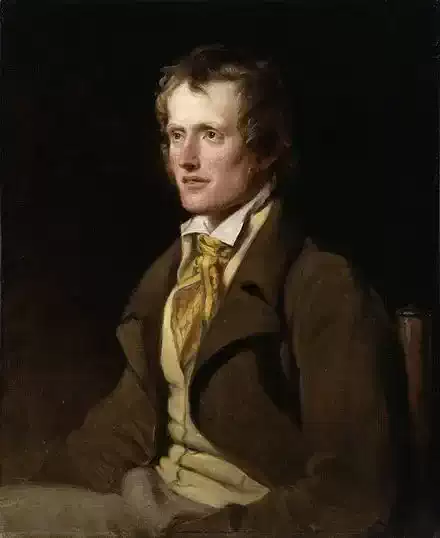
Full name: John Clare. Pseudonyms or heteronyms: Used "John Clare" for most of his published works, but sometimes signed himself as "a Northamptonshire peasant." Date and place of birth: July 13, 1793, Helpston, Northamptonshire, England. Date and place of death: May 20, 1864, High Beach, Epping Forest, Essex, England. Family background, social class, and cultural context of origin: Born into a family of agricultural laborers. His father was a farmhand and later a thresher. Clare was of humble peasant stock, a fact that profoundly influenced his perspective and his poetry. Nationality and language(s) of writing: English. Historical context in which they lived: Lived through the Napoleonic Wars, the Industrial Revolution, the enclosure of common lands, and significant social and economic changes in rural England. This era saw the decline of traditional agricultural life and the rise of industrialization, which deeply affected Clare's world.

Childhood and education

Family background and social environment: Grew up in poverty in the rural village of Helpston. His early life was shaped by agricultural labor and the close-knit but often harsh realities of peasant life. Formal education and self-education: Attended village school until the age of 12. He was largely self-taught, with a voracious appetite for reading. His education was supplemented by his work in the fields, which provided him with an intimate knowledge of nature. Early influences (readings, culture, religion, politics): Early influences included the Bible, popular ballads, chapbooks, and poetry from authors like James Thomson and William Cowper. The natural environment of his home in Northamptonshire was his most significant influence. Literary, philosophical, or artistic movements absorbed: While he engaged with the Romantic ideals of nature and individual experience, he remained largely outside the literary circles of his time and developed a unique, unschooled style. Significant events in youth: His early experiences of poverty, his work as a farm laborer, and his discovery of poetry.

Literary trajectory

Beginning of writing (when and how it started): Began writing poetry in his late teens, initially for his own pleasure and inspired by his surroundings. He learned to write by tracing letters in the sand and copying from books. Development over time (phases, changes in style): His early work focused on nature and rural life. Later poems, particularly those written during his periods of mental distress, became more introspective, fragmented, and experimental, reflecting his internal turmoil. Chronological evolution of the work: His published volumes "Poems Descriptive of Rural Life" (1820) and "The Village Minstrel" (1820) brought him initial fame. "The Shepherd's Calendar" (1827) is considered a major work. His most prolific period was before his major mental breakdowns. Contributions to magazines, newspapers, and anthologies: Contributed poems to various periodicals and was included in anthologies. Activity as a critic, translator, or editor: Not active as a critic or editor, though his letters sometimes contain observations on literature.

Works, style, and literary characteristics

Major works with dates and context of production: "Poems Descriptive of Rural Life and Scenery" (1820), "The Village Minstrel" (1820), "The Shepherd's Calendar" (1827), "The Rural Muse" (1835). His poetry was often inspired by his immediate environment, the changing seasons, and his observations of rural folk. Dominant themes — love, death, time, nature, identity, homeland, spirituality, etc.: Nature in its most detailed and vibrant forms, the changing seasons, rural labor, the impact of enclosure and industrialization on traditional life, poverty, social injustice, mental illness, memory, and the search for spiritual solace in nature. Form and structure — use of the sonnet, free verse, fixed forms, metrical experimentation: Employed a wide range of forms, including ballads, sonnets, and lyrics, often with a natural, conversational rhythm. His later, uncollected poems show significant experimentation, with irregular meter and fragmented structures reflecting his mental state. Poetic devices (metaphor, rhythm, musicality): Known for his precise, often startling imagery drawn directly from nature. His rhythm is typically fluid and musical, mimicking natural sounds and speech. Tone and poetic voice — lyrical, satirical, elegiac, epic, ironic, confessional: Primarily lyrical, observational, and elegiac, especially when reflecting on the loss of nature and rural traditions. Also capable of wit, satire, and deep personal confession. Poetic voice (personal, universal, fragmented, etc.): Rooted in the personal experience of a rural man, but his deep empathy for nature and his insights into the human condition give his voice universal resonance. His later work becomes increasingly fragmented. Language and style — vocabulary, imagery density, preferred rhetorical devices: Rich, vernacular vocabulary drawn from rural life and nature. Vivid, detailed, and specific imagery. He often used plain language to convey profound observations. Preferred rhetorical devices include direct description, simile, and personification of nature. Formal or thematic innovations introduced into literature: His unvarnished, accurate portrayal of rural life and nature, free from aristocratic romanticization, was innovative. His late, uncollected poems are seen as precursors to modernist experimentation. Relationship with tradition and modernity: He drew from traditional forms but infused them with a contemporary, unsentimental realism. His work captured the tension between enduring rural traditions and the encroaching modernity of industrialization. Associated literary movements (e.g., symbolism, modernism): Primarily associated with the Romantic movement due to his focus on nature and individual feeling, but his realism and unique voice set him apart. His later work is sometimes seen as proto-modernist. Lesser-known or unpublished works: Thousands of poems remained unpublished during his lifetime and were discovered decades after his death, revealing a vast and complex body of work.

Cultural and historical context

Relationship with historical events (wars, revolutions, regimes): Witnessed the profound social and economic shifts caused by the enclosure of common lands and the rise of industrialism, which directly impacted the rural communities he depicted. Relationship with other writers or literary circles: Known to have corresponded with poets like Robert Southey and met with figures like Charles Lamb. He was largely an outsider to the mainstream literary establishment. Generation or movement to which they belong (e.g., Romanticism, Modernism, Surrealism): Often categorized as a rural Romantic poet, but his unmediated realism and focus on social issues distinguish him. Political or philosophical stance: Sympathetic to the plight of the rural poor and critical of the injustices of land enclosure and social stratification. His political views were implicitly expressed through his observations of rural life. Influence of society and culture on the work: The declining rural way of life, the loss of common lands, and the pressures of poverty were central influences on his work. Dialogues and tensions with contemporaries: His struggle for recognition and his modest background created a tension with the more established literary figures of his time. Critical reception during life vs. posthumous recognition: Received initial acclaim as "the peasant poet" but struggled for consistent recognition and financial stability. His work was largely overlooked for many years before a major revival in the 20th century.

Personal life

Significant emotional and family relationships and how they shaped the work: His relationships, including his marriage to Caroline (or Mary) Turner, were often strained by his poverty and mental health issues. His deep connection to his home village of Helpston was a constant theme. Friendships and literary rivalries: Maintained friendships with some patrons and fellow writers, but his social isolation and mental illness made sustained relationships difficult. Personal experiences and crises, illnesses, or conflicts: Suffered from severe mental health problems, including periods of depression and delusions, leading to his confinement in asylums. His mental state deeply affected his life and his later poetry. Parallel professions (if they did not live solely from poetry): Worked variously as a gardener, an agricultural laborer, and a proofreader. Religious, spiritual, or philosophical beliefs: Found spiritual solace and meaning in nature. His faith was personal and deeply connected to the natural world, often expressed through his poetry. Political positions and civic engagement: While not overtly political, his poetry reflects a deep concern for the rural poor and a critique of social injustices.

Recognition and reception

Place in national and international literature: Considered one of the most significant English nature poets and a vital voice of rural experience. Awards, distinctions, and institutional recognition: Received some patronage and recognition during his lifetime, but never achieved lasting financial security or widespread literary status commensurate with his talent. Critical reception at the time and over time: Initially lauded for his "natural genius" but later sometimes dismissed for his perceived lack of polish. His reputation has been significantly rehabilitated and enhanced through scholarly work in the late 20th and 21st centuries. Popularity vs. academic recognition: Initially had some popular appeal, but his work is now primarily appreciated and studied in academic contexts, though his poems are widely read and admired by nature enthusiasts.

Influences and legacy

Authors who influenced them: James Thomson, William Cowper, Robert Burns, and possibly elements of Wordsworth. Poets and movements they influenced: His detailed, unsentimental depiction of nature and rural life influenced later poets interested in realism and social commentary. His uncollected poems, with their experimental qualities, are seen as precursors to modernist poetry. Impact on national and world literature and on later generations of poets: His authentic voice and profound connection to the natural world continue to inspire poets and readers. He is celebrated for giving a voice to the rural poor and capturing the essence of a vanishing way of life. Inclusion in the literary canon: Increasingly recognized as a major figure in the English Romantic canon and beyond. Translations and international dissemination: His works are translated into various languages and studied internationally. Academic studies dedicated to the work: A substantial and growing body of academic scholarship focuses on his life, his vast collected works, and his significance.

Interpretation and critical analysis

Possible readings of the work: His poems are read as direct observations of nature, elegies for a lost rural world, and deeply personal expressions of psychological distress. Philosophical and existential themes: Explores the relationship between humanity and nature, the impact of societal change on individuals, the fragility of memory, and the search for meaning in the face of adversity and mental illness. Controversies or critical debates: Debates have focused on the extent of his mental illness, the classification of his literary output (e.g., Romantic vs. realist vs. proto-modernist), and the interpretation of his social commentary.

Curiosities and lesser-known aspects

Lesser-known aspects of personality: Despite his profound connection to nature, he had a deep love for his home village and suffered greatly when confined away from it. Contradictions between life and work: The stark contrast between the beauty and order of his natural observations and the chaos and distress of his internal life. Significant or anecdotal episodes that illuminate the author’s profile: His numerous confinements in asylums, his attempts to escape, and his prolific writing even during periods of acute illness. Objects, places, or rituals associated with poetic creation: The fields and hedgerows of Northamptonshire were his muse. Writing habits: He wrote incessantly, filling notebooks with thousands of poems, often in a highly pressured and rapid manner during periods of lucidity or creative fervor. Curious episodes: His ability to recall and write down vast amounts of poetry from memory, even after long periods of illness.

Death and memory

Circumstances of death: Died in the asylum at High Beach, Essex. Posthumous publications: The "discovery" and publication of his vast body of uncollected poems in the 20th century led to a major reevaluation of his work and his status as a poet.