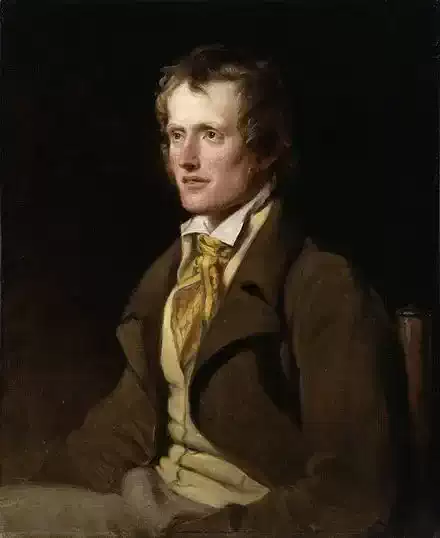
Identification and basic context
Full name: John Clare. Pseudonyms or heteronyms: Used "John Clare" for most of his published works, but sometimes signed himself as "a Northamptonshire peasant." Date and place of birth: July 13, 1793, Helpston, Northamptonshire, England. Date and place of death: May 20, 1864, High Beach, Epping Forest, Essex, England. Family background, social class, and cultural context of origin: Born into a family of agricultural laborers. His father was a farmhand and later a thresher. Clare was of humble peasant stock, a fact that profoundly influenced his perspective and his poetry. Nationality and language(s) of writing: English. Historical context in which they lived: Lived through the Napoleonic Wars, the Industrial Revolution, the enclosure of common lands, and significant social and economic changes in rural England. This era saw the decline of traditional agricultural life and the rise of industrialization, which deeply affected Clare's world.
Childhood and education
Family background and social environment: Grew up in poverty in the rural village of Helpston. His early life was shaped by agricultural labor and the close-knit but often harsh realities of peasant life. Formal education and self-education: Attended village school until the age of 12. He was largely self-taught, with a voracious appetite for reading. His education was supplemented by his work in the fields, which provided him with an intimate knowledge of nature. Early influences (readings, culture, religion, politics): Early influences included the Bible, popular ballads, chapbooks, and poetry from authors like James Thomson and William Cowper. The natural environment of his home in Northamptonshire was his most significant influence. Literary, philosophical, or artistic movements absorbed: While he engaged with the Romantic ideals of nature and individual experience, he remained largely outside the literary circles of his time and developed a unique, unschooled style. Significant events in youth: His early experiences of poverty, his work as a farm laborer, and his discovery of poetry.
Literary trajectory
Beginning of writing (when and how it started): Began writing poetry in his late teens, initially for his own pleasure and inspired by his surroundings. He learned to write by tracing letters in the sand and copying from books. Development over time (phases, changes in style): His early work focused on nature and rural life. Later poems, particularly those written during his periods of mental distress, became more introspective, fragmented, and experimental, reflecting his internal turmoil. Chronological evolution of the work: His published volumes "Poems Descriptive of Rural Life" (1820) and "The Village Minstrel" (1820) brought him initial fame. "The Shepherd's Calendar" (1827) is considered a major work. His most prolific period was before his major mental breakdowns. Contributions to magazines, newspapers, and anthologies: Contributed poems to various periodicals and was included in anthologies. Activity as a critic, translator, or editor: Not active as a critic or editor, though his letters sometimes contain observations on literature.
Works, style, and literary characteristics
Major works with dates and context of production: "Poems Descriptive of Rural Life and Scenery" (1820), "The Village Minstrel" (1820), "The Shepherd's Calendar" (1827), "The Rural Muse" (1835). His poetry was often inspired by his immediate environment, the changing seasons, and his observations of rural folk. Dominant themes — love, death, time, nature, identity, homeland, spirituality, etc.: Nature in its most detailed and vibrant forms, the changing seasons, rural labor, the impact of enclosure and industrialization on traditional life, poverty, social injustice, mental illness, memory, and the search for spiritual solace in nature. Form and structure — use of the sonnet, free verse, fixed forms, metrical experimentation: Employed a wide range of forms, including ballads, sonnets, and lyrics, often with a natural, conversational rhythm. His later, uncollected poems show significant experimentation, with irregular meter and fragmented structures reflecting his mental state. Poetic devices (metaphor, rhythm, musicality): Known for his precise, often startling imagery drawn directly from nature. His rhythm is typically fluid and musical, mimicking natural sounds and speech. Tone and poetic voice — lyrical, satirical, elegiac, epic, ironic, confessional: Primarily lyrical, observational, and elegiac, especially when reflecting on the loss of nature and rural traditions. Also capable of wit, satire, and deep personal confession. Poetic voice (personal, universal, fragmented, etc.): Rooted in the personal experience of a rural man, but his deep empathy for nature and his insights into the human condition give his voice universal resonance. His later work becomes increasingly fragmented. Language and style — vocabulary, imagery density, preferred rhetorical devices: Rich, vernacular vocabulary drawn from rural life and nature. Vivid, detailed, and specific imagery. He often used plain language to convey profound observations. Preferred rhetorical devices include direct description, simile, and personification of nature. Formal or thematic innovations introduced into literature: His unvarnished, accurate portrayal of rural life and nature, free from aristocratic romanticization, was innovative. His late, uncollected poems are seen as precursors to modernist experimentation. Relationship with tradition and modernity: He drew from traditional forms but infused them with a contemporary, unsentimental realism. His work captured the tension between enduring rural traditions and the encroaching modernity of industrialization. Associated literary movements (e.g., symbolism, modernism): Primarily associated with the Romantic movement due to his focus on nature and individual feeling, but his realism and unique voice set him apart. His later work is sometimes seen as proto-modernist. Lesser-known or unpublished works: Thousands of poems remained unpublished during his lifetime and were discovered decades after his death, revealing a vast and complex body of work.
Cultural and historical context
Relationship with historical events (wars, revolutions, regimes): Witnessed the profound social and economic shifts caused by the enclosure of common lands and the rise of industrialism, which directly impacted the rural communities he depicted. Relationship with other writers or literary circles: Known to have corresponded with poets like Robert Southey and met with figures like Charles Lamb. He was largely an outsider to the mainstream literary establishment. Generation or movement to which they belong (e.g., Romanticism, Modernism, Surrealism): Often categorized as a rural Romantic poet, but his unmediated realism and focus on social issues distinguish him. Political or philosophical stance: Sympathetic to the plight of the rural poor and critical of the injustices of land enclosure and social stratification. His political views were implicitly expressed through his observations of rural life. Influence of society and culture on the work: The declining rural way of life, the loss of common lands, and the pressures of poverty were central influences on his work. Dialogues and tensions with contemporaries: His struggle for recognition and his modest background created a tension with the more established literary figures of his time. Critical reception during life vs. posthumous recognition: Received initial acclaim as "the peasant poet" but struggled for consistent recognition and financial stability. His work was largely overlooked for many years before a major revival in the 20th century.
Personal life
Significant emotional and family relationships and how they shaped the work: His relationships, including his marriage to Caroline (or Mary) Turner, were often strained by his poverty and mental health issues. His deep connection to his home village of Helpston was a constant theme. Friendships and literary rivalries: Maintained friendships with some patrons and fellow writers, but his social isolation and mental illness made sustained relationships difficult. Personal experiences and crises, illnesses, or conflicts: Suffered from severe mental health problems, including periods of depression and delusions, leading to his confinement in asylums. His mental state deeply affected his life and his later poetry. Parallel professions (if they did not live solely from poetry): Worked variously as a gardener, an agricultural laborer, and a proofreader. Religious, spiritual, or philosophical beliefs: Found spiritual solace and meaning in nature. His faith was personal and deeply connected to the natural world, often expressed through his poetry. Political positions and civic engagement: While not overtly political, his poetry reflects a deep concern for the rural poor and a critique of social injustices.
Recognition and reception
Place in national and international literature: Considered one of the most significant English nature poets and a vital voice of rural experience. Awards, distinctions, and institutional recognition: Received some patronage and recognition during his lifetime, but never achieved lasting financial security or widespread literary status commensurate with his talent. Critical reception at the time and over time: Initially lauded for his "natural genius" but later sometimes dismissed for his perceived lack of polish. His reputation has been significantly rehabilitated and enhanced through scholarly work in the late 20th and 21st centuries. Popularity vs. academic recognition: Initially had some popular appeal, but his work is now primarily appreciated and studied in academic contexts, though his poems are widely read and admired by nature enthusiasts.
Influences and legacy
Authors who influenced them: James Thomson, William Cowper, Robert Burns, and possibly elements of Wordsworth. Poets and movements they influenced: His detailed, unsentimental depiction of nature and rural life influenced later poets interested in realism and social commentary. His uncollected poems, with their experimental qualities, are seen as precursors to modernist poetry. Impact on national and world literature and on later generations of poets: His authentic voice and profound connection to the natural world continue to inspire poets and readers. He is celebrated for giving a voice to the rural poor and capturing the essence of a vanishing way of life. Inclusion in the literary canon: Increasingly recognized as a major figure in the English Romantic canon and beyond. Translations and international dissemination: His works are translated into various languages and studied internationally. Academic studies dedicated to the work: A substantial and growing body of academic scholarship focuses on his life, his vast collected works, and his significance.
Interpretation and critical analysis
Possible readings of the work: His poems are read as direct observations of nature, elegies for a lost rural world, and deeply personal expressions of psychological distress. Philosophical and existential themes: Explores the relationship between humanity and nature, the impact of societal change on individuals, the fragility of memory, and the search for meaning in the face of adversity and mental illness. Controversies or critical debates: Debates have focused on the extent of his mental illness, the classification of his literary output (e.g., Romantic vs. realist vs. proto-modernist), and the interpretation of his social commentary.
Curiosities and lesser-known aspects
Lesser-known aspects of personality: Despite his profound connection to nature, he had a deep love for his home village and suffered greatly when confined away from it. Contradictions between life and work: The stark contrast between the beauty and order of his natural observations and the chaos and distress of his internal life. Significant or anecdotal episodes that illuminate the author’s profile: His numerous confinements in asylums, his attempts to escape, and his prolific writing even during periods of acute illness. Objects, places, or rituals associated with poetic creation: The fields and hedgerows of Northamptonshire were his muse. Writing habits: He wrote incessantly, filling notebooks with thousands of poems, often in a highly pressured and rapid manner during periods of lucidity or creative fervor. Curious episodes: His ability to recall and write down vast amounts of poetry from memory, even after long periods of illness.
Death and memory
Circumstances of death: Died in the asylum at High Beach, Essex. Posthumous publications: The "discovery" and publication of his vast body of uncollected poems in the 20th century led to a major reevaluation of his work and his status as a poet.