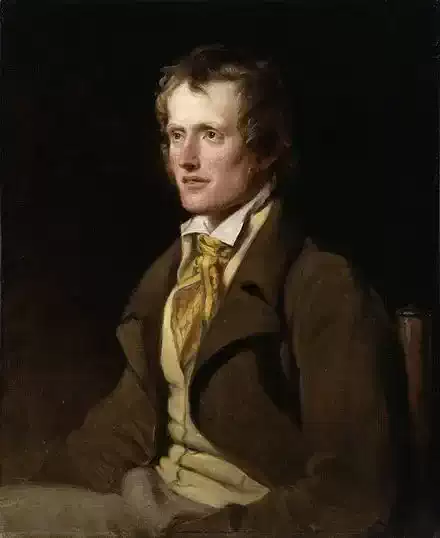
Poems List

Farewell And Defiance To Love

Farewell And Defiance To Love

Love and thy vain employs, away
From this too oft deluded breast!
No longer will I court thy stay,
To be my bosom's teazing guest.
Thou treacherous medicine, reckoned pure,
Thou quackery of the harassed heart,
That kills what it pretends to cure,
Life's mountebank thou art.


With nostrums vain of boasted powers,
That, ta'en, a worse disorder leave;
An asp hid in a group of flowers,
That bites and stings when few perceive;
Thou mock-truce to the troubled mind,
Leading it more in sorrow's way,
Freedom, that leaves us more confined,
I bid thee hence away.


Dost taunt, and deem thy power beyond
The resolution reason gave?
Tut! Falsity hath snapt each bond,
That kept me once thy quiet slave,
And made thy snare a spider's thread,
Which een my breath can break in twain;
Nor will I be, like Sampson, led
To trust thy wiles again.


I took thee as my staff to guide
Me on the road I did pursue,
And when my weakness most relied
Upon its strength it broke in two.
I took thee as my friendly host
That counsel might in dangers show,
But when I needed thee the most
I found thou wert my foe.


Tempt me no more with rosy cheeks,
Nor daze my reason with bright eyes;
I'm wearied with thy painted freaks,
And sicken at such vanities:
Be roses fine as eer they will,
They, with the meanest, fade and die,
And eyes, though thronged with darts to kill,
Share like mortality.
Feed the young bard, that madly sips
His nectar-draughts from folly's flowers,
Bright eyes, fair cheeks, and ruby lips,
Till muses melt to honey showers;
Lure him to thrum thy empty lays,
While flattery listens to the chimes,
Till words themselves grow sick with praise
And stop for want of rhymes.


Let such be still thy paramours,
And chaunt love's old and idle tune,
Robbing the spring of all its flowers,
And heaven of all her stars and moon,
To gild with dazzling similes
Blind folly's vain and empty lay:
I'm sobered from such phantasies,
So get thee hence away.


Nor bid me sigh for mine own cost,
Nor count its loss, for mine annoy,
Nor say my stubbornness hath lost
A paradise of dainty joy:
I'll not believe thee, till I know
That sober reason turns an ape,
And acts the harlequin, to show
That cares in every shape,


Heart-achings, sighs, and grief-wrung tears,
Shame-blushes at betrayed distress,
Dissembled smiles, and jealous fears,
Are nought but real happiness:
Then will I mourn what now I brave,
And suffer Celia's quirks to be
(Like a poor fate-bewilder'd slave,)
The rulers of my destiny.


I'll weep and sigh wheneer she wills
To frown, and when she deigns to smile
It shall be cure for all my ills,
And, foolish still, I'll laugh the while;
But till that comes, I'll bless the rules
Experience taught, and deem it wise
To hold thee as the game of fools,
And all thy tricks despise.
392

Emmonsail's Heath in Winter

Emmonsail's Heath in Winter

I love to see the old heath's withered brake
Mingle its crimpled leaves with furze and ling,
While the old heron from the lonely lake
Starts slow and flaps its melancholy wing,
An oddling crow in idle motion swing
On the half-rotten ash-tree's topmost twig,
Beside whose trunk the gypsy makes his bed.
Up flies the bouncing woodcock from the brig
Where a black quagmire quakes beneath the tread;
The fieldfares chatter in the whistling thorn
And for the haw round fields and closen rove,
And coy bumbarrels, twenty in a drove,
Flit down the hedgerows in the frozen plain
And hang on little twigs and start again.
426

Early Spring

Early Spring

The Spring is come, and Spring flowers coming too,
The crocus, patty kay, the rich hearts' ease;
The polyanthus peeps with blebs of dew,
And daisy flowers; the buds swell on the trees;
While oer the odd flowers swim grandfather bees
In the old homestead rests the cottage cow;
The dogs sit on their haunches near the pail,
The least one to the stranger growls 'bow wow,'
Then hurries to the door and cocks his tail,
To knaw the unfinished bone; the placid cow
Looks oer the gate; the thresher's lumping flail
Is all the noise the spring encounters now.
403

Dewdrops

Dewdrops


The dewdrops on every blade of grass are so much like silver drops
that I am obliged to stoop down as I walk to see if they are pearls,
and those sprinkled on the ivy-woven beds of primroses underneath the
hazels, whitethorns and maples are so like gold beads that I stooped
down to feel if they were hard, but they melted from my finger. And
where the dew lies on the primrose, the violet and whitethorn leaves
they are emerald and beryl, yet nothing more than the dews of the
morning on the budding leaves; nay, the road grasses are covered with
gold and silver beads, and the further we go the brighter they seem to
shine, like solid gold and silver. It is nothing more than the sun's
light and shade upon them in the dewy morning; every thorn-point and
every bramble-spear has its trembling ornament: till the wind gets
a little brisker, and then all is shaken off, and all the shining
jewelry passes away into a common spring morning full of budding
leaves, primroses, violets, vernal speedwell, bluebell and orchis, and
commonplace objects.
381

Dyke Side

Dyke Side

The frog croaks loud, and maidens dare not pass
But fear the noisome toad and shun the grass;
And on the sunny banks they dare not go
Where hissing snakes run to the flood below.
The nuthatch noises loud in wood and wild,
Like women turning skreeking to a child.
The schoolboy hears and brushes through the trees
And runs about till drabbled to the knees.
The old hawk winnows round the old crow's nest;
The schoolboy hears and wonder fills his breast.
He throws his basket down to climb the tree
And wonders what the red blotched eggs can be:
The green woodpecker bounces from the view
And hollos as he buzzes bye 'kew kew.'
401

Decay

Decay


O Poesy is on the wane,
For Fancy's visions all unfitting;
I hardly know her face again,
Nature herself seems on the flitting.
The fields grow old and common things,
The grass, the sky, the winds a-blowing;
And spots, where still a beauty clings,
Are sighing 'going! all a-going!'
O Poesy is on the wane,
I hardly know her face again.


The bank with brambles overspread,
And little molehills round about it,
Was more to me than laurel shades,
With paths of gravel finely clouted;
And streaking here and streaking there,
Through shaven grass and many a border,
With rutty lanes had no compare,
And heaths were in a richer order.
But Poesy is on the wane,
I hardly know her face again.


I sat beside the pasture stream,
When Beauty's self was sitting by,
The fields did more than Eden seem
Nor could I tell the reason why.
I often drank when not adry
To pledge her health in draughts divine;
Smiles made it nectar from the sky,
Love turned een water into wine.
O Poesy is on the wane,
I cannot find her face again.


The sun those mornings used to find,
Its clouds were other-country mountains,
And heaven looked downward on the mind,
Like groves, and rocks, and mottled fountains.
Those heavens are gone, the mountains grey
Turned mist--the sun, a homeless ranger,
Pursues alone his naked way,
Unnoticed like a very stranger.
O Poesy is on the wane,
Nor love nor joy is mine again.


Love's sun went down without a frown,
For very joy it used to grieve us;
I often think the West is gone,
Ah, cruel Time, to undeceive us.
The stream it is a common stream,
Where we on Sundays used to ramble,
The sky hangs oer a broken dream,
The bramble's dwindled to a bramble!


O Poesy is on the wane,
I cannot find her haunts again.


Mere withered stalks and fading trees,
And pastures spread with hills and rushes,
Are all my fading vision sees;
Gone, gone are rapture's flooding gushes!
When mushrooms they were fairy bowers,
Their marble pillars overswelling,
And Danger paused to pluck the flowers
That in their swarthy rings were dwelling.
Yes, Poesy is on the wane,
Nor joy nor fear is mine again.


Aye, Poesy hath passed away,
And Fancy's visions undeceive us;
The night hath ta'en the place of day,
And why should passing shadows grieve us?
I thought the flowers upon the hills
Were flowers from Adam's open gardens;
But I have had my summer thrills,
And I have had my heart's rewardings.
So Poesy is on the wane,
I hardly know her face again.


And Friendship it hath burned away,
Like to a very ember cooling,
A make-believe on April day
That sent the simple heart a-fooling;
Mere jesting in an earnest way,
Deceiving on and still deceiving;
And Hope is but a fancy-play,
And Joy the art of true believing;
For Poesy is on the wane,
O could I feel her faith again!
438

Country Letter

Country Letter

Dear brother robin this comes from us all
With our kind love and could Gip write and all
Though but a dog he'd have his love to spare
For still he knows and by your corner chair
The moment he comes in he lyes him down
and seems to fancy you are in the town.
This leaves us well in health thank God for that
For old acquaintance Sue has kept your hat
Which mother brushes ere she lays it bye
and every sunday goes upstairs to cry
Jane still is yours till you come back agen
and neer so much as dances with the men
and ned the woodman every week comes in
and asks about you kindly as our kin
and he with this and goody Thompson sends
Remembrances with those of all our friends
Father with us sends love untill he hears
and mother she has nothing but her tears
Yet wishes you like us in health the same
and longs to see a letter with your name
So loving brother don't forget to write
Old Gip lies on the hearth stone every night
Mother can't bear to turn him out of doors
and never noises now of dirty floors
Father will laugh but lets her have her way
and Gip for kindness get a double pay
So Robin write and let us quickly see
You don't forget old friends no more than we
Nor let my mother have so much to blame
To go three journeys ere your letter came.
363

Braggart

Braggart


With careful step to keep his balance up
He reels on warily along the street,
Slabbering at mouth and with a staggering stoop
Mutters an angry look at all he meets.
Bumptious and vain and proud he shoulders up
And would be something if he knew but how;
To any man on earth he will not stoop
But cracks of work, of horses and of plough.
Proud of the foolish talk, the ale he quaffs,
He never heeds the insult loud that laughs:
With rosy maid he tries to joke and play,--
Who shrugs and nettles deep his pomp and pride.
And calls him 'drunken beast' and runs away--
King to himself and fool to all beside.
388

Christmass

Christmass


Christmass is come and every hearth
Makes room to give him welcome now
Een want will dry its tears in mirth
And crown him wi a holly bough
Tho tramping neath a winters sky
Oer snow track paths and ryhmey stiles
The huswife sets her spining bye
And bids him welcome wi her smiles
Each house is swept the day before
And windows stuck wi evergreens
The snow is beesomd from the door
And comfort crowns the cottage scenes
Gilt holly wi its thorny pricks
And yew and box wi berrys small
These deck the unusd candlesticks
And pictures hanging by the wall

Neighbours resume their anual cheer
Wishing wi smiles and spirits high
Clad christmass and a happy year
To every morning passer bye
Milk maids their christmass journeys go
Accompanyd wi favourd swain
And childern pace the crumping snow
To taste their grannys cake again

Hung wi the ivys veining bough
The ash trees round the cottage farm
Are often stript of branches now
The cotters christmass hearth to warm
He swings and twists his hazel band
And lops them off wi sharpend hook
And oft brings ivy in his hand
To decorate the chimney nook

Old winter whipes his ides bye
And warms his fingers till he smiles
Where cottage hearths are blazing high
And labour resteth from his toils
Wi merry mirth beguiling care
Old customs keeping wi the day
Friends meet their christmass cheer to share
And pass it in a harmless way

Old customs O I love the sound
However simple they may be
What ere wi time has sanction found
Is welcome and is dear to me
Pride grows above simplicity
And spurns it from her haughty mind
And soon the poets song will be
The only refuge they can find


The shepherd now no more afraid
Since custom doth the chance bestow
Starts up to kiss the giggling maid
Beneath the branch of mizzletoe
That neath each cottage beam is seen
Wi pearl-like-berrys shining gay
The shadow still of what hath been
Which fashion yearly fades away

And singers too a merry throng
At early morn wi simple skill
Yet imitate the angels song
And chant their christmass ditty still
And mid the storm that dies and swells
By fits-in humings softly steals
The music of the village bells
Ringing round their merry peals

And when its past a merry crew
Bedeckt in masks and ribbons gay
The 'Morrice danse' their sports renew
And act their winter evening play
The clown-turnd-kings for penny praise
Storm wi the actors strut and swell
And harlequin a laugh to raise
Wears his hump back and tinkling bell

And oft for pence and spicy ale
Wi winter nosgays pind before
The wassail singer tells her tale
And drawls her christmass carrols oer
The prentice boy wi ruddy face
And ryhme bepowderd dancing locks
From door to door wi happy pace
Runs round to claim his 'christmass box'

The block behind the fire is put
To sanction customs old desires
And many a faggots bands are cut
For the old farmers christmass fires
Where loud tongd gladness joins the throng
And winter meets the warmth of may
Feeling by times the heat too strong
And rubs his shins and draws away

While snows the window panes bedim
The fire curls up a sunny charm
Where creaming oer the pitchers rim
The flowering ale is set to warm
Mirth full of joy as summer bees
Sits there its pleasures to impart


While childern tween their parents knees
Sing scraps of carrols oer by heart

And some to view the winter weathers
Climb up the window seat wi glee
Likening the snow to falling feathers
In fancys infant extacy
Laughing wi superstitious love
Oer visions wild that youth supplyes
Of people pulling geese above
And keeping christmass in the skyes

As tho the homstead trees were drest
In lieu of snow wi dancing leaves
As. tho the sundryd martins nest
Instead of ides hung the eaves
The childern hail the happy day
As if the snow was april grass
And pleasd as neath the warmth of may
Sport oer the water froze to glass

Thou day of happy sound and mirth
That long wi childish memory stays
How blest around the cottage hearth
I met thee in my boyish days
Harping wi raptures dreaming joys
On presents that thy coming found
The welcome sight of little toys
The christmass gifts of comers round

'The wooden horse wi arching head
Drawn upon wheels around the room
The gilded coach of ginger bread
And many colord sugar plumb
Gilt coverd books for pictures sought
Or storys childhood loves to tell
Wi many a urgent promise bought
To get tomorrows lesson well

And many a thing a minutes sport
Left broken on the sanded floor
When we woud leave our play and court
Our parents promises for more
Tho manhood bids such raptures dye
And throws such toys away as vain
Yet memory loves to turn her eye
And talk such pleasures oer again

Around the glowing hearth at night
The harmless laugh and winter tale
Goes round-while parting friends delight
To toast each other oer their ale


The cotter oft wi quiet zeal
Will musing oer his bible lean
While in the dark the lovers steal
To kiss and toy behind the screen

The yule cake dotted thick wi plumbs
Is on each supper table found
And cats look up for falling crumbs
Which greedy childern litter round
And huswifes sage stuffd seasond chine
Long hung in chimney nook to drye
And boiling eldern berry wine
To drink the christmass eves 'good bye'
357

Bonny Lassie O!

Bonny Lassie O!

O the evening's for the fair, bonny lassie O!
To meet the cooler air and walk an angel there,
With the dark dishevelled hair,
Bonny lassie O!


The bloom's on the brere, bonny lassie O!
Oak apples on the tree; and wilt thou gang to see
The shed I've made for thee,
Bonny lassie O!


Tis agen the running brook, bonny lassie O!
In a grassy nook hard by, with a little patch of sky,
And a bush to keep us dry,
Bonny lassie O!


There's the daisy all the year, bonny lassie O!
There's the king-cup bright as gold, and the speedwell never cold,
And the arum leaves unrolled,
Bonny lassie O!


O meet me at the shed, bonny lassie O!
With a woodbine peeping in, and the roses like thy skin
Blushing, thy praise to win,
Bonny lassie O!


I will meet thee there at e'en, bonny lassie O!
When the bee sips in the bean, and grey willow branches lean,
And the moonbeam looks between,
Bonny lassie O!
368

Comments (0)

Log in to post a comment.

NoComments

Identification and basic context

Full name: John Clare. Pseudonyms or heteronyms: Used "John Clare" for most of his published works, but sometimes signed himself as "a Northamptonshire peasant." Date and place of birth: July 13, 1793, Helpston, Northamptonshire, England. Date and place of death: May 20, 1864, High Beach, Epping Forest, Essex, England. Family background, social class, and cultural context of origin: Born into a family of agricultural laborers. His father was a farmhand and later a thresher. Clare was of humble peasant stock, a fact that profoundly influenced his perspective and his poetry. Nationality and language(s) of writing: English. Historical context in which they lived: Lived through the Napoleonic Wars, the Industrial Revolution, the enclosure of common lands, and significant social and economic changes in rural England. This era saw the decline of traditional agricultural life and the rise of industrialization, which deeply affected Clare's world.

Childhood and education

Family background and social environment: Grew up in poverty in the rural village of Helpston. His early life was shaped by agricultural labor and the close-knit but often harsh realities of peasant life. Formal education and self-education: Attended village school until the age of 12. He was largely self-taught, with a voracious appetite for reading. His education was supplemented by his work in the fields, which provided him with an intimate knowledge of nature. Early influences (readings, culture, religion, politics): Early influences included the Bible, popular ballads, chapbooks, and poetry from authors like James Thomson and William Cowper. The natural environment of his home in Northamptonshire was his most significant influence. Literary, philosophical, or artistic movements absorbed: While he engaged with the Romantic ideals of nature and individual experience, he remained largely outside the literary circles of his time and developed a unique, unschooled style. Significant events in youth: His early experiences of poverty, his work as a farm laborer, and his discovery of poetry.

Literary trajectory

Beginning of writing (when and how it started): Began writing poetry in his late teens, initially for his own pleasure and inspired by his surroundings. He learned to write by tracing letters in the sand and copying from books. Development over time (phases, changes in style): His early work focused on nature and rural life. Later poems, particularly those written during his periods of mental distress, became more introspective, fragmented, and experimental, reflecting his internal turmoil. Chronological evolution of the work: His published volumes "Poems Descriptive of Rural Life" (1820) and "The Village Minstrel" (1820) brought him initial fame. "The Shepherd's Calendar" (1827) is considered a major work. His most prolific period was before his major mental breakdowns. Contributions to magazines, newspapers, and anthologies: Contributed poems to various periodicals and was included in anthologies. Activity as a critic, translator, or editor: Not active as a critic or editor, though his letters sometimes contain observations on literature.

Works, style, and literary characteristics

Major works with dates and context of production: "Poems Descriptive of Rural Life and Scenery" (1820), "The Village Minstrel" (1820), "The Shepherd's Calendar" (1827), "The Rural Muse" (1835). His poetry was often inspired by his immediate environment, the changing seasons, and his observations of rural folk. Dominant themes — love, death, time, nature, identity, homeland, spirituality, etc.: Nature in its most detailed and vibrant forms, the changing seasons, rural labor, the impact of enclosure and industrialization on traditional life, poverty, social injustice, mental illness, memory, and the search for spiritual solace in nature. Form and structure — use of the sonnet, free verse, fixed forms, metrical experimentation: Employed a wide range of forms, including ballads, sonnets, and lyrics, often with a natural, conversational rhythm. His later, uncollected poems show significant experimentation, with irregular meter and fragmented structures reflecting his mental state. Poetic devices (metaphor, rhythm, musicality): Known for his precise, often startling imagery drawn directly from nature. His rhythm is typically fluid and musical, mimicking natural sounds and speech. Tone and poetic voice — lyrical, satirical, elegiac, epic, ironic, confessional: Primarily lyrical, observational, and elegiac, especially when reflecting on the loss of nature and rural traditions. Also capable of wit, satire, and deep personal confession. Poetic voice (personal, universal, fragmented, etc.): Rooted in the personal experience of a rural man, but his deep empathy for nature and his insights into the human condition give his voice universal resonance. His later work becomes increasingly fragmented. Language and style — vocabulary, imagery density, preferred rhetorical devices: Rich, vernacular vocabulary drawn from rural life and nature. Vivid, detailed, and specific imagery. He often used plain language to convey profound observations. Preferred rhetorical devices include direct description, simile, and personification of nature. Formal or thematic innovations introduced into literature: His unvarnished, accurate portrayal of rural life and nature, free from aristocratic romanticization, was innovative. His late, uncollected poems are seen as precursors to modernist experimentation. Relationship with tradition and modernity: He drew from traditional forms but infused them with a contemporary, unsentimental realism. His work captured the tension between enduring rural traditions and the encroaching modernity of industrialization. Associated literary movements (e.g., symbolism, modernism): Primarily associated with the Romantic movement due to his focus on nature and individual feeling, but his realism and unique voice set him apart. His later work is sometimes seen as proto-modernist. Lesser-known or unpublished works: Thousands of poems remained unpublished during his lifetime and were discovered decades after his death, revealing a vast and complex body of work.

Cultural and historical context

Relationship with historical events (wars, revolutions, regimes): Witnessed the profound social and economic shifts caused by the enclosure of common lands and the rise of industrialism, which directly impacted the rural communities he depicted. Relationship with other writers or literary circles: Known to have corresponded with poets like Robert Southey and met with figures like Charles Lamb. He was largely an outsider to the mainstream literary establishment. Generation or movement to which they belong (e.g., Romanticism, Modernism, Surrealism): Often categorized as a rural Romantic poet, but his unmediated realism and focus on social issues distinguish him. Political or philosophical stance: Sympathetic to the plight of the rural poor and critical of the injustices of land enclosure and social stratification. His political views were implicitly expressed through his observations of rural life. Influence of society and culture on the work: The declining rural way of life, the loss of common lands, and the pressures of poverty were central influences on his work. Dialogues and tensions with contemporaries: His struggle for recognition and his modest background created a tension with the more established literary figures of his time. Critical reception during life vs. posthumous recognition: Received initial acclaim as "the peasant poet" but struggled for consistent recognition and financial stability. His work was largely overlooked for many years before a major revival in the 20th century.

Personal life

Significant emotional and family relationships and how they shaped the work: His relationships, including his marriage to Caroline (or Mary) Turner, were often strained by his poverty and mental health issues. His deep connection to his home village of Helpston was a constant theme. Friendships and literary rivalries: Maintained friendships with some patrons and fellow writers, but his social isolation and mental illness made sustained relationships difficult. Personal experiences and crises, illnesses, or conflicts: Suffered from severe mental health problems, including periods of depression and delusions, leading to his confinement in asylums. His mental state deeply affected his life and his later poetry. Parallel professions (if they did not live solely from poetry): Worked variously as a gardener, an agricultural laborer, and a proofreader. Religious, spiritual, or philosophical beliefs: Found spiritual solace and meaning in nature. His faith was personal and deeply connected to the natural world, often expressed through his poetry. Political positions and civic engagement: While not overtly political, his poetry reflects a deep concern for the rural poor and a critique of social injustices.

Recognition and reception

Place in national and international literature: Considered one of the most significant English nature poets and a vital voice of rural experience. Awards, distinctions, and institutional recognition: Received some patronage and recognition during his lifetime, but never achieved lasting financial security or widespread literary status commensurate with his talent. Critical reception at the time and over time: Initially lauded for his "natural genius" but later sometimes dismissed for his perceived lack of polish. His reputation has been significantly rehabilitated and enhanced through scholarly work in the late 20th and 21st centuries. Popularity vs. academic recognition: Initially had some popular appeal, but his work is now primarily appreciated and studied in academic contexts, though his poems are widely read and admired by nature enthusiasts.

Influences and legacy

Authors who influenced them: James Thomson, William Cowper, Robert Burns, and possibly elements of Wordsworth. Poets and movements they influenced: His detailed, unsentimental depiction of nature and rural life influenced later poets interested in realism and social commentary. His uncollected poems, with their experimental qualities, are seen as precursors to modernist poetry. Impact on national and world literature and on later generations of poets: His authentic voice and profound connection to the natural world continue to inspire poets and readers. He is celebrated for giving a voice to the rural poor and capturing the essence of a vanishing way of life. Inclusion in the literary canon: Increasingly recognized as a major figure in the English Romantic canon and beyond. Translations and international dissemination: His works are translated into various languages and studied internationally. Academic studies dedicated to the work: A substantial and growing body of academic scholarship focuses on his life, his vast collected works, and his significance.

Interpretation and critical analysis

Possible readings of the work: His poems are read as direct observations of nature, elegies for a lost rural world, and deeply personal expressions of psychological distress. Philosophical and existential themes: Explores the relationship between humanity and nature, the impact of societal change on individuals, the fragility of memory, and the search for meaning in the face of adversity and mental illness. Controversies or critical debates: Debates have focused on the extent of his mental illness, the classification of his literary output (e.g., Romantic vs. realist vs. proto-modernist), and the interpretation of his social commentary.

Curiosities and lesser-known aspects

Lesser-known aspects of personality: Despite his profound connection to nature, he had a deep love for his home village and suffered greatly when confined away from it. Contradictions between life and work: The stark contrast between the beauty and order of his natural observations and the chaos and distress of his internal life. Significant or anecdotal episodes that illuminate the author’s profile: His numerous confinements in asylums, his attempts to escape, and his prolific writing even during periods of acute illness. Objects, places, or rituals associated with poetic creation: The fields and hedgerows of Northamptonshire were his muse. Writing habits: He wrote incessantly, filling notebooks with thousands of poems, often in a highly pressured and rapid manner during periods of lucidity or creative fervor. Curious episodes: His ability to recall and write down vast amounts of poetry from memory, even after long periods of illness.

Death and memory

Circumstances of death: Died in the asylum at High Beach, Essex. Posthumous publications: The "discovery" and publication of his vast body of uncollected poems in the 20th century led to a major reevaluation of his work and his status as a poet.