
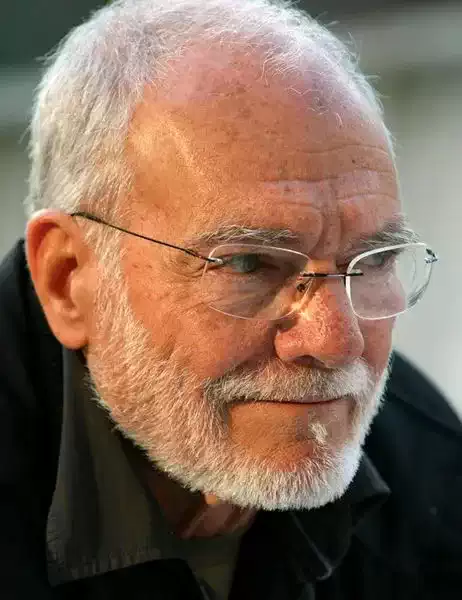
José Luandino Vieira
 AO
AO
José Luandino Vieira was a prominent Angolan writer, known for his profound exploration of the Portuguese language in Angola and for his work that portrays the life, culture, and struggles of the Angolan people. His writing is marked by audacious linguistic innovation, incorporating vocabulary, rhythms, and structures of Angolan speech. Considered one of the greatest names in Angolan and African literature in Portuguese, Luandino Vieira addressed themes such as identity, resistance, memory, and the pursuit of freedom, leaving a literary legacy that continues to influence generations of writers and enrich the Lusophone cultural heritage.
n. 1935-05-04, Ourém
Bio
Identification and basic context
José Vieira Mateus da Graça, better known by the pseudonym José Luandino Vieira, is one of Angola's most important writers. Born in Portugal, but with a deep connection to Angola since childhood, his work is intrinsically linked to Angolan reality, its language, and culture.Childhood and education
José Luandino Vieira was born in Portugal but moved to Angola with his family as a child. His childhood and adolescence in Angola, in contact with the country's social and cultural reality, were decisive in shaping his identity and developing his literary project. His education, largely self-taught regarding the experience of Angolan language and traditions, allowed him to develop a unique sensitivity for writing.Literary career
Luandino Vieira's literary career began with the publication of short stories that quickly attracted attention for their originality and the way they portrayed Angolan society. His best-known work, "Luuanda," is a landmark in African literature in Portuguese, exploring the orality and customs of the people of Luanda. Throughout his career, he published novels, short stories, and chronicles, consolidating his position as one of the great renovators of prose in Portuguese.Work, style, and literary characteristics
Luandino Vieira's work is characterized by profound linguistic innovation, the incorporation of Angolan orality, and the exploration of themes such as identity, oppression, resistance, and the pursuit of freedom. **Main works:** * "Luuanda" (1964): A collection of short stories revealing life in Luanda's musseques, with innovative language. * "O Trado de Fogo" (1967): A novel addressing the struggle for liberation. * "Nós, os do Makulusu" (1974): A novel exploring social relations and Angolan identity. **Dominant themes:** Angolan identity, struggle for independence, life in the musseques, popular culture, memory, ancestry, colonial oppression. **Form and structure:** Experimentation with narrative structure, incorporation of elements of orality, use of multiple points of view. **Poetic resources:** Rhythm of speech, musicality, vivid imagery, metaphors emerging from Angolan reality. **Language and style:** "Quimbundization" of the Portuguese language, i.e., incorporation of vocabulary, syntax, and sonorities from Kimbundu and other Angolan languages, creating a unique and profoundly Angolan style. **Literary movements:** Associated with African Modernism and Neorealism, although his work transcends labels, pioneering the exploration of an authentically Angolan voice in literature.Cultural and historical context
Luandino Vieira lived and wrote during the Portuguese colonial period and Angola's struggle for independence. His work is intimately linked to this historical context, reflecting social tensions, colonial repression, and the aspirations for freedom of the Angolan people. He was one of the founders of the Center for Research in Angolan Linguistics (CILA).Personal life
Luandino Vieira's life was marked by his political activism and dedication to the cause of Angolan independence. He was imprisoned and exiled due to his political convictions. His personal experience profoundly shaped his worldview and his literary work.Recognition and reception
José Luandino Vieira is widely recognized as one of the pillars of Angolan and African literature in Portuguese. He received several awards and distinctions throughout his career, and his work is studied in universities worldwide. He is considered a reference author for understanding Angola's identity and history.Influences and legacy
Luandino Vieira profoundly influenced the entire generation of Angolan and African writers in Portuguese who succeeded him, paving the way for linguistic experimentation and the affirmation of an African literary identity. His legacy lies in the consolidation of a literature that speaks of Africa with its own unmistakable voice.Interpretation and critical analysis
Luandino Vieira's work is the subject of constant critical analysis exploring his linguistic revolution, his profound humanism, and his ability to capture the essence of the Angolan soul. His writing is seen as an act of cultural affirmation and resistance.Curiosities and lesser-known aspects
A curiosity about Luandino Vieira is his passion for football, a theme that sometimes comes through in his narratives. His dedication to documenting and valuing Angolan oral culture is another fundamental aspect of his work, beyond his fictional writing.Death and memory
José Luandino Vieira passed away in 2021. After his death, his literary legacy continues to be celebrated and studied, ensuring his memory and the importance of his work for Portuguese-language literature.Poems
0No poems found
Comments (0)
No comments yet. Be the first to comment.