
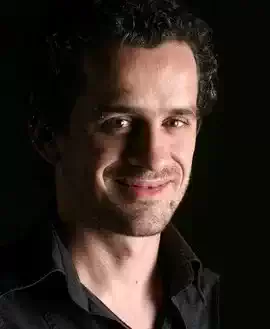
José Luís Peixoto
b. 1974
 PT
PT
PT
José Luís Peixoto is one of the most prominent contemporary Portuguese writers, known for his lyrical prose and his profound exploration of the human condition, memory, and identity. His work spans poetry, novels, and short stories, distinguished by its stylistic originality and its ability to evoke landscapes and emotions intensely, earning him national and international recognition.
n. 1974-09-04, Ponte de Sor
57
Views
Bio
Identification and basic context
José Luís Peixoto was born in Trindade, Lousã, Portugal. He is a multifaceted writer, the author of poetry, prose (novels and short stories), and drama. His work is written in Portuguese.Childhood and education
Peixoto grew up in Lousã, a region that frequently inspires his literary landscapes. His education, although not publicly detailed in terms of specific academic paths, is notable for his deep connection with reading and writing from an early age. He absorbed diverse influences from Portuguese and universal literature, with a style that demonstrates familiarity with different literary currents.Literary career
His literary career began with poetry, but it was with the novel "Nenhum Olhar" (1997) that he gained wider visibility. Since then, he has been consolidating an extensive and diverse body of work, regularly publishing novels, poetry books, and short stories. He has collaborated with various publications and is frequently invited to literary events in Portugal and abroad.Work, style, and literary characteristics
José Luís Peixoto's main works include novels such as "Nenhum Olhar" (1997), "A Padaria" (2000), "O Livro da Recreação", "Galanteios de um Tropeceiro" (2002), "Morreste-me" (2010), and "O Caminho de Regresso" (2013). In poetry, "A Criança em Ruínas" (2001) and "Cicatriz" (2005) stand out. His style is characterized by poetic and lyrical prose, with a unique use of language, exploring rhythm, musicality, and imagistic density. Recurring themes in his work include memory, identity, childhood, the relationship with the past, death, and the human condition. The poetic voice is often introspective, confessional, and universalizing. Peixoto is frequently associated with writing that combines realism with a strong lyrical and symbolic component. His work has been praised for its ability to create dense atmospheres and for its psychological exploration of characters.Work, style, and literary characteristics
Cultural and historical context José Luís Peixoto is part of contemporary Portuguese literature, engaging with other authors of his generation and contributing to the renewal of fiction and poetry in Portugal. The recent historical context, marked by economic and social crises, may underlie some of his reflections on the fragility of existence and the search for meaning.Work, style, and literary characteristics
Personal life Although his personal life is kept private, it is known that his connection to his homeland, Lousã, is an important element reflected in his works, particularly in "Morreste-me," dedicated to his father.Work, style, and literary characteristics
Recognition and reception José Luís Peixoto has received broad national and international recognition. His books have been translated into several languages and have been awarded various literary prizes. He is an author with a strong presence at book fairs and literary events, both in Portugal and in other countries, demonstrating a popularity that transcends academia.Work, style, and literary characteristics
Influences and legacy Peixoto's influences are diverse, encompassing authors from Portuguese and world literature who explore the depth of language and the investigation of the self. His legacy lies in his contribution to contemporary Portuguese-language poetry and prose, marked by a unique lyricism and the exploration of existential themes with unparalleled sensitivity.Work, style, and literary characteristics
Interpretation and critical analysis Peixoto's work is frequently the subject of critical analysis that highlights his ability to renew literary language and address universal themes in an original way. His works invite reflection on memory, loss, and the resilience of the human spirit.Work, style, and literary characteristics
Curiosities and lesser-known aspects A particularly touching aspect of his work is how family and personal memory intertwine with fiction, as in "Morreste-me," a book that deals with the death of his father in a heartfelt and universal way.Work, style, and literary characteristics
Death and memory Peixoto's work, especially "Morreste-me," deals profoundly with the theme of death, not as an end, but as a continuous presence that shapes life and memory.Poems
0No poems found
Comments (0)
Log in
to post a comment.
No comments yet. Be the first to comment.