
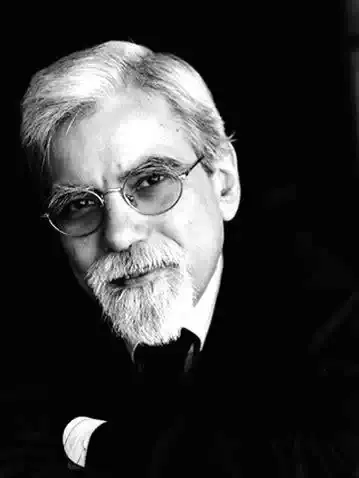
José Manuel Mendes
b. 1948
 AO
AO
AO
José Manuel Mendes was a Portuguese poet, essayist, and literary critic whose work was characterized by reflective depth and the exploration of themes such as the human condition, time, and memory. His writing, often marked by an elegiac tone and careful language, reflects an attentive gaze on existence and its complexity. Mendes also stood out for his academic activity and his contribution to the study of literature.
n. 1948, Luanda · m. , Luanda
53
Views
Bio
Identification and Basic Context
José Manuel Mendes, full name José Manuel Pinto da Costa Mendes, was a Portuguese poet, essayist, university professor, and literary critic. Born in Lisbon on March 12, 1929, he died in the same city on July 13, 2008. He was the son of Manuel Mendes and Maria da Graça Pinto da Costa. His work is predominantly written in Portuguese.Childhood and Education
José Manuel Mendes was born and raised in Lisbon. His academic background was solid, having completed the course in Germanic Philology at the Faculty of Arts of the University of Lisbon. Subsequently, he dedicated himself to university teaching, where he became a reference figure.Literary Career
José Manuel Mendes's literary career began early, with the publication of his first poems in literary magazines. Throughout his life, he published several poetic works, essays, and critical studies, consolidating his position as one of the important names in 20th-century Portuguese literature. He was also an active participant in literary gatherings and cultural events.Work, Style, and Literary Characteristics
José Manuel Mendes's poetic work is marked by a profound reflection on the human condition, time, memory, death, and transcendence. His style is characterized by careful, sometimes dense, language, with an often elegiac and melancholic tone. He uses resources such as metaphor and symbolism to evoke states of mind and existential questions. The poetic form varies, but there is a predilection for structures that allow the development of lyrical thought. His main works include "O Tempo e a Memória" (1960), "Poesia" (1976), and "O Fio de Ariadne" (1983). In addition to poetry, he dedicated himself to literary criticism and the study of literature, with a special interest in modern and contemporary poetry.Cultural and Historical Context
José Manuel Mendes lived and produced most of his work during a period of intense transformations in Portugal, including the end of the Estado Novo and the transition to democracy. He belonged to a generation of intellectuals who, to varying degrees, engaged with the political and cultural challenges of the time. His academic activity also allowed him to follow and influence literary thought.Personal Life
José Manuel Mendes was a university professor, dedicating much of his life to teaching and research in the field of Arts and Humanities. His personal relationships and his worldview, shaped by life experience and study, are reflected in the depth and introspection of his poetic work.Recognition and Reception
José Manuel Mendes was recognized by critics and academics as a prominent poet and scholar in Portuguese literature. He received several accolades, and his name holds a significant place in the history of contemporary Portuguese poetry. His work has been the subject of study and critical analysis, attesting to its importance.Influences and Legacy
José Manuel Mendes's influences include poets from the Portuguese lyrical tradition and European modern poetry. His legacy lies in his contribution to 20th-century Portuguese poetry, both through his poetic work and his work as a critic and professor, influencing generations of students and readers.Interpretation and Critical Analysis
José Manuel Mendes's work has been the subject of critical analysis focused on the exploration of existential themes, the formal quality of his poetry, and his reflection on art and life. Interpretations point to poetry that questions the meaning of existence and the passage of time, through lyrical and introspective language.Curiosities and Lesser-Known Aspects
José Manuel Mendes extensively studied the work of Fernando Pessoa and the poets of Orpheu, which certainly influenced his own writing and his perspective on Portuguese literature.Death and Memory
José Manuel Mendes died in Lisbon in 2008. His memory is preserved through his published work, the studies dedicated to him, and his role as a prominent figure in Portuguese culture.Poems
0No poems found
Comments (0)
Log in
to post a comment.
No comments yet. Be the first to comment.