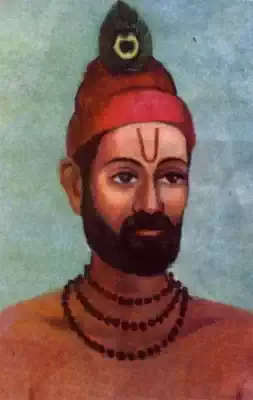
The Moon Shines In My Body
The Moon Shines In My Body
The moon shines in my body,
but my blind eyes cannot see it:
The moon is within me,
and so is the sun.
The unstruck drum of Eternity is sounded within me;
but my deaf ears cannot hear it.
So long as man clamours for the 'I' and the 'Mine',
his works are as naught:
When all love of the 'I' and the 'Mine' is dead,
then the work of the Lord is done.
For work has no other aim than the getting of knowledge:
When that comes, then work is put away.
The flower blooms for the fruit:
when the fruit comes, the flower withers.
The musk is in the deer,
but it seeks it not within itself:
it wanders in quest of grass.
The Guest is inside you, and also inside me
The Guest is inside you, and also inside me
The Guest is inside you, and also inside me;
you know the sprout is hidden inside the seed.
We are all struggling; none of us has gone far.
Let your arrogance go, and look around inside.
The blue sky opens out further and farther,
the daily sense of failure goes away,
the damage I have done to myself fades,
a million suns come forward with light,
when I sit firmly in that world.
I hear bells ringing that no one has shaken,
inside 'love' there is more joy than we know of,
rain pours down, although the sky is clear of clouds,
there are whole rivers of light.
The universe is shot through in all parts by a single sort of love.
How hard it is to feel that joy in all our four bodies!
Those who hope to be reasonable about it fail.
The arrogance of reason has separated us from that love.
With the word 'reason' you already feel miles away.
How lucky Kabir is, that surrounded by all this joy
he sings inside his own little boat.
His poems amount to one soul meeting another.
These songs are about forgetting dying and loss.
They rise above both coming in and going out.
The Last Flight
The Last Flight
Ud Jayega Huns Akela,
Jug Darshan Ka Mela
Jaise Paat Gire Taruvar Se,
Milna Bahut Duhela
Naa Jane Kidhar Girega,
Lageya Pawan Ka Rela
Jub Howe Umur Puri,
Jab Chute Ga Hukum Huzuri
Jum Ke Doot Bade Mazboot,
Jum Se Pada Jhamela
Das Kabir Har Ke Gun Gawe,
Wah Har Ko Paran Pawe
Guru Ki Karni Guru Jayega,
Chele Ki Karni Chela
English Translation
The Swan Will Fly Away All Alone,
Spectacle of the World Will Be a Mere Fair
As the Leaf Falls from the Tree
Is Difficult to Find
Who Knows Where it Will Fall
Once it is Struck with a Gust Of Wind
When Life Span is Complete
Then Listening to Orders, Following Others, Will Be Over
The Messengers of Yama are Very Strong
It's an Entanglement with the Yama
Servant Kabir Praises the Attributes of the Lord
He Finds the Lord Soon
Guru Will Go According to His Doings
The Disciple According to His
The Bride-Soul
The Bride-Soul
When will that day dawn, Mother;
When the One I took birth for
Holds me to His heart with deathless love?
I long for the bliss of divine union.
I long to lose my body, mind, and soul
And become one with my husband.
When will that day dawn, Mother?
Husband, fulfil now the longing I have had
Since before the universe was made.
Enter me completely and release me.
In terrible lonely years without You
I yearn and yearn for You.
I spend sleepless nights hunting for You,
Gazing into darkness after You,
With unblinking hopeless eyes.
When will that day dawn, Mother?
When will my Lord hold me to His heart?
My empty bed, like a hungry tigress,
Devours me whenever I try to sleep.
Listen to your slave's prayer -
Come and put out this blaze of agony
That consumes my soul and body.
When will He hold me to His heart?
When will that day dawn, Mother?
Kabir sings, "If I ever meet You, my Beloved,
I'll cling to you so fiercely You melt into me;
I'll sing from inside You songs of union,
World-dissolving songs of Eternal Bliss."
Tentacles of Time
Tentacles of Time
Sadho Ye Murdon Ka Gaon
Peer Mare, Pygambar Mari Hain
Mari Hain Zinda Jogi
Raja Mari Hain, Parja Mari Hain
Mari Hain Baid Aur Rogi
Chanda Mari Hain, Suraj Mari Hain
Mari Hain Dharni Akasa
Chaudan Bhuvan Ke Chaudhry Mari Hain
In Hun Ki Ka Asa
Nauhun Mari Hain, Dus Hun Mari Hain
Mari Hain Sahaj Athasi
Tethis Koti Devata Mari Hain
Badi Kaal Ki Bazi
Naam Anam Anant Rehat Hai
Duja Tatva Na Hoi
Kahe Kabir Suno Bhai Sadho
Bhatak Maro Mat Koi
English Translation
Oh Sadhu This is the Village of the Dead
The Saints Have Died, The God-Messengers Die
The Life-Filled Yogis Die Too |
The Kings Die, The Subjects Die
The Healers and the Sick Die Too ||
The Moon Dies, The Sun Dies
The Earth and Sky Die Too |
Even the Caretakers of the Fourteen Worlds Die
Why Hope For Any of These ||
The Nine Die, The Ten Die
The Eighty Eight Die Easily Too |
The Thirty Three Crore Devatas Die
It's a Big Game of Time ||
The Un-Named Naam Lives Without Any End
There is No Other Truth ||
Says Kabir Listen Oh Sadhu
Don't Get Lost and Die ||
Oh friend, I love you, think this over
Oh friend, I love you, think this over
Oh friend, I love you, think this over
carefully! If you are in love,
then why are you asleep?
If you have found him,
give yourself to him, take him.
Why do you lose track of him again and again?
If you are about to fall into heavy sleep anyway,
why waste time smoothing the bed
and arranging the pillows?
Kabir will tell you the truth: this is what love is like:
suppose you had to cut your head off
and give it to someone else,
what difference would that make?
Tell me Brother
Tell me Brother
Tell me, Brother, how can I renounce Maya?
When I gave up the tying of ribbons, still I tied my garment about me:
When I gave up tying my garment, still I covered my body in its folds.
So, when I give up passion, I see that anger remains;
And when I renounce anger, greed is with me still;
And when greed is vanquished, pride and vainglory remain;
When the mind is detached and casts Maya away, still it clings to the letter.
Kabîr says, 'Listen to me, dear Sadhu! the true path is rarely found.'
O servant where dost thou seek me
O servant where dost thou seek me
O servant, where dost thou seek Me?
O servant, where dost thou seek Me?
Lo! I am beside thee.
I am neither in temple nor in mosque:
I am neither in Kaaba nor in Kailash:
Neither am I in rites and ceremonies,
nor in Yoga and renunciation.
If thou art a true seeker, thou shalt at once see Me:
thou shalt meet Me in a moment of time.
Kabir says, ' O Sadhu! God is the breath of all breath.'
O lord Increate, who will serve Thee?
O lord Increate, who will serve Thee?
O lord Increate, who will serve Thee?
Every votary offers his worship to the God of his own creation:
each day he receives service-
None seek Him, the Perfect:
Brahma, the Indivisible Lord.
They believe in ten Avatars;
but no Avatar can be the Infinite Spirit,
for he suffers the results of his deeds:
The Supreme One must be other than this.
The Yogi, the Sanyasi,
the Ascetics, are disputing one with another:
Kabîr says, 'O brother! he who has seen that radiance of love,
he is saved.'
My body is flooded
My body is flooded
My body is flooded
With the flame of Love.
My soul lives in
A furnace of bliss.
Love's fragrance
Fills my mouth,
And fans through all things
With each outbreath.