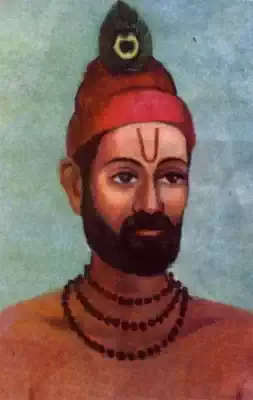
Poems List

How do you

How do you

How do you,
Asks the chief of police,
Patrol a city
Where the butcher shops
Are guarded by vultures;
Where bulls get pregnant,
Cows are barren,
And calves give milk
Three times a day;
Where mice are boatmen
And tomcats the boats
They row;
Where frogs keep snakes
As watchdogs,
And jackals
Go after lions?


Does anyone know
What I’m talking about?
Says Kabir.
406

His Death In Benares

His Death In Benares

His death in Benares
Won't save the assassin
From certain hell,


Any more than a dip
In the Ganges will send
Frogs—or you—to paradise.


My home, says Kabir,
Is where there's no day, no night,
And no holy book in sight


To squat on our lives.
364

Having Crossed The River

Having Crossed The River

Having crossed the river,
where will you go, O friend?


There's no road to tread,
No traveler ahead,
Neither a beginning, nor an end.


There's no water, no boat, no boatman, no cord;
No earth is there, no sky, no time, no bank, no ford.


You have forgotten the Self within,
Your search in the void will be in vain;
In a moment the life will ebb
And in this body you won't remain.


Be ever conscious of this, O friend,
You've to immerse within your Self;
Kabir says, salvation you won't then need,
For what you are, you would be indeed.
343

Hey brother, why do you want me to talk?

Hey brother, why do you want me to talk?

Hey brother, why do you want me to talk?
Talk and talk and the real things get lost.

Talk and talk and things get out of hand.
Why not stop talking and think?

If you meet someone good, listen a little, speak;
If you meet someone bad, clench up like a fist.

Talking with a wise man is a great reward.
Talking with a fool? A waste.

Kabir says: A pot makes noise if it's half full,
But fill it to the brim - no sound.
343

Friend, Wake Up! Why Do You Go On Sleeping?

Friend, Wake Up! Why Do You Go On Sleeping?

Friend, wake up! Why do you go on sleeping?
The night is over— do you want to lose the day
the same way?
Other women who managed to get up early have

already found an elephant or a jewel...
so much was lost already while you slept...
and that was so unnecessary!

The one who loves you understood, but you did not.
You forgot to make a place in your bed next to you.
Instead you spent your life playing.
In your twenties you did not grow
because you did not know who your Lord was.
Wake up! Wake up! There's no one in your bed—
He left you during the long night.


Kabir says: The only woman awake is the woman
who has heard the flute!
502

Do Not Go To The Garden Of Flowers

Do Not Go To The Garden Of Flowers

Do not go to the garden of flowers!
O Friend! go not there;
In your body is the garden of flowers.


Take your seat on the thousand petals of the lotus,
and there gaze on the Infinite Beauty.
271

Are you looking for me?

Are you looking for me?

Are you looking for me? I am in the next seat.
My shoulder is against yours.
you will not find me in the stupas, not in Indian shrine
rooms, nor in synagogues, nor in cathedrals:
not in masses, nor kirtans, not in legs winding
around your own neck, nor in eating nothing but
vegetables.


When you really look for me, you will see me
instantly -you
will find me in the tiniest house of time.


Kabir says: Student, tell me, what is God?
He is the breath inside the breath.

347

Brother, I've Seen Some

Brother, I've Seen Some

Brother, I've seen some
Astonishing sights:
A lion keeping watch
Over pasturing cows;
A mother delivered
After her son was;
A guru prostrated
Before his disciple;
Fish spawning
On treetops;
A cat carrying away
A dog;
A gunny-sack
Driving a bullock-cart;
A buffalo going out to graze,
Sitting on a horse;
A tree with its branches in the earth,
Its roots in the sky;
A tree with flowering roots.

This verse, says Kabir,
Is your key to the universe.
If you can figure it out.
437

Abode of the Beloved

Abode of the Beloved

Oh Companion That Abode Is Unmatched,
Where My Complete Beloved Is.


In that Place There Is No Happiness or Unhappiness,
No Truth or Untruth
Neither Sin Nor Virtue.
There Is No Day or Night, No Moon or Sun,
There Is Radiance Without Light.


There Is No Knowledge or Meditation
No Repetition of Mantra or Austerities,
Neither Speech Coming From Vedas or Books.
Doing, Not-Doing, Holding, Leaving
All These Are All Lost Too In This Place.


No Home, No Homeless, Neither Outside or Inside,
Micro and Macrocosm Are Non-Existent.
Five Elemental Constituents and the Trinity Are Both Not There
Witnessing Un-struck Shabad Sound is Also Not There.


No Root or Flower, Neither Branch or Seed,
Without a Tree Fruits are Adorning,
Primordial Om Sound, Breath-Synchronized Soham,
This and That - All Are Absent, The Breath Too Unknown


Where the Beloved Is There is Utterly Nothing
Says Kabir I Have Come To Realize.
Whoever Sees My Indicative Sign
Will Accomplish the Goal of Liberation.
356

Comments (0)

Log in to post a comment.

NoComments

Identification and basic context

Full name: Kabir. He is widely believed to have been born in northern India, likely around the city of Varanasi. He was a mystic, poet, and social reformer. His identity and religious affiliation are subjects of historical debate; he is claimed by both Hindu and Muslim traditions, and his teachings are central to Sikhism. He wrote in the vernacular Hindi (Braj Bhasha) and other dialects. He lived during a period of significant religious and cultural interaction in India.

Childhood and education

According to tradition, Kabir was born to a Muslim weaver family or abandoned and found by a Muslim couple. He may have been influenced by the teachings of the Hindu mystic Ramananda, though the exact nature of their relationship is debated. His education was likely informal, focused on spiritual teachings and the oral tradition rather than formal schooling. His verses reveal a deep understanding of both Hindu and Islamic philosophical concepts, though he often satirized religious rituals and dogma from both traditions.

Literary trajectory

Kabir's literary output consists primarily of devotional poems, songs, and aphorisms, known as *dohas* (couplets) and *padas* (stanzas). His work was not written down in a systematic way during his lifetime but was transmitted orally and later compiled into various collections, most notably the *Kabir Granthavali* and the *Bijak*. His trajectory was that of a spiritual teacher whose verses spread widely through popular devotion and teaching.

Works, style, and literary characteristics

Kabir's works are characterized by their directness, simplicity, and profound spiritual insight. He used everyday metaphors and vernacular language to convey complex theological ideas, making them accessible to the common people. Major themes include the unity of God, the illusory nature of the material world, the importance of inner spiritual experience over external rituals, the critique of the caste system, and the brotherhood of humanity. His style is often direct, sometimes provocative, and marked by a lyrical quality. He employed irony and satire to challenge religious hypocrisy. His innovations lay in his ability to synthesize diverse spiritual traditions and express them in a widely understandable form, advocating for a path of direct devotion (*bhakti*).

Cultural and historical context

Kabir lived during the 15th century, a period marked by the influence of the Bhakti movement, which emphasized devotion to a personal God, and the presence of Sufi mystics in India. This era saw considerable interaction and occasional tension between Hindu and Islamic traditions. Kabir's teachings resonated with a desire for spiritual unity and a critique of the rigid social hierarchies of the time, particularly the caste system. He was a contemporary of other Bhakti saints and challenged the religious establishments of both Hinduism and Islam.

Personal life

Details about Kabir's personal life are scarce and often embellished by legend. It is generally accepted that he was married and had a son, named Kamal. His life as a weaver provided him with a connection to the common people and a perspective from which to critique societal structures. His spiritual path was one of intense personal devotion and a rejection of worldly attachments.

Recognition and reception

Kabir's teachings and poetry gained immense popularity among the masses and were embraced by various religious communities. He is revered as a saint and a guru. His verses form a significant part of the Sikh holy scripture, the Guru Granth Sahib. The Kabir Panth, a religious sect founded in his name, continues to uphold his teachings. His critical stance towards religious dogma and the caste system also garnered him admiration and, at times, opposition from orthodox religious authorities.

Influences and legacy

Kabir was influenced by the devotional traditions of the Bhakti movement and possibly by Sufi mysticism. His own influence has been enormous, shaping the course of Indian spirituality and poetry. He is seen as a precursor to Sikhism and a major figure in the Bhakti tradition. His emphasis on interfaith harmony and direct spiritual experience continues to inspire poets, mystics, and social reformers in India and beyond.

Interpretation and critical analysis

Kabir's work is interpreted as a powerful call for religious pluralism, social justice, and direct spiritual realization. His critique of ritualism and dogma is seen as a timeless appeal for authenticity in faith. Scholars analyze his verses for their philosophical depth, linguistic innovation, and impact on Indian religious and cultural history.

Curiosities and lesser-known aspects

Legends surround Kabir's death, with some claiming that his Hindu and Muslim followers fought over his body, only for it to turn into flowers. This story symbolizes his ability to bridge religious divides. His simple, direct language and his bold pronouncements often surprised and challenged his contemporaries.

Death and memory

While the exact circumstances of Kabir's death are uncertain, it is believed to have occurred in Maghar, near Gorakhpur. His memory is kept alive through the Kabir Panth, the compilation of his verses, and his continued relevance in discussions about spirituality, tolerance, and social reform.