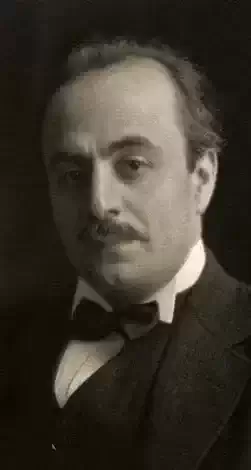
Khalil Gibran

Khalil Gibran

1883–1931 · lived 48 years LB LB

Khalil Gibran was a Lebanese-American poet, writer, and philosopher. He is best known for his philosophical essays and prose poetry, particularly his iconic work "The Prophet." Gibran's writings explore themes of love, freedom, spirituality, and the human condition with a distinctive blend of Eastern and Western thought. His poetic style is characterized by its lyrical beauty, profound wisdom, and universal appeal, making him one of the most widely read poets of the 20th century.

n. 1883-01-06, Bsharri · m. 1931-04-10, Nova Iorque

10,453 Views

Vision X

Vision X
There in the middle of the field, by the side of a crystalline stream, I saw a bird-cage
whose rods and hinges were fashioned by an expert's hands. In one corner lay a dead
bird, and in another were two basins -- one empty of water and the other of seeds. I
stood there reverently, as if the lifeless bird and the murmur of the water were worthy
of deep silence and respect -- something worth of examination and meditation by the
heard and conscience.
As I engrossed myself in view and thought, I found that the poor creature had died of
thirst beside a stream of water, and of hunger in the midst of a rich field, cradle of life;
like a rich man locked inside his iron safe, perishing from hunger amid heaps of gold.
Before my eyes I saw the cage turned suddenly into a human skeleton, and the dead
bird into a man's heart which was bleeding from a deep wound that looked like the lips
of a sorrowing woman. A voice came from that wound saying, "I am the human heart,
prisoner of substance and victim of earthly laws.
"In God's field of Beauty, at the edge of the stream of life, I was imprisoned in the cage
of laws made by man.
"In the center of beautiful Creation I died neglected because I was kept from enjoying
the freedom of God's bounty.
"Everything of beauty that awakens my love and desire is a disgrace, according to
man's conceptions; everything of goodness that I crave is but naught, according to his
judgment.
"I am the lost human heart, imprisoned in the foul dungeon of man's dictates, tied with
chains of earthly authority, dead and forgotten by laughing humanity whose tongue is
tied and whose eyes are empty of visible tears."
All these words I heard, and I saw them emerging with a stream of ever thinning blood
from that wounded heart.
More was said, but my misted eyes and crying should prevented further sight or
hearing.
Read full poem
Bio

Identification and basic context

Full name: Gibran Khalil Gibran. Date and place of birth: January 6, 1883, Bsharri, Mount Lebanon Mutasarrifate (Ottoman Syria). Family background, social class, and cultural context of origin: Born into a Maronite Christian family in a small village in mountainous Lebanon. His family experienced significant poverty. Nationality and language(s) of writing: Lebanese-American. He wrote primarily in Arabic and English. Historical context in which they lived: Lived through the late Ottoman Empire, World War I, and the establishment of modern nation-states in the Middle East and the rise of American multiculturalism.

Childhood and education

Family background and social environment: His father was a tax collector. The family faced financial hardship and social upheaval, leading to his mother's decision to emigrate to the United States. Formal education and self-education: Limited formal schooling in Lebanon. In Boston, he attended the Salvation Army's mission school and later the public school system. He was largely self-taught, avidly reading and absorbing knowledge from diverse sources. Early influences (readings, culture, religion, politics): Influenced by the Bible, Arabic literary classics, and the spiritual and philosophical currents in Boston's intellectual circles. His Maronite Christian upbringing also played a role. Literary, philosophical, or artistic movements absorbed: Exposed to Symbolism, Romanticism, and Transcendentalism. He was also deeply connected to the Arabic literary revival (Nahda). Significant events in youth: His mother's emigration to the United States in 1895 and his return to Lebanon for further education are pivotal.

Literary trajectory

Beginning of writing (when and how it started): Began writing poetry and prose in Arabic at a young age in Boston and Lebanon. His early works were published in Arabic newspapers. Development over time (phases, changes in style): His early Arabic works were more traditional. His later English works, especially "The Prophet," developed a unique, mystical, and parabolic style. Chronological evolution of the work: Moved from Arabic literary circles to establishing himself as a major figure in American literature, bridging cultures. Contributions to magazines, newspapers, and anthologies: Published in Arabic periodicals in Egypt and the United States, and later in American magazines. He was a key figure in the New York Pen League (al-Rabita al-Qalamiyya). Activity as a critic, translator, or editor: Edited Arabic magazines and wrote critical essays on Arabic literature and culture.

Works, style, and literary characteristics

Major works with dates and context of production: "The Madman" (1918), "The Forerunner" (1920), "The Prophet" (1923), "The Garden of the Prophet" (1933), "Jesus, the Son of Man" (1928). Dominant themes — love, death, time, nature, identity, homeland, spirituality, etc.: Love, life, death, freedom, fate, the soul, nature, spirituality, human relationships, and the search for inner peace and wisdom. Form and structure — use of the sonnet, free verse, fixed forms, metrical experimentation: Prose poetry, parabolic style, lyrical essays, and aphorisms. His structures are often free-flowing and rhetorical. Poetic devices (metaphor, rhythm, musicality): Rich in metaphors, similes, personification, and symbolic imagery. His language has a rhythmic, almost incantatory quality. Tone and poetic voice — lyrical, satirical, elegiac, epic, ironic, confessional: Often prophetic, mystical, didactic, philosophical, and deeply compassionate. His voice is authoritative yet gentle. Poetic voice (personal, universal, fragmented, etc.): A profoundly universal voice that speaks to the common human experience, often framed through personal reflection and spiritual insight. Language and style — vocabulary, imagery density, preferred rhetorical devices: Elegant, often elevated language. Dense with evocative imagery and philosophical concepts. Master of symbolic narrative and direct address. Formal or thematic innovations introduced into literature: Successfully blended Eastern mysticism with Western literary forms, creating a unique genre of philosophical prose poetry. Relationship with tradition and modernity: Synthesized traditional Arabic literary forms and spiritual traditions with contemporary Western philosophical and literary trends. Associated literary movements (e.g., symbolism, modernism): Symbolism, Romanticism, and his unique brand of philosophical mysticism. Lesser-known or unpublished works: Numerous early Arabic works and unpublished manuscripts exist.

Cultural and historical context

Relationship with historical events (wars, revolutions, regimes): His life spanned periods of significant political change in the Middle East and a growing awareness of Arab identity abroad. Relationship with other writers or literary circles: A central figure in the New York Pen League (al-Rabita al-Qalamiyya), a group of Arab émigré writers who sought to reform Arabic literature. He was also connected to American literary figures. Generation or movement to which they belong: A leading figure of the Mahjar (Arabic diaspora) literature and a key influence on the Arabic literary renaissance. Political or philosophical stance: Advocated for Arab unity and independence, and for a universal spiritual philosophy that transcended religious and national boundaries. Influence of society and culture on the work: The experience of emigration, the clash of cultures, and his spiritual explorations deeply shaped his literary output. Dialogues and tensions with contemporaries: Engaged with both Arab literary figures and American intellectuals, navigating cultural and artistic differences. Critical reception during life vs. posthumous recognition: Gained significant recognition during his lifetime, but "The Prophet" achieved massive posthumous popularity, becoming a global phenomenon.

Personal life

Significant emotional and family relationships and how they shaped the work: His complex relationship with Mary Haskell, his patron and intellectual companion, was highly influential. The loss of his mother and siblings deeply affected him. Friendships and literary rivalries: Close friendships within the Pen League. While not marked by overt rivalries, he engaged in intellectual debates. Personal experiences and crises, illnesses, or conflicts: Suffered from depression and physical ailments. His early life was marked by extreme poverty and displacement. Parallel professions (if they did not live solely from poetry): He supported himself through writing and lectures, and later through sales of his books. Religious, spiritual, or philosophical beliefs: Developed a syncretic spiritual philosophy, drawing from Christianity, Islam, and Eastern mysticism, emphasizing the unity of all existence. Political positions and civic engagement: Active in advocating for Lebanese independence and Arab self-determination.

Recognition and reception

Place in national and international literature: A major figure in both Arabic and American literature. "The Prophet" is one of the best-selling books of the 20th century worldwide. Awards, distinctions, and institutional recognition: His primary recognition came through the immense popularity and enduring influence of his work, rather than formal awards. Popularity vs. academic recognition: Extremely popular among the general public, while also being studied academically for its philosophical and literary merits.

Influences and legacy

Authors who influenced them: The Bible, Plato, Nietzsche, Emerson, and Arabic poets like Abu al-Ala al-Ma'arri. Poets and movements they influenced: The Arabic diaspora literary movement, poets worldwide seeking spiritual and philosophical expression, and New Age spirituality. Impact on national and world literature and on later generations of poets: Revolutionized Arabic prose and inspired countless writers with his unique blend of mysticism and accessible philosophy. His work continues to resonate with readers globally. Inclusion in the literary canon: Considered a classic of both Arabic and American literature. Translations and international dissemination: "The Prophet" has been translated into over 50 languages. Adaptations (music, theater, film): His works have been adapted into music, films, and theatrical productions. Academic studies dedicated to the work: Extensive academic research focuses on his literary style, philosophical content, and cultural significance.

Interpretation and critical analysis

Possible readings of the work: His writings are often interpreted as spiritual guides, philosophical reflections on life, and explorations of the human psyche. They can be seen as a call for self-discovery and universal love. Philosophical and existential themes: Explores the duality of human nature, the search for meaning, the interconnectedness of all beings, and the nature of God and the universe. Controversies or critical debates: Debates sometimes arise regarding the simplicity of his philosophical message, the extent of his originality, and his role as a cultural icon versus a literary giant.

Curiosities and lesser-known aspects

Lesser-known aspects of personality: Despite his gentle persona, he was a sharp observer of society and could be critical of hypocrisy. Contradictions between life and work: The spiritual themes in his work contrast with the often turbulent and challenging circumstances of his personal life. Significant or anecdotal episodes that illuminate the author’s profile: His early return to Lebanon for education after his initial emigration to the US was driven by a deep desire for knowledge and cultural grounding. Objects, places, or rituals associated with poetic creation: His writings often evoke biblical imagery and the landscapes of his native Lebanon. Writing habits: He worked meticulously on his texts, often revising them extensively. Curious episodes: He was known for his striking appearance, often wearing traditional Lebanese attire, which contributed to his mystique. Manuscripts, diaries, or correspondence: His extensive correspondence, particularly with Mary Haskell, provides invaluable insights into his creative process and philosophical development.

Death and memory

Circumstances of death: Died of liver cirrhosis and tuberculosis in New York City. Posthumous publications: Numerous works, including "The Garden of the Prophet" and "The Earth Gods," were published posthumously.

Poems

25

Crime and Punishment chapter XII

Crime and Punishment chapter XII
Then one of the judges of the city stood forth and said, "Speak to us of Crime and
Punishment."
And he answered saying:
It is when your spirit goes wandering upon the wind,
That you, alone and unguarded, commit a wrong unto others and therefore unto
yourself.
And for that wrong committed must you knock and wait a while unheeded at the gate
of the blessed.
Like the ocean is your god-self;
It remains for ever undefiled.
And like the ether it lifts but the winged.
Even like the sun is your god-self;
It knows not the ways of the mole nor seeks it the holes of the serpent.
But your god-self does not dwell alone in your being.
Much in you is still man, and much in you is not yet man,
But a shapeless pigmy that walks asleep in the mist searching for its own awakening.
And of the man in you would I now speak.
For it is he and not your god-self nor the pigmy in the mist, that knows crime and the
punishment of crime.
Oftentimes have I heard you speak of one who commits a wrong as though he were
not one of you, but a stranger unto you and an intruder upon your world.
But I say that even as the holy and the righteous cannot rise beyond the highest which
is in each one of you,
So the wicked and the weak cannot fall lower than the lowest which is in you also.
And as a single leaf turns not yellow but with the silent knowledge of the whole tree,
So the wrong-doer cannot do wrong without the hidden will of you all.
Like a procession you walk together towards your god-self.
You are the way and the wayfarers.
And when one of you falls down he falls for those behind him, a caution against the
stumbling stone.


Ay, and he falls for those ahead of him, who though faster and surer of foot, yet
removed not the stumbling stone.
And this also, though the word lie heavy upon your hearts:
The murdered is not unaccountable for his own murder,
And the robbed is not blameless in being robbed.
The righteous is not innocent of the deeds of the wicked,
And the white-handed is not clean in the doings of the felon.
Yea, the guilty is oftentimes the victim of the injured,
And still more often the condemned is the burden-bearer for the guiltless and
unblamed.
You cannot separate the just from the unjust and the good from the wicked;
For they stand together before the face of the sun even as the black thread and the
white are woven together.
And when the black thread breaks, the weaver shall look into the whole cloth, and he
shall examine the loom also.
If any of you would bring judgment the unfaithful wife,
Let him also weight the heart of her husband in scales, and measure his soul with
measurements.
And let him who would lash the offender look unto the spirit of the offended.
And if any of you would punish in the name of righteousness and lay the ax unto the
evil tree, let him see to its roots;
And verily he will find the roots of the good and the bad, the fruitful and the fruitless,
all entwined together in the silent heart of the earth.
And you judges who would be just,
What judgment pronounce you upon him who though honest in the flesh yet is a thief
in spirit?
What penalty lay you upon him who slays in the flesh yet is himself slain in the spirit?
And how prosecute you him who in action is a deceiver and an oppressor,
Yet who also is aggrieved and outraged?
And how shall you punish those whose remorse is already greater than their misdeeds?


Is not remorse the justice which is administered by that very law which you would fain
serve?
Yet you cannot lay remorse upon the innocent nor lift it from the heart of the guilty.
Unbidden shall it call in the night, that men may wake and gaze upon themselves.
And you who would understand justice, how shall you unless you look upon all deeds in
the fullness of light?
Only then shall you know that the erect and the fallen are but one man standing in
twilight between the night of his pigmy-self and the day of his god-self,
And that the corner-stone of the temple is not higher than the lowest stone in its
foundation.
311

Beauty XXV

Beauty XXV
And a poet said, "Speak to us of Beauty."
Where shall you seek beauty, and how shall you find her unless she herself be your
way and your guide?
And how shall you speak of her except she be the weaver of your speech?
The aggrieved and the injured say, "Beauty is kind and gentle.
Like a young mother half-shy of her own glory she walks among us."
And the passionate say, "Nay, beauty is a thing of might and dread.
Like the tempest she shakes the earth beneath us and the sky above us."
The tired and the weary say, "beauty is of soft whisperings. She speaks in our spirit.
Her voice yields to our silences like a faint light that quivers in fear of the shadow."
But the restless say, "We have heard her shouting among the mountains,
And with her cries came the sound of hoofs, and the beating of wings and the roaring
of lions."
At night the watchmen of the city say, "Beauty shall rise with the dawn from the east."
And at noontide the toilers and the wayfarers say, "we have seen her leaning over the
earth from the windows of the sunset."
In winter say the snow-bound, "She shall come with the spring leaping upon the hills."
And in the summer heat the reapers say, "We have seen her dancing with the autumn
leaves, and we saw a drift of snow in her hair."
All these things have you said of beauty.
Yet in truth you spoke not of her but of needs unsatisfied,
And beauty is not a need but an ecstasy.
It is not a mouth thirsting nor an empty hand stretched forth,
But rather a heart enflamed and a soul enchanted.
It is not the image you would see nor the song you would hear,
But rather an image you see though you close your eyes and a song you hear though
you shut your ears.
It is not the sap within the furrowed bark, nor a wing attached to a claw,
But rather a garden forever in bloom and a flock of angels for ever in flight.


People of Orphalese, beauty is life when life unveils her holy face.
But you are life and you are the veil.
Beauty is eternity gazing at itself in a mirror.
But you are eternity and you are the mirror.
359

Buying and Selling chapter XI

Buying and Selling chapter XI
And a merchant said, "Speak to us of Buying and Selling."
And he answered and said:
To you the earth yields her fruit, and you shall not want if you but know how to fill your
hands.
It is in exchanging the gifts of the earth that you shall find abundance and be satisfied.
Yet unless the exchange be in love and kindly justice, it will but lead some to greed
and others to hunger.
When in the market place you toilers of the sea and fields and vineyards meet the
weavers and the potters and the gatherers of spices, -
Invoke then the master spirit of the earth, to come into your midst and sanctify the
scales and the reckoning that weighs value against value.
And suffer not the barren-handed to take part in your transactions, who would sell
their words for your labour.
To such men you should say,
"Come with us to the field, or go with our brothers to the sea and cast your net;
For the land and the sea shall be bountiful to you even as to us."
And if there come the singers and the dancers and the flute players, - buy of their gifts
also.
For they too are gatherers of fruit and frankincense, and that which they bring, though
fashioned of dreams, is raiment and food for your soul.
And before you leave the marketplace, see that no one has gone his way with empty
hands.
For the master spirit of the earth shall not sleep peacefully upon the wind till the needs
of the least of you are satisfied.
314

Sail your smile into the air; it will reach and enliven me!

Sail your smile into the air; it will reach and enliven me!
Breathe your fragrance into the air; it will sustain me!
Where are you, me beloved?
Oh, how great is Love!
And how little am I!
865

A Poet's Death is His Life IV

A Poet's Death is His Life IV
The dark wings of night enfolded the city upon which Nature had spread a pure white
garment of snow; and men deserted the streets for their houses in search of warmth,
while the north wind probed in contemplation of laying waste the gardens. There in the
suburb stood an old hut heavily laden with snow and on the verge of falling. In a dark
recess of that hovel was a poor bed in which a dying youth was lying, staring at the
dim light of his oil lamp, made to flicker by the entering winds. He a man in the spring
of life who foresaw fully that the peaceful hour of freeing himself from the clutches of
life was fast nearing. He was awaiting Death's visit gratefully, and upon his pale face
appeared the dawn of hope; and on his lops a sorrowful smile; and in his eyes
forgiveness.
He was poet perishing from hunger in the city of living rich. He was placed in the
earthly world to enliven the heart of man with his beautiful and profound sayings. He
as noble soul, sent by the Goddess of Understanding to soothe and make gentle the
human spirit. But alas! He gladly bade the cold earth farewell without receiving a smile
from its strange occupants.
He was breathing his last and had no one at his bedside save the oil lamp, his only
companion, and some parchments upon which he had inscribed his heart's feeling. As
he salvaged the remnants of his withering strength he lifted his hands heavenward; he
moved his eyes hopelessly, as if wanting to penetrate the ceiling in order to see the
stars from behind the veil clouds.
And he said, "Come, oh beautiful Death; my soul is longing for you. Come close to me
and unfasten the irons life, for I am weary of dragging them. Come, oh sweet Death,
and deliver me from my neighbors who looked upon me as a stranger because I
interpret to them the language of the angels. Hurry, oh peaceful Death, and carry me
from these multitudes who left me in the dark corner of oblivion because I do not bleed
the weak as they do. Come, oh gentle Death, and enfold me under your white wings,
for my fellowmen are not in want of me. Embrace me, oh Death, full of love and
mercy; let your lips touch my lips which never tasted a mother's kiss, not touched a
sister's cheeks, not caresses a sweetheart's fingertips. Come and take me, by beloved
Death."
Then, at the bedside of the dying poet appeared an angel who possessed a
supernatural and divine beauty, holding in her hand a wreath of lilies. She embraced
him and closed his eyes so he could see no more, except with the eye of his spirit. She
impressed a deep and long and gently withdrawn kiss that left and eternal smile of
fulfillment upon his lips. Then the hovel became empty and nothing was lest save
parchments and papers which the poet had strewn with bitter futility.
Hundreds of years later, when the people of the city arose from the diseases slumber
of ignorance and saw the dawn of knowledge, they erected a monument in the most
beautiful garden of the city and celebrated a feast every year in honor of that poet,
whose writings had freed them. Oh, how cruel is man's ignorance!
348

Quotes

40

Videos

50

Comments (0)

Share
Log in to post a comment.

No comments yet. Be the first to comment.