
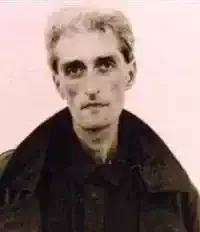
Lois Pereiro
 ES
ES
Lois Pereiro was a Galician poet and activist whose work is distinguished by its irreverence, social criticism, and a deep love for his land and language. His poetry, often marked by biting humor and colloquial language, addresses themes such as Galician identity, political repression, social injustice, and the beauty of everyday life, always with a sharp eye and an unwavering commitment to the emancipation of his people. Pereiro embodies the rebellious spirit and passion for Galician culture, leaving a legacy of resistance and authenticity.
n. 1958-02-16, Monforte de Lemos · m. 1996-05-24, Corunha
Bio
Identification and basic context
Lois Pereiro (full name: Luís Pereiro Rodríguez) was a Galician poet, prose writer, and political activist. He was born in Monforte de Lemos, Galicia, and died in Ferrol. He is an emblematic figure of social and resistance poetry in contemporary Galician literature.Childhood and education
Pereiro had a childhood marked by the social and political transformations of Francoist Spain. His education, although not detailed in public sources regarding his formal literary education, was deeply shaped by his life experiences, Galician culture, and his political involvement from a young age. Readings of authors who addressed social and identity themes were crucial for the development of his thought and writing.Literary career
Lois Pereiro's literary career began to take shape with his participation in cultural and political circles that defended the Galician language and culture. His work, published in various magazines and anthologies, and posthumously collected in books, is characterized by a constant evolution in his social commitment and the exploration of Galician identity. He was an active defender of the Galician language, using it as a tool for expression and cultural affirmation.Work, style, and literary characteristics
Lois Pereiro's work is vast and multifaceted, including poetry, prose, and political commentary. His main poetic works explore themes such as Galician identity, language, emigration, oppression, memory, and resistance. His style is marked by orality, black humor, irony, scathing social criticism, and a deep, heartfelt lyricism. He frequently uses colloquial language and references to everyday Galician elements, bringing his poetry closer to the people. The poetic form varies, but there is a strong inclination towards free verse and structures that reflect the urgency of his message. The tone is often combative and passionate, but also capable of touching delicacy.Cultural and historical context
Lois Pereiro lived most of his life under the Franco dictatorship, a period of strong political and cultural repression in Spain, especially in regions like Galicia, where the Galician language and culture were marginalized. He was a central figure in the struggle for the recovery of Galician identity, actively participating in clandestine cultural and political movements. His generation, often referred to as "the 1950s generation" or "the 1960s generation," faced censorship and clandestinity but contributed significantly to the revitalization of Galician literature. His work engages with that of other authors who defended Galician culture, in a context of great intellectual effervescence and the fight for democracy.Personal life
Lois Pereiro's personal life was marked by his political activism and his dedication to the Galician cause. His family and romantic relationships, although not widely detailed publicly, shaped his worldview and social sensitivity. His friendships were often linked to the intellectual and militant milieu, and his political convictions were a pillar of his existence. His parallel profession, often in manual labor or cultural-related jobs, allowed him to maintain his independence while dedicating himself to his passion for literature and politics.Recognition and reception
Although during his lifetime he did not receive the broad institutional recognition his work deserved, Lois Pereiro is today considered one of the most important poets in contemporary Galician literature. His work is increasingly studied and valued, both in Galicia and in other academic contexts. Posthumous recognition has been growing, with the publication and re-edition of his texts, and his figure is a symbol of Galician resistance and identity.Influences and legacy
Lois Pereiro was influenced by authors who addressed identity, social criticism, and resistance poetry. His legacy is immense for Galician literature, inspiring generations of poets, writers, and activists to defend the Galician language, culture, and identity. His work is a landmark in social intervention poetry and in the affirmation of the culture of a marginalized people.Interpretation and critical analysis
Lois Pereiro's work is often analyzed from the perspective of resistance literature, social poetry, and Galician cultural studies. His works explore philosophical themes such as freedom, justice, and the importance of collective memory. Critiques focus on his ability to combine the strength of the message with the aesthetic quality of poetic language.Curiosities and lesser-known aspects
A curious aspect of his work is the way he used humor and irony to address serious and often painful topics, making his criticism even more penetrating. His connection to the Galician nationalist movement and his protest stance are aspects that define his profile.Death and memory
Lois Pereiro died in Ferrol. After his death, his work continued to be disseminated and valued, with posthumous publications that solidified his place in the history of Galician literature. His memory is kept alive through the study of his work, tributes, and his continuous influence on new creators.Poems
0No poems found
Comments (0)
No comments yet. Be the first to comment.