
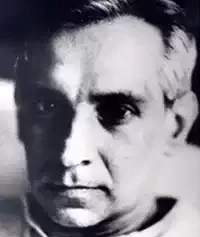
Lúcio Cardoso
1913–1968
· lived 55 years
 BR
BR
BR
Lúcio Cardoso was a Brazilian writer whose work deeply explored the complexity of the human soul, addressing themes such as incommunicability, existential boredom, and the anxieties of the modern condition. His writing stood out for its psychological introspection and its melancholic atmosphere, often set in high society or intellectual circles. He excelled in both prose and theater, leaving a legacy of works that continue to provoke reflection on human nature and interpersonal relationships.
n. 1913-08-14, Curvelo · m. 1968-09-22, Rio de Janeiro
67
Views
Bio
Identification and basic context
Lúcio Cardoso was a prominent Brazilian writer, known mainly for his novels and plays. His work is marked by deep psychological analysis and an atmosphere of melancholy and existential boredom.Childhood and education
Born into a wealthy and influential family in Brazilian society, Lúcio Cardoso had a privileged childhood. His intellectual education was largely self-taught, with access to a vast private library and an environment conducive to reading and cultural debate. From an early age, he showed an interest in arts and literature, absorbing diverse influences, both from European literature and the Brazilian cultural scene of his time.Literary career
Lúcio Cardoso's literary career began with the publication of his first novels. His work evolved over time, with an initial phase more focused on social and psychological chronicles, and later phases that deepened introspection and the exploration of existential themes. He collaborated with important newspapers and literary magazines, and was also known for his work as a literary critic and translator.Work, style, and literary characteristics
Among his most important works are novels such as "O Enigma de Consuelo" and "O Romance de São Paulo". His recurring themes include incommunicability, boredom, loneliness, identity crisis, and the fragility of human relationships, often set in elite or artistic circles. Cardoso's style is characterized by elegant, dense, and introspective prose, with an often melancholic and ironic tone. He explored the human condition with remarkable psychological depth, anticipating modern literature in many aspects. His language is precise and evocative, with subtle use of metaphors and symbolism. His work engages with literary tradition but innovates by bringing a modern sensibility and a critical look at the society of his time. He is often associated with Brazilian Modernism, although his work possesses unique characteristics that transcend rigid classifications.Cultural and historical context
Lúcio Cardoso lived in a period of great transformations in Brazil and the world, which was reflected in his work. His writing engages with the Brazilian intellectual and artistic elite, and his plays often addressed social and behavioral issues of the era. He was part of a circle of writers and intellectuals who sought to renew the Brazilian cultural scene, maintaining a critical view of society and politics.Personal life
Cardoso's life was marked by discretion. His emotional and family relationships, although not widely publicized, appear to have been a source of inspiration for his work, which explores the complexities of human bonds. He maintained friendships in intellectual circles but was also known for his reserved temperament. His work reveals a deep sensibility and, at times, a pessimistic view of existence.Recognition and reception
Lúcio Cardoso was recognized during his lifetime for his literary quality, especially in critical circles. His work, although sometimes considered difficult to access, earned a prominent place in 20th-century Brazilian literature. Critical reception varied, with some pointing to the genius of his psychological analysis and others to his somber atmosphere. Over time, his recognition has grown, consolidating him as an important author.Influences and legacy
Cardoso was influenced by authors such as Marcel Proust and F. Scott Fitzgerald, whose explorations of psychology and high society echo in his work. His legacy lies in the depth with which he portrayed the human soul and existential anxieties, influencing later generations of writers who delved into similar themes. His contribution to Brazilian literature is undeniable, consolidating him as a benchmark author in the national literary canon.Interpretation and critical analysis
Lúcio Cardoso's work has been the subject of various interpretations, focusing on his ability to unravel the complexities of the human psyche, the feeling of alienation, and the search for meaning in a constantly changing world. His works invite reflection on the existential condition, the difficulty of communication, and the melancholy inherent in modern life.Curiosities and lesser-known aspects
A lesser-known aspect of Lúcio Cardoso is his ability to create dense atmospheres charged with meaning, often with a touch of mystery. His writing habits were shrouded in discretion, but it is known that he was an attentive observer of society and human relationships, which translated into his detailed and psychological prose.Death and memory
Lúcio Cardoso passed away, leaving behind an important literary body of work that continues to be studied and appreciated. His works remain relevant, testifying to the depth of his vision of human existence.Poems
0No poems found
Comments (0)
Log in
to post a comment.
No comments yet. Be the first to comment.