Identification and basic context
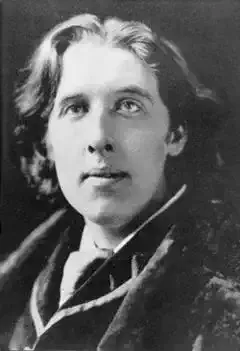
Oscar Wilde was an Irish poet, playwright, novelist, and critic. He is renowned for his sharp wit, flamboyant personality, and his advocacy of the aesthetic movement.
Childhood and education
Wilde was born into a prominent Anglo-Irish family. His father was a surgeon and his mother a poet and nationalist. He received a classical education at Trinity College, Dublin, and later at Magdalen College, Oxford, where he excelled in classical studies and developed his aesthetic theories.
Literary trajectory
Wilde's literary career began with poetry, notably his collection 'Poems' (1881). He gained significant fame as a playwright with works like 'The Importance of Being Earnest' and 'Salomé'. His novel 'The Picture of Dorian Gray' (1890) also garnered attention. He was a prominent figure in the Aesthetic and Decadent movements.
Works, style, and literary characteristics
Wilde's most famous works include 'The Picture of Dorian Gray', 'The Importance of Being Earnest', 'An Ideal Husband', and 'A Woman of No Importance'. His style is characterized by epigrammatic wit, paradox, lyrical beauty, and a focus on aestheticism. Themes explored include beauty, art, morality, hypocrisy, and the duality of human nature. He often used satire to critique Victorian society.
Cultural and historical context
Wilde lived during the late Victorian era in Britain, a period of great industrial change, social reform, and imperial expansion, but also of strict social codes and moral hypocrisy. He was a prominent voice of the Aesthetic movement, which challenged the utilitarian and moralistic views of art prevalent at the time. He was a contemporary of writers like Algernon Charles Swinburne and Walter Pater.
Personal life
Wilde's personal life was marked by his marriage to Constance Lloyd, with whom he had two sons. He also had a notorious relationship with Lord Alfred Douglas, which ultimately led to his downfall. His flamboyant lifestyle and outspoken views on art and morality set him apart from conventional society.
Recognition and reception
Wilde achieved considerable fame during his lifetime, becoming a celebrated figure in London society. However, his trial for gross indecency in 1895 led to his imprisonment and public disgrace, severely damaging his reputation. Posthumously, his work has been re-evaluated, and he is now recognized as a major literary figure of the 19th century.
Influences and legacy
Wilde was influenced by Romantic poets and French Symbolists. His emphasis on beauty and art for art's sake, his wit, and his critique of social conventions have influenced numerous writers and artists. He is considered a key figure in the development of modern drama and aesthetic theory.
Interpretation and critical analysis
Wilde's work is often analyzed through the lens of aestheticism, dandyism, and his critique of Victorian morality. His life and work continue to be debated, particularly concerning his persecution and the relationship between art and life.
Curiosities and lesser-known aspects
Wilde famously declared, "I have put my genius into my life; I have put only my talent into my works." He was known for his elaborate dress and his love of paradox. His famous green carnation became a symbol of the aesthetic movement.
Death and memory
Oscar Wilde died in exile in Paris in 1900. His tomb in Père Lachaise Cemetery is a popular tourist destination. His literary and cultural significance has endured, and he remains a celebrated figure for his wit and artistic contributions.