Dylan Thomas
Author of the day

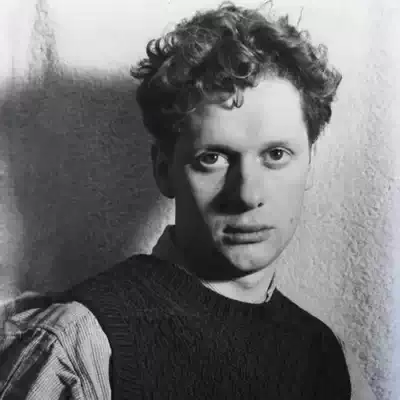
Dylan Thomas

Dylan Thomas was a celebrated Welsh poet whose vivid imagery, lyrical intensity, and unique use of language captivated readers worldwide. His work, often characterized by its passionate exploration of life, death, love, and nature, combined a deep connection to his Welsh heritage with a modernist sensibility. Despite a tragically short and often tumultuous life, his poems possess an enduring power and musicality that have secured his place as one of the 20th century's most important poets.

Poem of the day

Grass

Carl Sandburg
Pile the bodies high at Austerlitz and Waterloo.
Shovel them under and let me work
-I am the grass; I cover all.

And pile them high at Gettysburg
And pile them high at Ypres and Verdun.
Shovel them under and let me work.
Two years, ten years, and the passengers ask the conductor:

What place is this?
Where are we now?

I am the grass.
Let me work.
Read full poem

Born on this day

14
Mário Beirão

Mário Beirão was a poet who stood out in the Portuguese literary landscape, associated with the surrealist movement. His poetic work is recognized for its formal audacity and exploration of the unconscious, key characteristics of surrealism, reflecting a desire for rupture with aesthetic and social conventions. His writing, at times enigmatic and deeply personal, invites the reader to dive into a dreamlike and subversive universe, where the logic of everyday life gives way to free associations and surprising images. Beirão left a legacy that dialogues with creative freedom and the pursuit of authentic expression.

Goulart Gomes

Goulart Gomes is a Portuguese poet whose work is distinguished by its exploration of language, its sonority, and its ability to evoke landscapes and sensations. His poetry, often marked by introspective lyricism and keen observation of the world, transitions between the personal and the universal, using stylistic resources that lend depth and expressiveness to his verses.

Joachim Du Bellay

Joachim Du Bellay was a French poet and literary critic of the 16th century, a central figure of the literary movement known as La Pléiade. His most famous work, 'Défense et illustration de la langue française', is considered a fundamental manifesto for the affirmation and development of the French language as a literary vehicle. Du Bellay celebrated the beauty of his mother tongue and defended its dignity in comparison to Latin and Greek, while also exploring universal themes such as love, homeland, exile, and the transience of time in his lyrical poetry, notably in the 'Sonnets pour Hélène'.

Sérgio José Rodrigues Saraiva

Sérgio José Rodrigues Saraiva is a Portuguese writer whose work is part of the contemporary literary production. His literary contribution is marked by an approach that seeks to explore the nuances of the human condition and current society. With a style that aims for depth and reflection, Saraiva has been developing a literary career that, while perhaps not immediately recognized by a wide audience, is of interest to those who value the diversity and quality of writing in Portuguese. His work invites attentive and considered reading.

Joseph Addison

Joseph Addison was an English essayist, poet, playwright, and politician. He is best known for co-founding The Spectator magazine with his lifelong friend Richard Steele. Addison's writings were highly influential in the 18th century, shaping literary tastes and contributing to the development of English prose style. His essays offered witty observations on society, politics, and morality, making him a prominent figure in the Augustan age of English literature.

Otto Lara Resende

Otto Lara Resende was a prominent Brazilian journalist and writer. Although primarily known for his work in journalism, his literary output, while less extensive, reveals a sharp sensibility and a critical eye on society and the human condition. His writing is marked by elegant and reflective prose, exploring universal themes with depth.

Yannis Ritsos

Yannis Ritsos was one of the most important Greek poets of the 20th century, known for his vast body of work and his political and social engagement. His poetry, deeply rooted in the Greek experience, addresses universal themes such as love, death, injustice, and human resistance. Considered one of the great names in modern poetry, Ritsos explored various poetic forms, from free verse to more elaborate structures, always with accessible language but loaded with symbolism and emotion.

Laureano Santos

Laureano Santos is a poet whose work is characterized by the exploration of the inner and outer landscape, combining the observation of nature with reflection on the human condition. His poetry, often imbued with a contemplative and lyrical tone, addresses themes such as memory, time, saudade, and the search for deeper meaning in existence. With a language that prioritizes imagery and musicality, Santos constructs a poetic universe that resonates with its sincerity and its ability to capture the fleeting beauty of the world.

Fernando Cabrita

Fernando Cabrita is a name associated with poetry, with a body of work that reflects a sharp sensitivity to the nuances of existence. His writing navigates universal themes, often exploring the inner landscape and human relationships with a careful and expressive language. His poetry invites contemplation and the discovery of deep meanings in everyday experiences. Throughout his literary career, Fernando Cabrita has been building a body of work distinguished by its authenticity and its ability to touch the reader. His poetic voice, though sometimes melancholic, is also a vehicle for hope and reflection on the human condition.

Dominique Fourcade

Dominique Fourcade is a contemporary French poet, whose work is marked by intense writing and a deep exploration of language, the body, and lived experience. Her poetry is distinguished by its lyrical strength and its ability to reveal the complexities of being and feeling. She is recognized for her significant contribution to French poetry, with verses that challenge conventions and invite immersion in poetic matter, revealing a sharp sensibility and a particular vision of the world.

Vincenzo Cardarelli

Vincenzo Cardarelli was an Italian poet and journalist, considered one of the most important voices of lyrical poetry of the 20th century in Italy. His work is characterized by a deep meditation on time, memory, solitude, and the fleeting beauty of life. Cardarelli developed a refined and musical poetic style, focused on expressing universal feelings with precise and evocative language.

Died on this day

9
Djalma Filho

Djalma Filho was an Angolan poet known for his work exploring the complexities of identity, land, and the human condition in Africa. His poetry is marked by a deep connection to his homeland and an evocative language, often using strong imagery and a rhythmic cadence that reflects African sounds. He explored themes such as saudade, hope, and the struggle for freedom, becoming an important voice in Angolan literature. His work continues to resonate for its authenticity and its ability to capture the essence of the African experience with sensitivity and vigor.

Giosi Lippolis

Giosi Lippolis was an Italian poet whose work stood out for its profound exploration of the human condition and its imagery-rich language. His poetic compositions, often melancholic and reflective in tone, address universal themes such as love, loss, time, and the search for meaning in a constantly changing world. His writing is characterized by a unique musicality and an unparalleled ability to evoke deep emotions in the reader, consolidating his position as an important voice in contemporary poetry.

Lya Carvalho Jardim

Lya Carvalho Jardim is a Brazilian writer whose work stands out for its sensitivity and exploration of universal themes such as love, longing, and the search for identity. Her prose and poetry are marked by accessible language, yet charged with emotion, resonating deeply with readers. Through her narratives and verses, Carvalho Jardim constructs a literary universe that invites reflection on human relationships and existential dilemmas.

Heliodoro Baptista

Heliodoro Baptista is a poet whose work is characterized by deep sensitivity and an exploration of poetic language. His poetry often delves into existential themes, love, and the beauty of the everyday, with a style that combines lyricism and introspection. Baptista is recognized for his contribution to contemporary poetry, leaving a record of verses that invite reflection and appreciation of literary art.

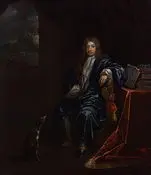
John Dryden

John Dryden (1631-1700) was an English poet, playwright, and literary critic. A dominant figure in the literary life of Restoration England, he was appointed the first Poet Laureate in 1668. His work spans a wide range of genres, including satire, religious poetry, plays, and translations. Dryden is known for his mastery of the heroic couplet and his influence on English poetry and drama. He became a master of the English language, shaping its development through his clear and powerful prose and verse. His work often reflects the political and religious turmoil of his time.

John Vance Cheney

John Vance Cheney was an American poet and librarian. His poetic work, although less known today, was appreciated in his time for its musicality and themes related to nature and spirituality. As a librarian, he contributed to the organization and dissemination of knowledge.

Mário da Silva Brito

Mário da Silva Brito was a Portuguese poet and writer. His work often explored themes of Portuguese identity, history, and the human condition. He is recognized for his contributions to Portuguese literature in the 20th century.

Manuel Caetano de Sousa

Manuel Caetano de Sousa was a Portuguese poet, a prominent figure in 18th-century literature, a period marked by the influence of Arcadianism. His poetic work, although not extensive, demonstrates a strong inclination towards courtly lyrics and bucolic themes, characteristic of the Arcadian movement. His style is characterized by the pursuit of clarity, formal symmetry, and the evocation of pastoral and idyllic settings, reflecting the aesthetic ideals of his time.

Alberto Estima de Oliveira

Alberto Estima de Oliveira was a Portuguese poet, author of a work marked by introspection, melancholy, and a deep connection to the land and sea. His poetry reflects a refined sensitivity to the landscapes of Minho and a constant reflection on time, memory, and the human condition. He stands out for the musicality of his verses and for the way he managed to combine Portuguese lyrical tradition with a personal and contemporary language. He was part of the so-called "Geração de 50" or "Neo-realism", although his work transcends labels, maintaining its own identity and a distinctive tone that consecrates him as a singular voice in 20th-century Portuguese poetry.