Carl Sandburg
Author of the day

Carl Sandburg

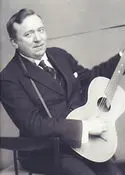
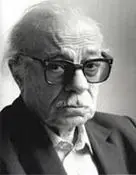
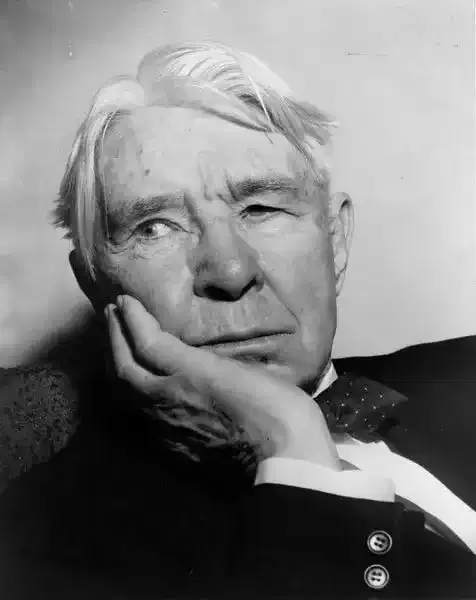
Carl Sandburg was an American poet, historian, novelist, and lexicographer. He is considered one of the most important American poets of the 20th century, known for his free verse and his focus on the American working class and the landscapes of the American Midwest. His poetry often celebrated the common man and the industrial might of America, earning him a reputation as the "poet of the people." Beyond his poetry, Sandburg was also a prolific biographer, most notably of Abraham Lincoln, and a…

Poems
Poem of the day

Do Not Go Gentle Into That Good Night

Dylan Thomas
Do not go gentle into that good night, 
Old age should burn and rave at close of day; 
Rage, rage against the dying of the light. 

Though wise men at their end know dark is right, 
Because their words had forked no lightning they 
Do not go gentle into that good night. 

Good men, the last wave by, crying how bright 
Their frail deeds might have danced in a green bay, 
Rage, rage against the dying of the light. 

Wild men who caught and sang the sun in flight, 
And learn, too late, they grieved it on its way, 
Do not go gentle into that good night. 

Grave men, near death, who see with blinding sight 
Blind eyes could blaze like meteors and be gay, 
Rage, rage against the dying of the light. 

And you, my father, there on that sad height, 
Curse, bless, me now with your fierce tears, I pray. 
Do not go gentle into that good night. 
Rage, rage against the dying of the light.
Read full poem

Born on this day

16
Cândida Alves

Cândida Alves is a contemporary poetic figure whose work is distinguished by introspection and the exploration of universal themes such as identity, memory, and the passage of time. Her writing, marked by a refined and imagistic language, invites reflection on the human condition and the ephemerality of existence. Through verses that evoke deep sensations and emotions, the author constructs a lyrical universe that resonates with individual and collective experience.

Maciel Monteiro

Maciel Monteiro was a Brazilian poet whose work, although not as widely publicized as that of his contemporaries, is an important testament to 19th-century poetry. His writing is characterized by Romantic sensibility, with themes that address love, nature, and saudade (longing), reflecting the spirit of his time. His contribution, though sometimes forgotten, is relevant to understanding the Brazilian literary landscape. Maciel Monteiro navigated the literary currents of Romanticism, expressing in his verses the melancholy and yearnings characteristic of this period. His poetry, marked by a particular lyricism, invites reflection on the human condition and the ephemeral beauty of life, consolidating his place in the history of Brazilian literature as a poet of notable sensitivity and expression.

Rita Barém de Melo

Rita Barém de Melo is a poetic voice that stands out for her sensitivity and deep exploration of themes such as identity, memory, and the relationship between human beings and their environment. Her poetry, often marked by precise and imagistic language, invites reflection on everyday experiences and their existential resonances. Barém de Melo constructs a particular lyrical universe, where introspection intersects with careful observation of the world.

Alda do Espírito Santo

Alda do Espírito Santo was a Santomean poet, writer, and educator, a prominent figure in Portuguese-language African literature. Her poetic work, deeply marked by identity, the struggle for liberation, and the valorization of African and Santomean culture, is a testament to her experiences and her social and political commitment. With a lyrical and expressive language, she explored themes such as the land, ancestry, women, justice, and hope. She was an essential voice in the construction of the national identity of São Tomé and Príncipe and in the affirmation of its literature on the Lusophone and global stage.

Eduardo de Lacerda

Eduardo de Lacerda was a poet whose poetic work is characterized by the exploration of themes related to intimacy, existential reflection, and observation of daily life. His writing tends to be marked by careful language and an introspective tone, where subjectivity and the search for meaning intertwine with the description of the surrounding world. Lacerda demonstrates a sharp sensibility for the nuances of human experience.

António Cabral

António Cabral was a Portuguese poet whose work is part of the literary landscape of the 20th century. His poetry is marked by an introspective lyricism and a deep reflection on the human condition, the passage of time, and the search for meaning. His writing, although perhaps less publicized than that of other contemporaries, is notable for its sensitivity and for the way it explores the complexity of emotions and lived experiences, using carefully crafted and evocative language.

Eduardo Brazão Filho

Eduardo Brazão Filho was a Brazilian poet, short story writer, and playwright. His poetic work is marked by deep sensitivity and an exploration of the complexities of the human condition, addressing themes such as love, loneliness, and the passage of time. As a short story writer and playwright, he also demonstrated talent in creating engaging narratives and in dialogue with the social issues of his time.

Rui Namorado

Rui Namorado is a contemporary Portuguese poet, known for his writing that transitions between intimate lyricism and social observation. His poetry often addresses universal themes such as love, the passage of time, memory, and landscape, with a language that combines the musicality of verse with the precision of the word. Namorado's work is marked by a sharp sensitivity to the nuances of daily life and by the existential reflections that emerge from it. His poems invite introspection and contemplation, exploring the complexity of human emotions and the search for meaning in a constantly changing world.

Jose Luis Otamendi

Jose Luis Otamendi is a Basque poet and translator, known for his contribution to contemporary Basque-language poetry. His work explores language, reality, and subjectivity, with a striking style.

Margarita Villaseñor

Margarita Villaseñor is a Mexican writer whose works are notable for their psychological depth and the exploration of engaging narratives. Her writing straddles fiction and reflection, addressing themes such as human relationships, the challenges of modern life, and the search for meaning. Villaseñor is known for her ability to create complex characters and literary universes that resonate with readers.

Winfield T. Scott

Winfield T. Scott was a writer whose contributions to literature focused on themes of historical and cultural interest. His work reflects a keen eye for social complexities and the narratives that shape our understanding of the past. Scott dedicated himself to exploring and documenting relevant aspects of his time, leaving a record of his perspective on the events and people around him.

Félix de Azúa

Félix de Azúa is a prominent Spanish writer, essayist, and poet, whose work spans various genres and reflections on culture, history, and the human condition. His poetry is characterized by deep erudition, precise language, and an often ironic or skeptical view of reality. He has been a critical and lucid voice in the Spanish intellectual landscape, addressing themes such as identity, memory, and the critique of ideologies. His essayistic prose is equally recognized for its sharpness and its ability to connect history with the present, offering penetrating analyses of contemporary society.

Miguel Florián

Miguel Florián is a contemporary poet whose work is characterized by deep sensitivity, careful language, and a constant exploration of the human condition. Through verses that move between the intimate and the universal, he addresses themes such as love, solitude, the passage of time, and the search for meaning in an often uncertain world. His poetry invites reflection and contemplation of the ephemeral beauty of life.

Died on this day

11
António Carlos Belchior

António Carlos Belchior was a Brazilian singer, songwriter, and poet, known for his poetic and reflective lyrics that addressed themes such as love, loneliness, the passage of time, and existential anxieties. His work is distinguished by its originality, mixing influences from Brazilian popular music with elements of avant-garde poetry and philosophy. Belchior marked generations with his critical view of society and his ability to translate universal feelings into memorable and timeless songs.

Alfred Edward Housman

A. E. Housman was an English poet and classical scholar. His poetry is renowned for its lyrical beauty, melancholic tone, and exploration of themes such as mortality, the brevity of life, and the harsh realities of human experience. Housman's distinctive style, often characterized by its stoicism and elegiac quality, has secured his place as a significant voice in English verse.

From Clee to heaven the beacon burns,
Nuno Guimarães

Nuno Guimarães is a prominent figure in contemporary poetry, with a body of work that stands out for its ability to transition between personal lyricism and social reflection. His writing, often marked by direct language and vivid imagery, addresses universal themes such as love, loss, and the search for meaning. His poetry, rooted in tradition, does not fail to explore new forms of expression, consolidating itself as a relevant voice in the literary landscape.

Anna de Noailles

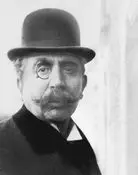
Anna de Noailles was a Franco-Romanian poet and novelist, born in 1876. She is considered one of the most important poetic voices in France in the early 20th century. Her work is marked by intense lyricism, sensuality, and a deep reflection on life, death, and nature.

Birger Sjöberg

Birger Sjöberg was a Swedish poet and composer, known for his songs and poems that capture the melancholy and beauty of everyday life. His most famous work, "Frida's Book", is a collection of poems and songs that have become classics of Swedish popular music. Sjöberg is remembered for his ability to evoke deep feelings with simplicity and lyricism.

Jean Moréas

Jean Moréas was a Greek poet who became a naturalized French citizen, known for being one of the founders of Symbolism in poetry. Born in Athens, he moved to Paris where he became a prominent figure in literary circles, contributing to the renewal of poetic expression in France.

Lucano

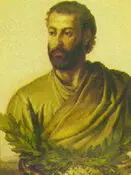
Marcus Annaeus Lucanus (39-65 AD), known in Portuguese as Lucano, was a Roman poet of the Golden Age of Latin literature. He is most famous for his unfinished epic, "Pharsalia", which narrates the civil war between Julius Caesar and Pompey. Lucano was the nephew of the Stoic philosopher Seneca the Younger. His work is marked by a rhetorical and dramatic style, and by a frequently dark and critical tone towards war and imperial power. He died young, supposedly forced to commit suicide by order of Emperor Nero.

Nizâr Qabbânî

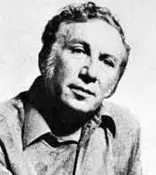
Nizâr Qabbânî was a prominent Syrian poet and diplomat, known for his works exploring love, sensuality, and social and political critique. His poetry, written in accessible and direct language, resonated deeply with the Arab public, making him one of the most popular Arab poets of the 20th century. Qabbânî addressed universal themes such as romantic love and passion, but also social and political issues, including the status of women in Arab society and criticism of oppressive regimes. His works are characterized by a strong emotional charge and a language that combines tradition with modernity.

Gerry Loose

Gerry Loose is a Scottish poet and writer, whose work is often associated with landscape, history, and the interconnections between the natural and human realms. His work is known for its attention to detail and its contemplative approach. Loose is a practitioner of gardening, and his experiences in this field inform many of his poetic explorations of growth, decay, and the cycle of life.