Juan Ramón Jiménez
Author of the day

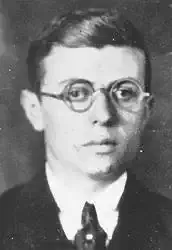
Juan Ramón Jiménez

Juan Ramón Jiménez was a Spanish poet, awarded the Nobel Prize in Literature in 1956. His work, profoundly marked by symbolism and the desire for "pure poetry," evolved towards an incessant search for beauty and transcendence. His poetry explores themes such as nature, spirituality, love, and the very essence of poetry, with a refined, musical, and visionary style. He is considered one of the great renovators of 20th-century Spanish poetry.

Poem of the day

Grass

Carl Sandburg
Pile the bodies high at Austerlitz and Waterloo.
Shovel them under and let me work
-I am the grass; I cover all.

And pile them high at Gettysburg
And pile them high at Ypres and Verdun.
Shovel them under and let me work.
Two years, ten years, and the passengers ask the conductor:

What place is this?
Where are we now?

I am the grass.
Let me work.
Read full poem

Born on this day

5
Emílio Burlamaqui

Emílio Burlamaqui was a Brazilian poet, journalist, and literary critic, known for his participation in the modernist movement and for his writing that moved between lyricism and formal experimentation. His work addressed themes such as the city, the ephemerality of life, and the complexities of human feeling, with a language that reflected the aesthetic innovations of his time. As a journalist and critic, he contributed to the dissemination and debate of Brazilian literary production, exerting influence on the cultural scene of his time. His work was marked by the pursuit of new forms of poetic expression.

Fernando Luso Soares

Fernando Luso Soares was a distinguished Portuguese poet, whose work is known for its expressive force and profound humanism. His poetry addresses themes such as the human condition, social injustice, the ephemerality of life, and the search for freedom and dignity. With a direct and impactful language, Luso Soares managed to captivate a wide readership, becoming a relevant voice in contemporary Portuguese poetry.

Fernando Quiñones

Fernando Quiñones was a Spanish poet, writer, and journalist. His work is marked by the influence of post-war Spanish poetry and his connection to the land and Andalusian culture. With a rich and evocative language, Quiñones portrayed in his verses and prose the soul of Andalusia, exploring themes such as identity, memory, and landscape.

Died on this day

8
Sousa Caldas

Sousa Caldas, a Portuguese poet, dedicated his life to the art of the word, exploring themes such as saudade, love, and nature with pronounced lyrical sensitivity. His work reflects a deep connection to the land and traditions, expressed through careful and musical language.

Ricardo Miró

Ricardo Miró was a Panamanian poet, considered one of the most important representatives of modernism in his country. His work is marked by a profound love for his homeland, the exaltation of nature, and reflection on national identity. With an elegant and evocative language, Miró celebrated the landscapes, history, and people of Panama, consolidating himself as one of the great figures of Central American literature. His poetry, which oscillates between romantic lyricism and the search for a more modern expression, continues to inspire generations of readers and writers, keeping alive the memory and pride of his native land.

Henry Bataille

Henry Bataille was an influential French playwright and novelist, known for his provocative plays and his exploration of psychological and social themes. His work had a significant impact on the French theater of his time.

Luís de Montalvor

Luís de Montalvor was a multifaceted figure in the Portuguese artistic and literary scene, with a notable connection to the Surrealist movement. His work, both in painting and poetry, reflects a quest for the exploration of the subconscious and the liberation of imagination. His influence extends to how Surrealism manifested in Portugal, leaving a legacy of experimentation and avant-garde.

Dalila Pereira da Costa

Dalila Pereira da Costa is a prominent figure in contemporary Portuguese poetry, known for her lyrical and reflective writing. Her work deeply explores themes such as identity, memory, the female condition, and the complexities of human relationships, often with a melancholic and introspective tone. Using careful and imagistic language, the author crafts poems that resonate with their musicality and their ability to evoke intense emotions. Dalila Pereira da Costa's poetry has been recognized for its originality and the sensitivity with which it addresses the existential experience, consolidating her place in the literary landscape.

Lupercio Leonardo de Argensola

Lupercio Leonardo de Argensola was a distinguished Spanish poet and military man, known for his poetic work which is framed within courtly lyrics and satirical poetry. His production is characterized by the sharpness of his wit, formal perfection, and a style that often borders on irony and humor, addressing universal themes with a critical and observant perspective. As a military man, he participated in various campaigns, experiences that undoubtedly enriched his worldview and his writing.

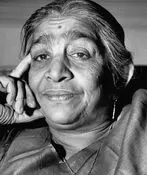
Sarojini Naidu

Sarojini Naidu was a prominent Indian poet and a key figure in the Indian independence movement. Known as the "Nightingale of India," her poetry often celebrated Indian culture, love, and patriotism, earning her acclaim in both India and abroad. Beyond her literary contributions, Naidu was a fervent nationalist, a suffragist, and a powerful orator who played a crucial role in India's struggle for freedom from British rule. She served as the first Indian woman to hold the office of Governor of a state in India.

A Love Song from the North