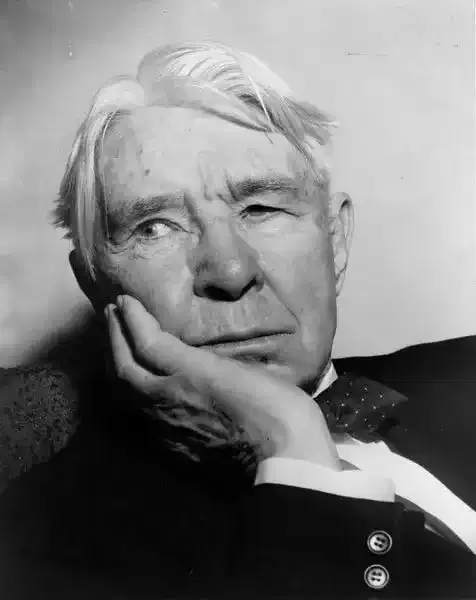
Carl Sandburg
Author of the day

Carl Sandburg

Carl Sandburg was an American poet, historian, novelist, and lexicographer. He is considered one of the most important American poets of the 20th century, known for his free verse and his focus on the American working class and the landscapes of the American Midwest. His poetry often celebrated the common man and the industrial might of America, earning him a reputation as the "poet of the people." Beyond his poetry, Sandburg was also a prolific biographer, most notably of Abraham Lincoln, and a…

Poems
Poem of the day

Do Not Go Gentle Into That Good Night

Dylan Thomas
Do not go gentle into that good night, 
Old age should burn and rave at close of day; 
Rage, rage against the dying of the light. 

Though wise men at their end know dark is right, 
Because their words had forked no lightning they 
Do not go gentle into that good night. 

Good men, the last wave by, crying how bright 
Their frail deeds might have danced in a green bay, 
Rage, rage against the dying of the light. 

Wild men who caught and sang the sun in flight, 
And learn, too late, they grieved it on its way, 
Do not go gentle into that good night. 

Grave men, near death, who see with blinding sight 
Blind eyes could blaze like meteors and be gay, 
Rage, rage against the dying of the light. 

And you, my father, there on that sad height, 
Curse, bless, me now with your fierce tears, I pray. 
Do not go gentle into that good night. 
Rage, rage against the dying of the light.
Read full poem

Born on this day

6
Alonso Alvarez

Alonso Álvarez de Pinedo was a Spanish poet of the 17th century, known for his participation in the literary Baroque period. His work, although less celebrated than that of some contemporaries, reflects the aesthetic and thematic characteristics of his time, marked by a profound sense of religiosity, the ephemerality of life, and the complexity of poetic language. He explored the human condition through verses that combine erudition with sentimental expression.

Faria Neves Sobrinho

Faria Neves Sobrinho is a poet whose work stands out for its exploration of the inner and outer landscape, intertwining the melancholy of existence with the intrinsic beauty of nature. His poetry, marked by a sensory and imagistic language, invites contemplation of time, memory, and the ephemerality of life, establishing a deep dialogue between the lyrical self and the world around him.

Giacomo Casanova

Giacomo Girolamo Casanova was a Venetian adventurer and writer. Famous for his numerous love adventures, he also had a multifaceted life, engaging in various professions and activities, including diplomacy, espionage, and even the priesthood. His autobiography, "The Story of My Life," is a detailed and vivid account of his experiences and of European society in the 18th century.

Luís Correia Caldeira

Luís Correia Caldeira was a Portuguese poet associated with the 19th century, a period marked by intense social and literary transformations. His work reflects a lyrical sensibility and an engagement with the themes of his time, although he is not one of the most prominent names in Portuguese literature. His poetry often addresses nature, human feelings, and reflections on life, in a style that dialogues with the aesthetic currents of Romanticism and Realism.

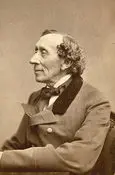
Hans Christian Andersen

Hans Christian Andersen was a Danish author celebrated for his timeless fairy tales that have captivated generations of readers worldwide. His stories, often infused with a blend of whimsy, pathos, and profound moral lessons, explore universal themes of identity, social class, and the human condition. Despite a challenging early life, Andersen's imagination and keen observation of the world around him led him to create a literary legacy that transcends cultural boundaries. His works, including "The Little Mermaid," "The Ugly Duckling," and "The Snow Queen," continue to be cherished for their enduring charm, emotional depth, and insightful commentary on life.

The Emperor’s new clothes.

Died on this day

6
Avelino de Sousa

Avelino de Sousa was a poet whose work is part of the Portuguese literary landscape. His poetry often explores universal themes through careful language and refined sensitivity. His literary career contributed to the diversity of poetic expression in Portuguese.

João Ferry

João Ferry was a Portuguese poet whose work stands out for its connection to the surrealist movement and the exploration of a dreamlike and imagistic universe. His poetry is marked by formal freedom, the subversion of language, and the pursuit of an authentic expression of the unconscious. Ferry is recognized for his contribution to the renewal of Portuguese poetry in the 20th century, introducing new sensibilities and aesthetic approaches that challenged the literary conventions of his time.

Kōtarō Takamura

Kōtarō Takamura was a Japanese sculptor and poet, known for his work that oscillates between symbolism and modernism. His poetry, often marked by deep introspection and exploration of themes such as love, beauty, and the human condition, reflects both Western influences and Japanese sensibility. Works like "Chijin no Ai" (A Fool's Love) are emblematic of his style.

Paul von Heyse

Paul Heyse was a prominent German writer, known for his vast body of work in poetry, prose, and drama. He was a central figure in German literary life of the 19th and early 20th centuries, and was awarded the Nobel Prize in Literature in 1910. His writing covered a wide range of themes, often exploring human psychology and the complexities of social relationships. Heyse is remembered as a representative of the Munich School, associated with a certain academicism and refined aesthetics.

Gouvêa Lemos

Gouvêa Lemos was a poet whose work reflects the literary trends of his time, with a strong inclination towards lyrical and reflective expression. His poetry explores universal themes through carefully crafted language, seeking musicality and imagistic depth. His literary output is a testament to the sensitivity and cultural context in which he was situated.

Angela Figuera Aymerich

Ángela Figuera Aymerich was a Spanish poet whose work is characterized by profound social sensibility and a vital commitment to human values. Her poetry, often marked by the experience of the Spanish Civil War and its aftermath, addresses themes such as injustice, solidarity, the female condition, and the pursuit of freedom. With a direct and emotional language, Figuera Aymerich became a powerful and necessary voice in post-war Spanish poetry, defending human dignity and hope amidst adversity.