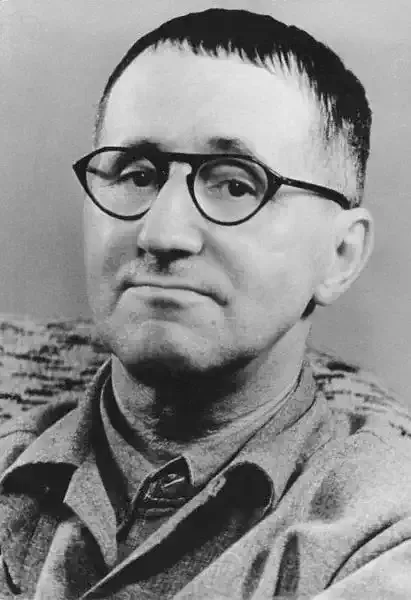
Jean-Paul Sartre
Author of the day

Jean-Paul Sartre

Jean-Paul Sartre was a French philosopher, writer, playwright, and literary critic, a central figure of atheistic existentialism. His vast and multifaceted work explores human freedom, individual responsibility, bad faith, and social commitment. Sartre rejected the Nobel Prize in Literature, advocating for a stance of refusal of bourgeois institutions. His thought profoundly influenced 20th-century philosophy, literature, and political debate, marking a generation with his emphasis on autonomy a…

Poem of the day

Grass

Carl Sandburg
Pile the bodies high at Austerlitz and Waterloo.
Shovel them under and let me work
-I am the grass; I cover all.

And pile them high at Gettysburg
And pile them high at Ypres and Verdun.
Shovel them under and let me work.
Two years, ten years, and the passengers ask the conductor:

What place is this?
Where are we now?

I am the grass.
Let me work.
Read full poem

Born on this day

20
Ana Luísa Amaral

Ana Luísa Amaral was a Portuguese poet, essayist, and translator whose work deeply explored themes such as identity, memory, the body, otherness, and the complex relationship between the human and non-human. With precise and imagistic language, her poetry reflects a constant questioning of the world and the subject's place within it, often permeated by an ecological and feminist sensibility. Her vast body of work, encompassing poetry, essays, and children's and young adult literature, earned her broad national and international recognition, consolidating her as one of the most unique and important voices in contemporary Portuguese-language poetry.

Mário António

Mário António is a name associated with Portuguese poetry, with a body of work marked by a profound reflection on the human condition and the ephemerality of time. His writing, although sometimes dense and allusive, reveals a constant search for meaning and beauty in language. His literary contribution fits into a context of poetic renewal, where formal exploration is combined with a contained, but penetrating lyricism.

Carlos Queirós

Carlos Queirós is a Portuguese poet and writer, whose work is characterized by a multifaceted approach to reality, combining lyricism with acute social and existential observation. His poetry often explores the complexities of human relationships, the ephemerality of time, and the search for meaning in a constantly changing world. With a refined language and an attentive eye to the details of everyday life, Queirós manages to build poetic universes that resonate with the reader's experience. His writing is marked by the ability to move between melancholy and hope, the intimate and the collective, establishing himself as a unique voice in contemporary Portuguese-language poetry.

Francisco Inácio Peixoto

Francisco Inácio Peixoto was a Brazilian poet whose works explore themes such as nature, love, and religiosity, often with a language that refers to the Brazilian poetic tradition. His poetry is marked by lyrical sensitivity and a search for beauty and transcendence. Although not a widely known name in the dominant literary canon, his work represents a valuable contribution to regional poetry and the expression of more intimate and contemplative sensibilities.

Fausto Nilo

Fausto Nilo is a Brazilian poet and composer, known for his poetry that oscillates between the lyrical and the social, with a language that blends the colloquial and the erudite. His work frequently addresses themes such as love, politics, the city, and the ephemerality of life, with a critical and sensitive perspective. As a composer, he collaborated with important names in Brazilian popular music, leaving a significant legacy in both arts. His poetry is marked by intelligence, irony, and a profound observation of everyday life.

Rodrigo L. A. Santos

Rodrigo L. A. Santos is a contemporary poet whose work stands out for its exploration of existential and social themes, rooted in direct and accessible language, yet charged with depth. His poetry invites reflection on the inner world and the complexities of human relationships in modern society. With a writing style that transitions between the lyrical and the reflective, Santos addresses issues such as identity, memory, the passage of time, and social dynamics, often through an intimate perspective. His work is an invitation to introspection and dialogue with the concerns of the individual in the current context.

Antônio Augusto de Lima

Antônio Augusto de Lima was a Brazilian poet and politician, whose work is part of a context of valuing national identity and culture. His poetry is known for its expressiveness and engagement with social and patriotic themes. Through his verses, he sought to portray the landscapes and feelings of the Brazilian people. His literary and political trajectory demonstrates a commitment to the issues of his time, using poetry as a means of reflection and expression. Antônio Augusto de Lima is remembered for his contribution to literature during a crucial period for the formation of Brazilian cultural identity.

Vicente de Carvalho

Vicente de Carvalho was a Brazilian poet, journalist, and politician, known as the "Poeta do Amor" (Poet of Love) or "Poeta da Saudade" (Poet of Longing). His work, strongly influenced by Romanticism and Parnassianism, explored themes such as idealized love, saudade, nature, and patriotism with an elegant and musical language. He was one of the founders of the Brazilian Academy of Letters and had an active career in public life, also being known for his oratory and his defense of the Portuguese language.

Diogo Pires

Diogo Pires was a poet who stood out for his unique approach to language and poetic expression. His work, marked by a strong reflective component, delves into existential and social themes, using a language that combines conceptual density with the musicality of verse. His ability to capture the complexity of the contemporary world and translate it into poetry gives him a prominent place in literature. His production is an invitation to introspection and critical analysis of the human condition.

Lia Viegas

Lia Viegas is a prominent figure in Portuguese children's and youth literature, known for her vast and rich work that spans generations. With a career dedicated to writing, she explored various genres, from poetry to prose, always with a keen eye on the child's universe and its complexities. Her writing is characterized by inventiveness, subtle humor, and the sensitivity with which she addresses important themes for the development of children and young people. Lia Viegas has established herself as a benchmark author, with a lasting legacy in the Portuguese literary landscape.

António Magalhães

António Magalhães was a Portuguese poet whose work stands out for its lyrical depth and exploration of themes such as nature, love, and spirituality. His poetic compositions are marked by careful language and unique sensitivity, reflecting a deep connection with the natural world and the yearnings of the human soul. Although less known to the general public, his poetic legacy is valued for its authenticity and the intrinsic beauty of his verses.

Teresa Guedes

Teresa Guedes is a notable figure in the literary landscape, with a body of work that stands out for its lyrical depth and exploration of universal themes. Her writing is characterized by careful language and a unique sensibility in approaching human emotions and the complexities of existence. Teresa Guedes's poetry invites reflection and introspection, establishing an intimate dialogue with the reader.

Leonida Répaci

Leonida Répaci was an Italian writer, journalist, and anti-fascist, known for his work that frequently portrays life in Calabria and the experiences of humble people. His writing is marked by a strong sense of realism, attention to social details, and direct, expressive language. Répaci was also politically engaged, using his writing as a tool for denunciation and social reflection.

Xabier Lete

Xabier Lete Aranguren was a Spanish poet, singer, and composer, considered one of the most important figures in Basque poetry and song. His work is deeply marked by melancholy, reflection on Basque identity, the land, and the human condition, expressed through verses full of emotion and lyricism.

Jorge Esquinca

Jorge Esquinca is a contemporary Mexican poet and essayist, whose poetic work is marked by precise language and a deep reflection on the human condition and the perception of reality. His poetry explores themes such as time, memory, the city, and the interiority of the self, with a style that combines formal rigor with notable lyrical intensity. Esquinca is considered one of the most important poets of his generation in Mexico.

Minerva Margarita Villarreal

Minerva Margarita Villarreal is a writer and poet recognized for her work that delves into the complexities of the female experience and social issues. Her writing is marked by intelligence, sensitivity, and a critical view of the world. With a consolidated literary career, Villarreal has stood out for the depth of her reflections and the strength of her prose and poetry. Her work is an invitation to empathy and understanding of the diverse realities that shape the lives of women and society in general.

Narcís Comadira

Narcís Comadira is a Spanish poet, translator, and playwright, whose poetic work is distinguished by its formal rigor and its exploration of classical mythology, history, and the human condition. His writing, often marked by deep existential reflection and notable musicality, moves between tradition and modernity, seeking in language the vehicle to unravel the complexities of being. Recognized for his work as a translator of classical and modern authors, Comadira has significantly contributed to the enrichment of the literary landscape in the Catalan language. His poetry invites a dialogue with the past and the present, offering a lucid and committed voice to the exploration of beauty and truth in art.

Died on this day

8
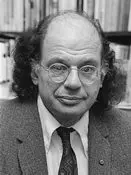
Allen Ginsberg

Allen Ginsberg was a pioneering American poet and a central figure of the Beat Generation. His work is characterized by its raw, confessional style, prophetic voice, and exploration of themes such as spirituality, sexuality, political dissent, and the critique of American materialism. He was a prominent activist, advocating for civil rights, environmental protection, and nuclear disarmament. His most famous poem, "Howl," became a symbol of countercultural rebellion and freedom of expression.

Syllables at Rocky Mountain Dharma Center
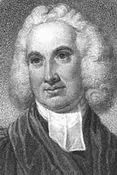
Edward Young

Edward Young was an English poet and critic. He is best known for his long poem 'Night-Thoughts,' a work of the graveyard school of poetry. Young held various positions, including fellow of All Souls College, Oxford, and rector of Welwyn.

Susana Thénon

Susana Thénon was an Argentine poet, associated with the avant-garde movement and experimental poetry. Her work is known for its formal daring, its exploration of humor, irony, and its trenchant social criticism. Thénon challenged literary and social conventions, using language innovatively to address themes such as identity, the body, and power relations.

Makoto Ooka

Makoto Ooka was a Japanese poet, literary critic, and translator. He is considered an important figure in 20th-century Japanese poetry, known for his innovative style and his profound influence on contemporary literature.

Mariano Roldán

Mariano Roldán is a name associated with literature, with contributions extending to poetry and possibly prose. His work is noted for its lyrical sensitivity and an exploration of themes that touch the soul. He stands out for the way he weaves words, creating vivid images and deep emotions in his verses. Roldán's work reflects a profound observation of the world and human experience, seeking to express universal truths through his literary art.

Ignazio Buttitta

Ignazio Buttitta was an Italian poet, considered one of the most important voices of Sicilian dialect poetry. His work stands out for its strong connection with popular traditions, peasant culture, and the social struggles of Sicily. With an authentic and expressive language, Buttitta gave voice to the aspirations, pains, and dignity of his people. His poetry is a vibrant testimony of Sicilian identity and a call for justice and solidarity, consolidating him as a poet of profound social and cultural significance.

Isabel Fraire

Isabel Fraire was a Mexican poet and translator, known for her lyrical and introspective work. Her poetry explores themes such as solitude, the search for meaning, and the complexity of human relationships, with a delicate and profound language.