Juan Ramón Jiménez
Author of the day

Juan Ramón Jiménez

Juan Ramón Jiménez was a Spanish poet, awarded the Nobel Prize in Literature in 1956. His work, profoundly marked by symbolism and the desire for "pure poetry," evolved towards an incessant search for beauty and transcendence. His poetry explores themes such as nature, spirituality, love, and the very essence of poetry, with a refined, musical, and visionary style. He is considered one of the great renovators of 20th-century Spanish poetry.

Poem of the day

Do Not Go Gentle Into That Good Night

Dylan Thomas
Do not go gentle into that good night, 
Old age should burn and rave at close of day; 
Rage, rage against the dying of the light. 

Though wise men at their end know dark is right, 
Because their words had forked no lightning they 
Do not go gentle into that good night. 

Good men, the last wave by, crying how bright 
Their frail deeds might have danced in a green bay, 
Rage, rage against the dying of the light. 

Wild men who caught and sang the sun in flight, 
And learn, too late, they grieved it on its way, 
Do not go gentle into that good night. 

Grave men, near death, who see with blinding sight 
Blind eyes could blaze like meteors and be gay, 
Rage, rage against the dying of the light. 

And you, my father, there on that sad height, 
Curse, bless, me now with your fierce tears, I pray. 
Do not go gentle into that good night. 
Rage, rage against the dying of the light.
Read full poem

Born on this day

10
Ondina Castilho

Ondina Castilho was a Portuguese poet whose work is distinguished by her deep lyrical sensitivity and the exploration of themes such as nature, love, and the passage of time. Her writing, often marked by a subtle melancholy and an enveloping musicality, reflects a deep connection with her inner world and the environment that surrounded her. Ondina Castilho's poetry is a testament to her ability to observe and feel the world, translating these perceptions into verses that touch the reader's soul. Her work, though perhaps less known to the general public, holds a valuable place in 20th-century Portuguese literature for its authenticity and lyrical beauty.

Manuel Sobrinho

Manuel Sobrinho is a poet whose work is characterized by energetic language and a critical look at society and the human condition. His poetry oscillates between lyricism and social intervention, exploring themes such as injustice, hope, love, and the search for identity. With a powerful voice and a style that combines expressive force with sensitivity, Sobrinho has established himself as a relevant name in contemporary poetry, capable of engaging with tradition and proposing new perspectives.

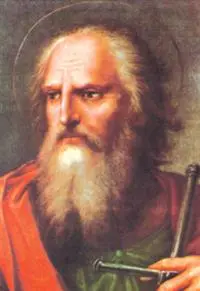
Paulo de Tarso

Paul of Tarsus, a central figure in early Christianity, is known for his extraordinary journey from persecuting Christians to conversion and his subsequent role as one of the most influential apostles. His vast epistolary work, compiled in the New Testament, profoundly shaped Christian theology and practice, establishing fundamental doctrines on faith, salvation, and the nature of Christ. His expansive theology and tireless missionary activity throughout the territories of the Roman Empire were crucial for the dissemination and consolidation of Christianity as a global religion. His legacy endures as one of the intellectual and spiritual pillars of the Christian faith.

Goulart de Andrade

Goulart de Andrade was a poet and writer whose work is marked by a strong lyrical charge and a deep sensitivity in exploring themes such as love, longing, identity, and the human condition. His poetry, often associated with an bittersweet lyricism, reflects a deep connection with emotions and introspection, inviting reflection on the nuances of life and relationships.

Luiz de Miranda

Luiz de Miranda was a Portuguese poet and diplomat known for his lyrical poetry and his deep reflection on love, nature, and the human condition. His work, marked by careful language and a unique musicality, explores the nuances of human feeling and the beauty of the world. Throughout his literary career, he demonstrated unparalleled mastery in the art of versification, using classical and experimental forms to express his vision of the universe. His poetry invites introspection and contemplation, leaving a legacy of beauty and depth.

Nicolas Chamfort

Nicolas Chamfort was an 18th-century French writer and essayist, known for his witty and cynical aphorisms and thoughts. His works reflect a pessimistic view of human nature and society, criticizing the hypocrisy and social conventions of his time. He is considered a precursor to existentialist thought.

Henrique Segurado

Henrique Segurado was a Portuguese poet whose work stands out for its lyrical depth and exploration of universal themes such as love, nature, and the human condition. His poetry, although embedded in a specific cultural context, transcends temporal and geographical barriers, resonating with the sensitivity of readers from different times and places. His writing is marked by careful language and intrinsic musicality, characteristics that have established him as an important voice in contemporary Portuguese poetry.

Serafim Leite

Serafim Leite was a Portuguese Jesuit priest, historian, and ethnographer, known for his extensive work on the history of the Society of Jesus in Brazil. He dedicated a large part of his life to researching and documenting the Jesuit presence in the missions, collecting a valuable archive of information on indigenous cultures and Portuguese colonization. His work is fundamental for the study of Brazilian colonial history and missionary activities.

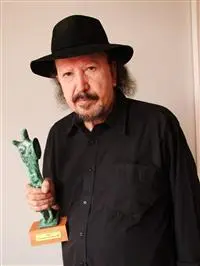
Antón Avilés "de Taramancos"

Antón Avilés "de Taramancos" was an influential Galician poet and cultural activist. His poetic work is a reflection of Galician identity, addressing themes such as land, history, and social struggles. He is known for his strong language and his deep connection with the cultural roots of Galicia. Besides his literary production, Avilés "de Taramancos" played an important role in defending Galician culture and language, being a respected figure for his integrity and passion for his land.

Homero Aridjis

Homero Aridjis is a prominent Mexican poet, essayist, and ecologist, whose work is characterized by a deep connection with nature and a constant reflection on the human condition. His poetry, often lyrical and evocative, explores universal themes such as love, death, time, and memory, imbued with a particular sensitivity to the natural world and its life cycles.

Died on this day

9
Daniel Filipe

Daniel Filipe is a Portuguese poet known for his work deeply marked by existential reflection and the exploration of the human condition. His poetry is characterized by careful language and subtle musicality, exploring themes such as time, memory, the ephemerality of life, and the search for meaning. With a body of work that develops discreetly but persistently, Filipe has built a singular poetic universe, where melancholy intertwines with a serene acceptance of reality.

José Honório

José Honório was a Portuguese poet whose work is part of the literary context of the 20th century. His poetry is marked by a profound reflection on the human condition, exploring themes such as time, memory, and the ephemerality of existence. His poetic compositions are characterized by careful language and intrinsic musicality, inviting introspection and contemplation. His literary contribution, although sometimes less publicized than that of his contemporaries, represents a valuable testimony to Portuguese poetry.

Dora Ferreira da Silva

Dora Ferreira da Silva was a Brazilian poet, known for her lyrical and reflective work. Her poetry explores themes such as love, the ephemerality of time, and the search for meaning, often permeated by a gentle melancholy and profound sensitivity. With refined language and a style marked by musicality and lexical precision, the author left a legacy of poems that continue to resonate with their authenticity and emotional depth. Her contribution to Brazilian poetry is recognized for the originality and strength of her lyrical expression.

José Bonifácio de Andrada e Silva

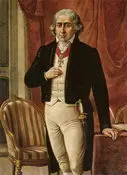
José Bonifácio de Andrada e Silva was an influential Brazilian statesman, naturalist, and poet, a central figure in the Independence of Brazil. He stood out for his political and scientific work, being considered the Patriarch of Independence. His poetic work, although less known than his public activity, reflects the spirit of his time and his convictions.

Ismael Nery

Ismael Nery was a Brazilian painter and poet, a singular and enigmatic figure in the 20th-century art scene. His poetic work, although less known than his pictorial production, reveals a deep introspection, a unique lyricism, and an exploration of themes such as identity, spirituality, and androgyny. His writing, marked by delicate and introspective language, reflects the same quest for transcendence and duality that permeates his painting.

Giovanni Pascoli

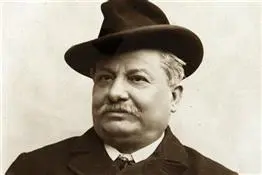
Giovanni Pascoli (December 31, 1855 – April 6, 1912) was an Italian poet. He is considered one of the greatest lyric poets in modern Italian literature. His poetry is characterized by an innovative style, with great attention to musicality and the use of a language rich in symbolism. Recurring themes in his work include childhood, nature, memory, and loss.

Guilherme de Azevedo

Guilherme de Azevedo was a Portuguese poet, journalist, and politician, a prominent figure in the Portugal Renaissance movement in the late 19th and early 20th centuries. His poetic work is marked by deep lyricism, addressing themes such as love, saudade, and nature, with a style that reflects the influence of Symbolism and Parnassianism. As a journalist and politician, Azevedo played an active role in the public life of his time, advocating for social and cultural causes. His poetry, although sometimes melancholic, reveals a strong connection to Portuguese identity and a desire for aesthetic and social renewal.

Reed Whittemore

Reed Whittemore was an American poet, critic, and professor, known for his poetry that blends the colloquial with the reflective, often addressing themes of daily life and intellectual pursuits with a touch of humor and irony. His literary work is appreciated for its clarity and the originality of his view of the world. Whittemore dedicated part of his career to teaching, sharing his love for literature and writing with new generations of students.

José María Iparraguirre

José María Iparraguirre Balerdi was a Spanish poet and composer, known mainly for being the author of the lyrics of "Gernikako Arbola", considered the unofficial anthem of the Basque Country. Born into a Basque family, his life was marked by exile and commitment to the Basque cause, which was deeply reflected in his poetic and musical work. His poetry, written in Euskera and Spanish, conveys a strong feeling of love for the land, its culture, and its people, as well as a deep longing and denunciation of oppression. Through his verses and songs, Iparraguirre became a symbol of the identity and resistance of the Basque people, leaving a lasting legacy in collective memory.