Poem of the day

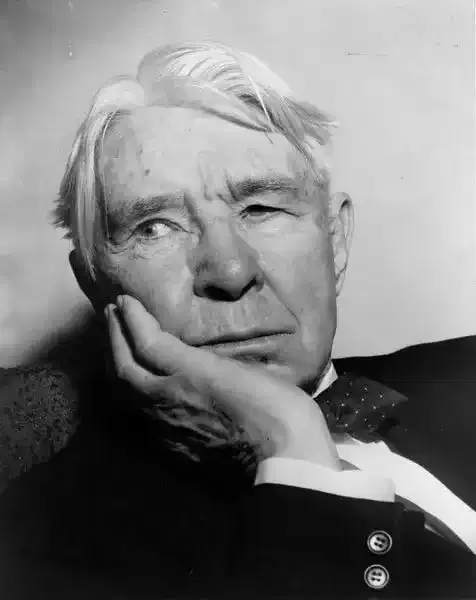
Grass

Carl Sandburg
Pile the bodies high at Austerlitz and Waterloo.
Shovel them under and let me work
-I am the grass; I cover all.

And pile them high at Gettysburg
And pile them high at Ypres and Verdun.
Shovel them under and let me work.
Two years, ten years, and the passengers ask the conductor:

What place is this?
Where are we now?

I am the grass.
Let me work.
Read full poem

Born on this day

7
Ruy Câmara

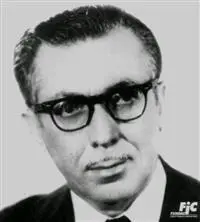
Ruy Câmara was a Brazilian poet whose work stands out for its expressive force and exploration of social and existential themes. His poetry, often tinged with a confessional and interventionist tone, reflects on the human condition, social injustices, and the search for a deeper meaning in life. With direct language and powerful imagery, Ruy Câmara established himself as a relevant voice in contemporary poetry, leaving a legacy of verses that provoke reflection and engagement.

Homero Exposito

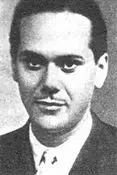
Homero Exposito was a renowned Argentine poet and composer, known for his profound contribution to the music and literature of his country. His poetic work, marked by lyrical sensibility and mastery in image construction, transcended the boundaries of poetry to become an integral part of iconic tangos, sung by great performers. He explored universal themes such as love, longing, and the passage of time, using a rich and evocative language that resonated with the public.

Ricardo Miró

Ricardo Miró was a Panamanian poet, considered one of the most important representatives of modernism in his country. His work is marked by a profound love for his homeland, the exaltation of nature, and reflection on national identity. With an elegant and evocative language, Miró celebrated the landscapes, history, and people of Panama, consolidating himself as one of the great figures of Central American literature. His poetry, which oscillates between romantic lyricism and the search for a more modern expression, continues to inspire generations of readers and writers, keeping alive the memory and pride of his native land.

Ella Wheeler Wilcox

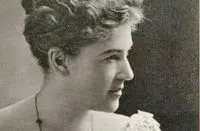
Ella Wheeler Wilcox was an American poet and author known for her inspirational and often sentimental verse. Her poetry resonated widely with the public for its accessible style and optimistic themes, which frequently touched on love, nature, and positive thinking. Wilcox achieved significant popularity during her lifetime, with her works being widely published and embraced by readers seeking comfort and encouragement. She became a prominent voice, particularly in the late 19th and early 20th centuries, for her ability to distill complex emotions and life philosophies into memorable, quotable lines that continue to be recognized.

It Might Have Been
Dmitri Prigov

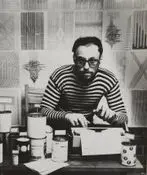
Dmitri Prigov (Dmitri Aleksandrovich Prigov) was a Russian poet, visual artist, and playwright, a central figure of Soviet and post-Soviet underground poetry. Known for his iconoclastic and experimental approach, Prigov explored language, mass culture, and symbols of power with biting irony and profound social criticism. His work, marked by fragmentation, appropriation, and performance, reflects the contradictions of Russian society, from the Soviet era to the transition years. Prigov was a provocateur and innovator, using diverse forms of artistic expression to challenge conventions and question reality. His poetry, often performative, echoes the urgency and complexity of the Russian experience in the 20th and 21st centuries.

Jaime Câmara

Jaime Câmara was a Portuguese poet and professor. He dedicated a large part of his life to teaching, but his passion for literature and poetry marked his artistic production. His work reflects a unique sensitivity towards the human condition and the beauty of the natural world, expressed through careful language and profound musicality. He stood out for his introspective lyrics and for the way he explored universal themes such as love, longing, and the passage of time, leaving a poetic legacy that continues to be valued for its depth and authenticity.

Died on this day

5
Luis Cernuda

Luis Cernuda was a Spanish poet, a central figure of the Generation of '27. His work, marked by a profound melancholy and an incessant search for an ideal love and a full reality, explores themes such as desire, solitude, rebellion, and beauty. Cernuda lived much of his life in exile, which intensified his reflection on identity, homeland, and displacement.

Sosigenes Costa

Sosigenes Costa was a Brazilian poet known for his work that moves between lyricism and existential reflection. His poetry frequently explores melancholy, the passage of time, and the search for meaning amidst reality. His writing is marked by careful language and a refined sensitivity to capture the nuances of the human soul and the ephemeral beauties of the world.

Carlos Eugénio Correia da Silva

Carlos Eugénio Correia da Silva was a Portuguese poet whose work stands out for its lyrical depth and exploration of universal themes. His writing reflects a keen sensitivity to the nuances of the human soul and the world around him. Through careful language and a contemplative vision, Silva left behind a body of poems that resonate with authenticity and the ability to evoke emotions. His poetry often addresses love, nature, and the passage of time, with a sometimes melancholic tone, but always imbued with a unique beauty. Correia da Silva's contribution to Portuguese poetry lies in his ability to translate the complexity of human feelings and their relationship with the cosmos into verses, leaving a legacy of reflection and aesthetic contemplation.

John C. Farrar

John C. Farrar is a writer whose works frequently address themes of adventure and exploration, captivating readers with his exciting narratives and vivid settings. His writing is known for its clarity and engaging pace, which transport the reader to distant worlds and extraordinary experiences. He is dedicated to creating stories that combine action with subtle reflection on human values.

Luis Barahona de Soto

Luis Barahona de Soto was a Spanish poet of the Golden Age, recognized for his lyric and epic work. His poetry is characterized by profound erudition, careful language, and a constant exploration of philosophical and existential themes, with a clear influence from classical and Renaissance tradition. Despite his relevance in the literary landscape of his time, his figure is often overshadowed by that of other great poets of the Golden Age. His work, although not very extensive, offers a particular vision of the sensibility and concerns of his era, marked by the complexity of thought and the pursuit of formal perfection.