Poem of the day

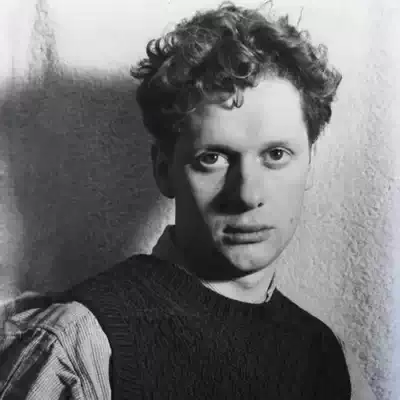
Do Not Go Gentle Into That Good Night

Dylan Thomas
Do not go gentle into that good night, 
Old age should burn and rave at close of day; 
Rage, rage against the dying of the light. 

Though wise men at their end know dark is right, 
Because their words had forked no lightning they 
Do not go gentle into that good night. 

Good men, the last wave by, crying how bright 
Their frail deeds might have danced in a green bay, 
Rage, rage against the dying of the light. 

Wild men who caught and sang the sun in flight, 
And learn, too late, they grieved it on its way, 
Do not go gentle into that good night. 

Grave men, near death, who see with blinding sight 
Blind eyes could blaze like meteors and be gay, 
Rage, rage against the dying of the light. 

And you, my father, there on that sad height, 
Curse, bless, me now with your fierce tears, I pray. 
Do not go gentle into that good night. 
Rage, rage against the dying of the light.
Read full poem

Born on this day

8
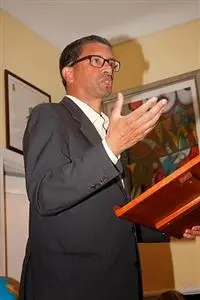
Sophia de Mello Breyner Andresen

Sophia de Mello Breyner Andresen was one of the most prominent poets in the Portuguese language, known for her refined lyricism, clarity of thought, and deep connection with Ancient Greece and nature. Her poetic work is marked by a constant search for justice, beauty, and truth, exploring universal themes such as love, death, time, and the human condition, always with a focus on redemption and hope. Her poetry is recognized for its moral strength and formal elegance, combining tradition with a contemporary and accessible language, which made her an essential figure in 20th and 21st-century Portuguese literature.

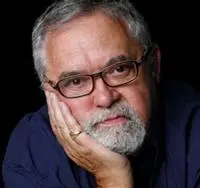
Jorge Viegas

Jorge Viegas was a Portuguese poet whose work is part of the contemporary poetry scene, exploring language and form with a keen sensitivity to human and existential issues. His poetry is marked by introspection, reflection on time, memory, and the human condition, often expressed through careful and imagistic language. His literary career demonstrates a constant search for new forms of poetic expression, engaging with tradition while simultaneously challenging it. Viegas has established himself as an important voice in recent Portuguese poetry, recognized for the depth of his reflections and his formal mastery.

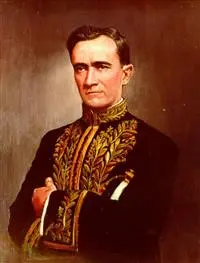
Mário Cláudio

Mário Cláudio is a contemporary Portuguese writer, known for his engaging prose and his ability to explore the complexity of the human condition, memory, and identity. His works, which often delve into the past and its reverberations in the present, are distinguished by their stylistic richness and psychological depth. With a consolidated literary career, Mário Cláudio is a prominent name in Portuguese literature, whose books invite reflection on universal themes, presented through narratives that captivate the reader with their intelligence and sensitivity.

Amadeu Amaral

Amadeu Amaral was a Portuguese poet, playwright, and literary critic, a prominent figure of the Orpheu group and the modernist movement in Portugal. His poetic work is marked by formal innovation, the exploration of urban themes, and the search for a freer and more expressive language. As a critic and theorist, Amaral played a crucial role in defining and disseminating modernist aesthetics, advocating for the renewal of Portuguese literature in the face of previous traditions.

Domingos Monteiro

Domingos Monteiro was a Portuguese writer and professor who left an indelible mark on literature, especially through his novels that explore rural life and the complexities of human relationships with raw realism and vigorous language. His work, deeply rooted in Portuguese identity, is a testament to his keen observation of society and his ability to create striking characters and engaging stories. He was also an interventionist intellectual, whose writing reflected a commitment to education and culture.

Clara Janés

Clara Janés is an internationally renowned Spanish poet, translator, and novelist, whose work is marked by philosophical depth, sensuality, and a rich, evocative language. Her poetry explores themes such as identity, spirituality, the body, and the human relationship with the universe, often influenced by Eastern and mystical traditions. A translator of fundamental works by authors like Rumi and Hafez, Janés has established a cross-cultural dialogue that is reflected in her own writing. Her vast body of work, encompassing poetry, prose, and essays, has consolidated her as one of the most unique and influential voices in contemporary Spanish-language literature.

Juvencio Valle

Juvencio Valle was a Chilean poet whose work stood out for its sensitivity and depth in exploring the human condition and the landscapes of southern Chile. His poetry, often melancholic and reflective, addresses themes such as time, memory, solitude, and the ephemeral beauty of existence, consolidating him as an important lyrical voice in Chilean literature.

Died on this day

5
Jacques Rigaut

Jacques-Bénigne Bossuet (1627-1704) was a prominent French orator, theologian, and bishop, known for his eloquent sermons and writings that defended the theory of the divine right of kings. He served as preceptor to the Dauphin, son of Louis XIV, and his works had considerable influence on the politics and religion of his time. Bossuet is considered one of the greatest masters of French rhetoric.

Henrique O'Neill

Henrique O'Neill was a Portuguese poet and playwright, known for his poetry of an existential and intimate nature, frequently exploring the themes of the fleetingness of time, melancholy, and the search for meaning. His work reflects a refined style and careful language, marked by a keen sensitivity to the complexities of the human condition. Throughout his career, he left a poetic legacy distinguished by its reflective depth and ability to evoke subtle emotions in the reader.

Bernard Sesé

Bernard Sesé is a recognized expert in French literature, with a vast body of work dedicated to the critical analysis and editing of texts by important authors, especially from the modern and contemporary periods. His academic career is marked by a profound knowledge of French literary tradition and by his contribution to the dissemination and study of its works. He is known for his critical editions, which offer new perspectives on classic texts and for his ability to contextualize the works within their respective historical periods and literary movements.

Ataliva Herrera

Ataliva Herrera is a prominent figure in literature, with a work distinguished by its depth and the rigor with which it approaches universal themes. His writing is marked by precise language and a critical view of society and the human condition. He is dedicated to exploring the complexities of existence, moral dilemmas, and interpersonal relationships. His literary legacy is built on a foundation of deep reflection, translated into dense and meaningful narratives. Herrera is an author who invites meditation on life, art, and the individual's role in the world, leaving an indelible mark on the literary field.

Estanislao del Campo

Estanislao del Campo was a 19th-century Argentine poet and military man, mainly known for his work "Fausto," a gaucho poem that satirizes the visit of a devil to Buenos Aires and reflects on the society of his time. His writing is characterized by the mixture of criollo and cultured elements, humor, and sharp social observation. Through his verses, del Campo portrayed rural and urban life in Argentina, addressing themes such as politics, customs, and national identity with an agile and often ironic style. His figure is relevant for understanding gaucho poetry and Argentine literature of his era.