
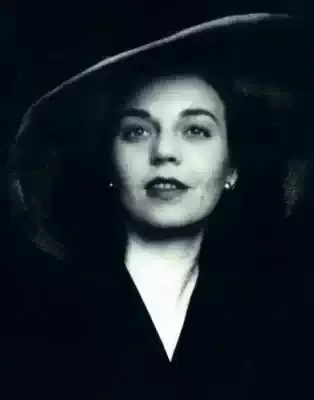
Sophia de Mello Breyner Andresen
 PT
PT
Sophia de Mello Breyner Andresen was one of the most prominent poets in the Portuguese language, known for her refined lyricism, clarity of thought, and deep connection with Ancient Greece and nature. Her poetic work is marked by a constant search for justice, beauty, and truth, exploring universal themes such as love, death, time, and the human condition, always with a focus on redemption and hope. Her poetry is recognized for its moral strength and formal elegance, combining tradition with a contemporary and accessible language, which made her an essential figure in 20th and 21st-century Portuguese literature.
n. 1919-11-06, Porto · m. 2004-07-02, Lisboa
Bio
Identification and basic context
Sophia de Mello Breyner Andresen, the full name of Sophia de Mello Breyner Andresen, was born in Lisbon. She used only her baptismal name as an author. Her family origins belonged to the upper bourgeoisie, with ties to the nobility, and her father was a man of great culture and political involvement. Her nationality was Portuguese, and she wrote exclusively in the Portuguese language. She lived through a large part of the 20th century and the early 21st century, a period of intense political and social transformations in Portugal and the world.Childhood and education
She spent her childhood and youth in Cascais, in a family environment that valued culture, reading, and contact with nature, elements that would become central to her work. Her education was marked by a humanist upbringing and the strong influence of her parents. She had early contact with classical Greek literature, philosophy, and European culture, as well as a deep connection with the maritime landscape of her childhood. This environment fostered a critical spirit and a refined artistic sensibility.Literary career
Her literary activity began early, but the publication of her first book, 'Dia do Mar' (Day of the Sea), occurred in 1947, a milestone in Portuguese poetry. Throughout her career, her work evolved, maintaining a remarkable thematic and stylistic coherence, focused on clarity, denunciation of injustice, and the exaltation of beauty. She regularly published poetry books, but also works of fiction and essays. She collaborated in various cultural publications throughout her life.Work, style, and literary characteristics
Work, style, and literary characteristics Among her main works, highlights include 'Dia do Mar' (1947), 'Coral' (1950), 'O Livro Sexto' (1962), and 'Geografia' (1967). The dominant themes in her work include the beauty of the world, nature (especially the sea), justice, freedom, the human condition, death, and memory. Her poetic form tends towards clarity and refinement, frequently using free verse, but with a striking musicality and rhythm. Metaphor is a central expressive resource, but always in service of communicating an idea or feeling. The tone of her poetry is often lyrical, but also interventionist and morally elevated. Her language is precise, limpid, and imagistic, without ornamental excess. Sophia de Mello Breyner Andresen's work dialogues with the classical tradition and European poetry, but is fully integrated into Portuguese Modernism, contributing a unique voice focused on ethics and aesthetics.Work, style, and literary characteristics
Cultural and historical context Sophia lived and wrote during a period of great turmoil in Portugal, notably the Estado Novo (New State), against which she openly positioned herself, defending freedom and justice. Her work reflects this civic and moral intervention. She maintained relationships with important figures in Portuguese culture, such as her generation of modernist poets. Her poetry, although linked to a tradition, always sought a universal and interventionist dimension.Work, style, and literary characteristics
Personal life She married the journalist and politician Francisco de Portugal, with whom she had five children. Her life was marked by a strong family connection and her civic and political activism. She maintained friendships with many intellectuals and artists of her time. Her home, in Lisbon and later in Sintra, was a center for cultural gatherings. Her belief in the power of words and the pursuit of truth marked her life.Work, style, and literary characteristics
Recognition and reception Sophia de Mello Breyner Andresen is widely recognized as one of the greatest poets in the Portuguese language. She received numerous awards and distinctions throughout her life, including the Prémio Camões (Camões Prize). Her work has been the subject of academic study, and her popularity extends across several generations.Work, style, and literary characteristics
Influences and legacy Influenced by classical Greek poetry, the Bible, poets like Fernando Pessoa, and philosophers like Plato, Sophia in turn influenced several generations of poets in Portugal and Brazil. Her legacy lies in her poetry of profound humanity, her ethical demands, and her formal beauty, which continues to inspire readers and writers.Work, style, and literary characteristics
Interpretation and critical analysis Sophia's work has been the subject of various interpretations, focusing on its ethical and aesthetic dimension, its relationship with Greek thought, and its ability to transfigure reality through words. The universality of her themes and the clarity of her message give her a remarkable philosophical and existential depth.Work, style, and literary characteristics
Curiosities and lesser-known aspects A curious aspect is her strong connection to Greece, which went beyond literary influence, even including personal acquaintances with important figures in Greek culture. Her house in Lisbon was known for its informal gatherings with friends and intellectuals. Her dedication to poetry was seen as a life mission.Work, style, and literary characteristics
Death and memory Sophia de Mello Breyner Andresen passed away in Lisbon. Her death was felt as the loss of a pillar of Portuguese culture. Her work continues to be widely disseminated, read, and studied, keeping her memory and legacy alive.Poems
0No poems found
Videos
50
Comments (0)
No comments yet. Be the first to comment.