

Awards
Prémio de Vida Literária APE
Prémio Vida Literária APE
Description
A Tribute to the Lusophone Literary Journey
The APE Lifetime Literary Award is a distinction of great prestige in the Portuguese-language literary scene, awarded annually by the Portuguese Writers Association (APE). This award aims to celebrate and honor the careers of writers who, throughout their careers, have demonstrated consistent, relevant work with a profound impact on literature. Unlike other awards that focus on specific works, the APE Lifetime Literary Award distinguishes the author's entire body of work, recognizing their lasting contribution to culture and literary expression.
Award Criteria
The award criteria focus on the literary quality of the work, originality, thematic depth, stylistic innovation, and the author's ability to engage with literary tradition while expanding it. The longevity and consistency of literary production are also important factors, as is the influence the author has had on subsequent generations of writers and readers. The laureate is chosen by a jury composed of individuals of recognized merit in the fields of literature, criticism, and academia, ensuring the impartiality and relevance of the decision.
Diversity of Genres
This award does not have specific categories, as its nature is to recognize the totality of a writer's work. However, the diversity of literary genres in which the awarded authors have worked – poetry, prose (novels, short stories), essays – reflects the breadth of Portuguese-language literature and the award's capacity to encompass different forms of expression.
Relevance and Mission
The relevance of the APE Lifetime Literary Award lies in its ability to highlight authors who may sometimes not have achieved the media notoriety of others, but whose work is fundamental to understanding the evolution of Portuguese-language literature. By awarding the 'literary life,' the APE emphasizes the importance of dedication, perseverance, and passion for writing as pillars of artistic creation.
History and Curiosities
The award was founded in 1987.
Some curiosities about the award include its founding in 1987, and its awarding to some of the most important names in Lusophone literature, both from Portugal and other Portuguese-speaking countries. The award ceremony is usually a significant cultural event, bringing together writers, publishers, critics, and literature lovers, serving as a moment of celebration and reflection on the state of literary art. The APE, as the promoting entity, plays a crucial role in defending and promoting writers' rights and valuing literature, and this award is one of the highest exponents of that mission. Its continuity over the decades attests to its importance and the recognition it receives from the literary community.
Winners
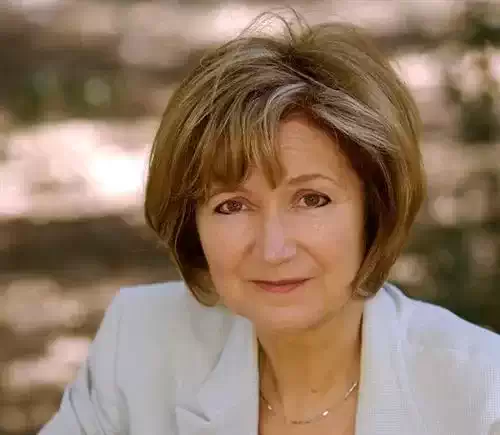
Lídia Jorge

Lídia Jorge is one of the most prominent and celebrated contemporary Portuguese writers, with a vast body of work that spans poetry, novels, and short stories. Her writing is often characterized by psychological depth, the exploration of themes such as memory, identity, the female condition, the history of Portugal, and the complexity of human relationships. With a rich and evocative language, Lídia Jorge has been building a significant literary legacy, marked by sensitivity, intelligence, and a critical look at society. Recognized with multiple national and international awards, her work is translated into several languages, attesting to her importance in the global literary scene. Lídia Jorge is an indispensable voice in Portuguese-language literature, whose work continues to captivate and provoke reflection in its readers.

João Barrento
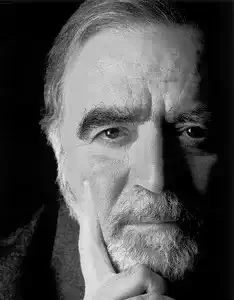
Manuel Alegre
Manuel Alegre is a prominent figure in contemporary Portuguese literature, known for his engaged, lyrical, and deeply human poetry. His work is marked by a strong connection to Portugal's recent history, particularly the period of dictatorship and the struggle for freedom. With a style that combines the power of the word with the subtlety of feeling, Alegre explores themes such as identity, memory, justice, and hope. His poetry, with great popular reach and critical recognition, is a testament to his journey through political life and his experience of the ideals of democracy and civic engagement.

Maria Velho da Costa
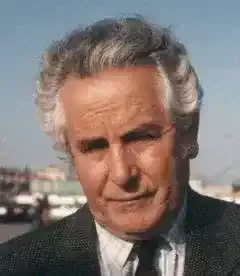
João Rui de Sousa
João Rui de Sousa is a Portuguese poet and writer whose work is characterized by its reflective depth and exploration of themes such as memory, the passage of time, and identity. With a careful style and a language that combines rigor and sensitivity, Sousa has been building a literary career that has earned him recognition in the panorama of contemporary Portuguese-language poetry. His writing invites contemplation and introspection, addressing the human condition with a nuanced and humanistic perspective.

VÃtor Aguiar e Silva
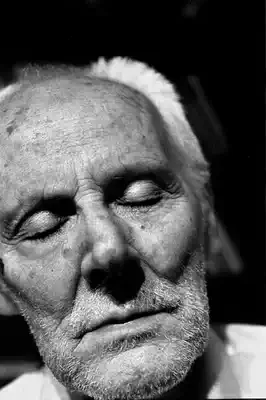
Mário Cesariny
Mário Cesariny de Vasconcelos was a Portuguese poet, a prominent figure of surrealism in Portugal. His work is characterized by the exploration of the unconscious, the dreamlike, and creative freedom, combined with a language rich in surprising imagery and unexpected associations. Cesariny also distinguished himself as an essayist and translator, being one of the most important Portuguese poets of the second half of the 20th century.

Urbano Tavares Rodrigues
Urbano Tavares Rodrigues was a prominent Portuguese writer, poet, and essayist, known for his multifaceted work that addressed social, political, and existential themes. His writing is marked by a profound humanism, a strong sense of civic engagement, and an exploration of the human condition in its various aspects. He was an influential figure in Portuguese culture of the 20th and early 21st centuries, leaving a significant literary and intellectual legacy.
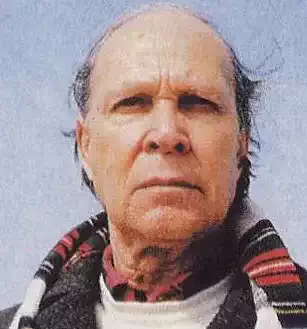
Eugénio de Andrade
Eugénio de Andrade was one of the most important Portuguese poets of the 20th century, known for the purity and musicality of his language, and for his deep connection to nature, the body, and sensory experience. His work is characterized by a refined lyricism that celebrates life, light, and beauty, without ignoring the darker dimensions of existence. With poetry distinguished by its conciseness, clarity, and apparent simplicity that hides great reflective depth, Eugénio de Andrade consolidated an unmistakable style and a unique voice in contemporary Portuguese-language poetry.

José Cardoso Pires

Óscar Lopes
Óscar Lopes was a notable Portuguese intellectual, distinguishing himself as a literary critic, essayist, poet, and university professor. His vast work encompasses the analysis of Portuguese literature, with a particular focus on the Romantic and Modernist periods, and on poetry in the Portuguese language. He was a central figure in the renewal of literary studies in Portugal, advocating for a rigorous and contextualized critical approach. His academic activity and written output left an indelible mark on the Portuguese intellectual scene of the 20th century.
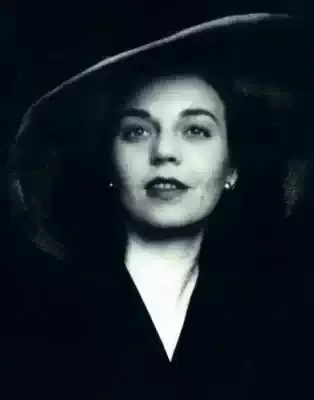
Sophia de Mello Breyner Andresen
Sophia de Mello Breyner Andresen was one of the most prominent poets in the Portuguese language, known for her refined lyricism, clarity of thought, and deep connection with Ancient Greece and nature. Her poetic work is marked by a constant search for justice, beauty, and truth, exploring universal themes such as love, death, time, and the human condition, always with a focus on redemption and hope. Her poetry is recognized for its moral strength and formal elegance, combining tradition with a contemporary and accessible language, which made her an essential figure in 20th and 21st-century Portuguese literature.
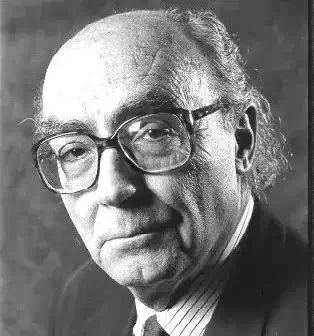
José Saramago
José Saramago was a Portuguese writer, awarded the Nobel Prize in Literature in 1998. His work, profoundly humanistic and critical, addresses existential, social, and political issues with a unique narrative style, marked by the absence of conventional punctuation in dialogue and by long sentences. He explored the human condition, memory, identity, and power, leaving a significant literary legacy. His writing is recognized for its complexity, philosophical reflection, and ability to question social structures and human behavior, inviting the reader to a deep immersion in dense and thought-provoking fictional universes.
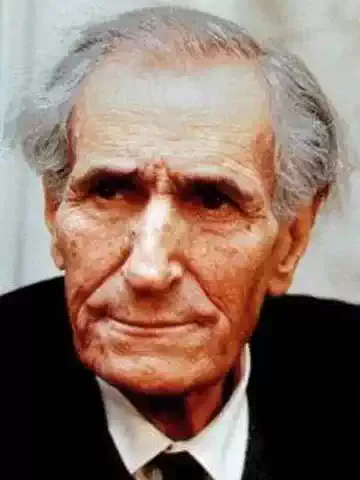
Miguel Torga
Miguel Torga was a Portuguese poet and writer, known for his multifaceted work that explores the roots of the human being and their relationship with the land. His poetry is marked by a deep connection to nature, popular tradition, and an existentialist view of the world. His writing, often visceral and strongly lyrical, reflects a constant search for identity and truth, in a style that combines the strength of free verse with the solidity of form. Torga addressed themes such as the human condition, the passage of time, the land of Trás-os-Montes, and spirituality, leaving a poetic legacy that continues to resonate for its authenticity and depth.