
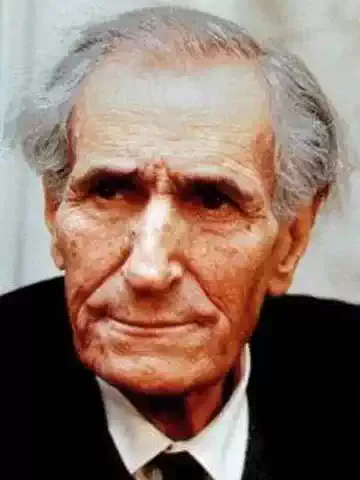
Miguel Torga
 PT
PT
Miguel Torga was a Portuguese poet and writer, known for his multifaceted work that explores the roots of the human being and their relationship with the land. His poetry is marked by a deep connection to nature, popular tradition, and an existentialist view of the world. His writing, often visceral and strongly lyrical, reflects a constant search for identity and truth, in a style that combines the strength of free verse with the solidity of form. Torga addressed themes such as the human condition, the passage of time, the land of Trás-os-Montes, and spirituality, leaving a poetic legacy that continues to resonate for its authenticity and depth.
n. 1907-08-12, São Martinho de Anta · m. 1995-01-17, Coimbra
Bio
Identification and basic context
Miguel Torga, pseudonym of Adolfo Correia da Rocha, was born in São Martinho de Anta, Portugal. He was a renowned poet, prose writer, playwright, and columnist, whose work stands out for its deep connection to the land, Portuguese identity, and an existentialist view of the world. His writing is characterized by a strong lyrical component, direct and sometimes rough language, and a constant exploration of the themes of the human condition, nature, and spirituality. Torga wrote predominantly in Portuguese.Childhood and education
Born into a family of farmers, his childhood in Trás-os-Montes profoundly marked his work, instilling in him an unwavering love for the land and its people. His initial education took place in Vila Real, where he attended high school. He later studied Medicine in Coimbra, graduating in 1936. During his student years, Torga showed a rebellious spirit and a strong social conscience, absorbing the cultural and political influences of the time, particularly the currents of thought that questioned the status quo.Literary career
The beginning of his literary career dates back to his youth, with sporadic publications in student newspapers and magazines. His work evolved over time, passing through phases of greater social and political engagement, until reaching a maturity marked by existential reflection and the exploration of human nature. The publication of "Diário" in several volumes, begun in 1940, was an important milestone, allowing him to express his thoughts more intimately and profoundly. Alongside his literary activity, Torga practiced medicine, a profession that provided him with direct contact with the realities of the country.Work, style, and literary characteristics
Miguel Torga's main works include "A Criação do Mundo" (1937), "O Outro Livro de Job" (1936), "Penas do Purgatório" (1941), and "Rua" (1942), in addition to the monumental "Diário". The dominant themes in his poetry and prose are the land, identity, the human condition, death, time, spirituality, and the search for freedom. His style is marked by expressive force, frequent use of free verse, concise and evocative language, and intrinsic musicality. Torga's poetic voice is simultaneously personal and universal, expressing anxieties and longings common to humanity. He introduced an innovative approach to exploring the inner and outer landscape, linking them inseparably.Cultural and historical context
Miguel Torga lived much of his life under the Estado Novo regime in Portugal, a period of dictatorship and censorship. His work, though not overtly political most of the time, contained a spirit of resistance and an uncompromising defense of individual freedom and human dignity. He was one of the most important poets of his generation, engaging with other writers and intellectuals of the time, but always maintaining a stance of independence and critique.Personal life
Torga was married and had children. His experience as a doctor, especially in the interior of the country, provided him with profound contact with the social and human realities that shaped his worldview and were reflected in his work. His friendships and his civic positions, sometimes controversial, reflect a nonconformist spirit and a deep sense of justice.Recognition and reception
Miguel Torga is widely recognized as one of the great names in Portuguese literature of the 20th century. His work has achieved a prominent place in the literary canon, being studied and admired both in Portugal and abroad. He received several awards and distinctions throughout his life, and his popularity remained high among readers.Influences and legacy
Torga was influenced by authors such as Fernando Pessoa and by a deep connection to Portuguese literary and popular tradition. His legacy lies in his ability to express the Portuguese soul, its strength, and its contradictions, through an authentic and powerful language. He influenced later generations of poets and writers through his originality and the depth of his vision.Interpretation and critical analysis
Torga's work has been the subject of numerous critical analyses, which highlight his exploration of the human condition, his relationship with the land, and his search for meaning in existence. His interpretations of Portuguese identity and his ability to transcend the particular to reach the universal are central points of debate.Curiosities and lesser-known aspects
A curious aspect of his life is his dual identity as a doctor and writer, two facets that complemented and enriched each other. His house in São Martinho de Anta has become a pilgrimage site for many admirers of his work.Death and memory
Miguel Torga passed away in Coimbra, leaving behind a vast literary estate and an indelible memory in Portuguese culture. His works continue to be published and reissued, keeping his presence alive in contemporary literature.Poems
0No poems found
Comments (0)
No comments yet. Be the first to comment.