
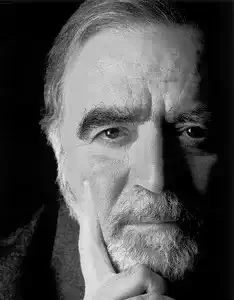
Manuel Alegre
 PT
PT
Manuel Alegre is a prominent figure in contemporary Portuguese literature, known for his engaged, lyrical, and deeply human poetry. His work is marked by a strong connection to Portugal's recent history, particularly the period of dictatorship and the struggle for freedom. With a style that combines the power of the word with the subtlety of feeling, Alegre explores themes such as identity, memory, justice, and hope. His poetry, with great popular reach and critical recognition, is a testament to his journey through political life and his experience of the ideals of democracy and civic engagement.
n. 1936-05-12, Águeda · m. , Ciudad de México
Bio
Identification and basic context
Manuel Alegre de Miguel Fernandes, known as Manuel Alegre, is a Portuguese poet, writer, and politician. He was born in Coimbra in 1936. He is known for his engaged and lyrical poetry, which reflects his political experience and historical understanding of Portugal in the 20th century. He writes in Portuguese.Childhood and education
Born in Coimbra, where his father was a military officer. He spent part of his childhood in Angola, where his father was stationed, which provided him with early exposure to different social and cultural realities, which would influence his later work. He attended Law school at the University of Coimbra, where he was actively involved in student life and anti-fascist politics. His youth was marked by the repression of the Salazar dictatorship.Literary career
His poetic production began during his youth in Coimbra, with poems that already revealed a strong sense of social engagement and criticism of the regime. His work evolved, always maintaining a connecting thread to Portuguese history and identity, but also exploring universal themes such as love, death, and the passage of time. His writing gained prominence with the publication of 'O Canto e as Armas' (1966). He collaborated in various clandestine and resistance publications during the dictatorship. In parallel, he had an active civic and political involvement.Work, style, and literary characteristics
Some of his most important poetic works include 'O Canto e as Armas' (1966), 'Babilónia' (1983), 'A Secreta Vida das Palavras' (2007), and 'O Pão e a Pedras' (2017). The central themes of his poetry are freedom, resistance, memory, national identity, social justice, love, and the human condition. His style is characterized by direct and accessible language, but loaded with meaning and emotion. He frequently uses free verse, with strong musicality and a striking rhythm. The poetic tone varies between the epic and the lyrical, the confessional and the social, his poetic voice being unmistakable in its strength and authenticity. His poetry seeks to create a dialogue between individual experience and the collective dimension of history, bringing the reader closer to his experiences and reflections.Work, style, and literary characteristics
Cultural and historical context Manuel Alegre is one of the most representative poets of the resistance to the dictatorship in Portugal. His work is intrinsically linked to the historical events of the 20th century in Portugal, such as the colonial war and the struggle for democracy. He belongs to a generation of writers who used words as a tool for engagement and hope. His political position is left-wing, having been one of the founders of the Socialist Party. Portuguese society and culture, marked by dictatorship, censorship, and war, profoundly shaped his work.Work, style, and literary characteristics
Personal life Manuel Alegre intensely lived the years of struggle against the dictatorship, having been imprisoned and exiled. His life experience, marked by politics, resistance, and hope for freedom, is a fundamental element for understanding his work. He was an active militant against the Salazar regime and, after the Revolution of April 25, 1974, played an important role in Portuguese political life, having been a deputy and a candidate for the Presidency of the Republic.Work, style, and literary characteristics
Recognition and reception Manuel Alegre is a widely recognized poet in Portugal with international reach. His work has been the subject of academic study and his poetry enjoys great popularity with the public, being frequently read and recited on various occasions. He has received several literary awards throughout his career.Work, style, and literary characteristics
Influences and legacy In his poetic formation, he felt influences from poets like Fernando Pessoa and other writers who marked the cultural resistance against the dictatorship. His legacy lies in his ability to give voice to a people struggling for freedom and to transform historical experience into universal poetry. He has influenced generations of poets and writers with his courage, his authenticity, and the strength of his message.Work, style, and literary characteristics
Interpretation and critical analysis Manuel Alegre's poetry is seen as a mirror of Portugal's recent history, addressing themes such as the struggle for freedom, collective memory, and national identity. Critical analyses highlight his ability to combine the political dimension with the lyrical, creating a work of great human depth.Work, style, and literary characteristics
Curiosities and lesser-known aspects Manuel Alegre has a strong connection to Portuguese popular music, having authored lyrics for emblematic songs. His experience in Angola left deep marks on his worldview and his writing.Work, style, and literary characteristics
Death and memory Manuel Alegre remains active and his work is a living testimony to Portuguese history and culture.Poems
0No poems found
Videos
50
Comments (0)
No comments yet. Be the first to comment.