
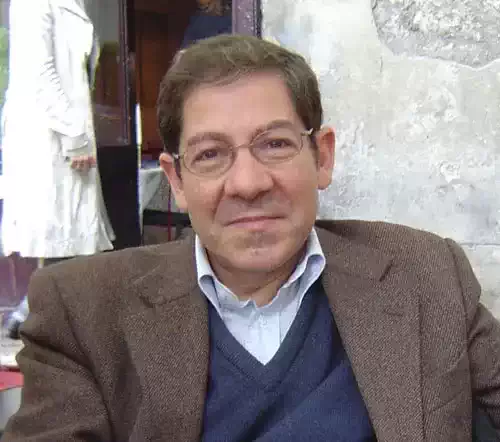
Nuno Júdice
 PT
PT
Nuno Júdice was a prominent Portuguese poet, essayist, novelist, and literary critic. His poetic work is characterized by intelligence, irony, and a constant questioning of language, identity, and reality itself. With a style that moves between the lyrical and the reflective, Júdice addressed universal themes such as time, memory, love, and the human condition, always with a sharp eye on the paradoxes of existence. His vast output, recognized nationally and internationally, establishes him as one of the most important authors of contemporary Portuguese-language literature.
n. 1949-04-29, Mexilhoeira Grande · m. 2024-03-17, Lisboa
Bio
Identification and Basic Context
Full name: Nuno Miguel Eugénio de Alpiarça Gago Júdice. Pseudonyms: Did not use pseudonyms recurrently. Date and place of birth: February 26, 1941, in Mexilhoeira Grande, Portimão, Algarve, Portugal. Date and place of death: November 17, 2024, in Lisbon, Portugal. Family background, social class, and cultural background: Born into a family of doctors and lawyers, with strong ties to the Algarve. Had access to a diverse cultural and intellectual education. Nationality and language(s) of writing: Portuguese, wrote in Portuguese. Historical context in which he lived: Lived through the Estado Novo, the Carnation Revolution, the construction of democracy in Portugal, and globalization. His literary career spanned various political and cultural phases, reflecting social transformations and the complexity of the contemporary world in his work.Childhood and Education
Family background and social environment: Grew up in a cultured and open family environment, which facilitated his early contact with reading and culture. Formal education and self-teaching: Attended Liceu Passos Manuel in Lisbon and graduated in Romance Philology from the Faculty of Arts of the University of Lisbon. Obtained a PhD in Comparative Literature from the same university. Initial influences (readings, culture, religion, politics): Was influenced by poets such as Fernando Pessoa, Luís de Camões, and authors of European literature. The intellectual context of the time, with debates on existentialism and new literary currents, also shaped him. Literary, philosophical, or artistic movements absorbed: Although not strictly adhering to a single movement, his work engages with Modernism, Surrealism, and postmodern currents, assimilating experimentation and reflection on language. Significant events in youth: The period of protest against the Estado Novo regime and the experience of the Colonial War during military service marked him profoundly and were reflected in his poetry.Literary Career
Beginning of writing (when and how it started): Began writing poetry in adolescence, but his most significant publication dates from the 1960s. His entry into the Portuguese literary scene occurred with the publication of "O Fio do Tempo" in 1963. Evolution over time (phases, style changes): His work evolved from an initial phase marked by a certain lyricism and surrealist influence to more reflective, ironic, and conceptual poetry. His capacity for stylistic reinvention is one of his great characteristics. Chronological evolution of work: Published dozens of books of poetry, essays, and fiction, demonstrating a constant and diverse output over the decades. Collaborations in magazines, newspapers, and anthologies: Actively collaborated in various literary and cultural publications, such as "Jornal de Letras e Artes", "Diário de Lisboa", "O Tempo e o Modo", "Relâmpago", "Poesia 61", among others. He also served as an editor and was a member of literary magazine boards. Activity as a critic, translator, or editor: Was a prolific essayist, literary and cultural critic, and also worked as an editor. Translated works by other authors.Work, Style, and Literary Characteristics
Major works with dates and production context: "O Fio do Tempo" (1963), "A Cor dos Dias" (1971), "O Altar das Palavras" (1975), "O Movimento Perpétuo" (1977), "A Sombra do Caos" (1995), "Cartografia das Sete Colinas" (2002), "O Livro das Estações" (2011), "A Ilha de cada um" (2014). Dominant themes—love, death, time, nature, identity, spirituality, etc.: Addresses themes such as memory, time, the passage of life, identity, the city, the landscape, love, death, religion, and humanity's relationship with the universe and language. Form and structure—use of sonnet, free verse, fixed form, metrical experimentation: Primarily uses free verse, but with great attention to rhythm and musicality. Experimented with different poetic structures, integrating reflection on form into the poetry itself. Poetic devices (metaphor, rhythm, musicality): Employs original and unexpected metaphors, wordplay, irony, and a rhythm that is sometimes contemplative and at other times more incisive. Musicality is subtly worked. Tone and poetic voice—lyrical, satirical, elegiac, epic, ironic, confessional: The tone varies between lyrical, reflective, ironic, and elegiac. The poetic voice is often questioning, but also capable of deep tenderness and melancholy. Poetic voice (personal, universal, fragmented, etc.): The poetic voice is simultaneously personal and universal, starting from individual experience to reach reflections on the human condition. Language and style—vocabulary, imagery density, preferred rhetorical devices: Clear, precise language, but with a rich and sometimes unexpected vocabulary. Imagery density is constructed with subtlety and intelligence. Uses irony, metaphor, and paradox as preferred rhetorical devices. Formal or thematic innovations introduced in literature: Introduced poetry that questions poetry itself, language, and the limits of representation. His irony and his ability to think about poetry from outside of it were innovative. Relationship with tradition and modernity: Engages with Portuguese and universal literary tradition, but always from a contemporary and critical perspective, integrating the novelties of modernity and postmodernity. Associated literary movements (e.g., symbolism, modernism): Although not confined to a movement, he is associated with Modernism and its derivations, as well as with a postmodern aesthetic that explores metalanguage and fragmentation. Lesser-known or unpublished works: "Poemas para Viajar" (2004), "Filosofia para Iniciantes" (2009).Cultural and Historical Context
Relationship with historical events (wars, revolutions, regimes): Closely followed Portugal's political and social events, such as the Estado Novo dictatorship, the April 25th Revolution, and the years of democracy building, themes that are reflected, directly or indirectly, in his work. Relationship with other writers or literary circles: Maintained close relationships with many Portuguese and foreign writers, actively participating in cultural and literary debates. He was a central figure in Portuguese cultural life. Generation or movement to which he belongs (e.g., Romanticism, Modernism, Surrealism): Belongs to the continuity of Portuguese Modernism and is considered one of the exponents of contemporary poetry, with connections to postmodern currents. Political or philosophical position: Advocate of a democratic and open society, his work reflects critical and humanistic thought, with ethical and existential concerns. Influence of society and culture on the work: Portuguese society and global culture, with their complexities, contradictions, and transformations, are the backdrop and, at times, the object of reflection in his poetry. Dialogues and tensions with contemporaries: Actively participated in literary debates, maintaining a critical dialogue with his peers and with the history of literature itself. Critical reception during life vs. posthumous recognition: Enjoyed wide recognition during his lifetime, both in Portugal and abroad. His work continues to be studied and admired after his death.Personal Life
Significant affective and family relationships and how they shaped the work: Married to filmmaker Teresa Villaverde and had two children. Family experience and affective relationships are recurring and humanizing themes in his poetry. Literary friendships and rivalries: Cultivated many friendships in the literary and artistic circles, both in Portugal and abroad, such as with the Brazilian poet Carlos Drummond de Andrade, with whom he shared affinities. Personal experiences and crises, illnesses, or conflicts: The experience of the Colonial War left its mark, as did the challenges of intellectual and artistic life in a transforming country. Parallel professions (if he did not live solely from poetry): Was a university professor, researcher, literary critic, and essayist. His academic career paralleled his literary production. Religious, spiritual, or philosophical beliefs: Showed a deep interest in existential and spiritual questions, though with a more philosophical and questioning approach than a confessional one. Political positions and civic engagement: Was an engaged intellectual, actively participating in debates about culture and society, and always in favor of democratic values.Recognition and Reception
Place in national and international literature: He is one of the most translated and internationally recognized Portuguese poets, with a work of great prestige in contemporary Portuguese-language literature. Awards, distinctions, and institutional recognition: Received numerous literary awards in Portugal and abroad, including the Prémio Vida Literária from the Portuguese Writers' Association and the Camões Prize. Critical reception at the time and over time: Criticism has been unanimous in recognizing his originality, intelligence, and the depth of his poetic work, which remains relevant and current. Popularity vs. academic recognition: Enjoys both strong academic recognition and considerable popularity among readers who appreciate poetry that challenges and reflects.Influences and Legacy
Authors who influenced him: Fernando Pessoa, Carlos Drummond de Andrade, Jorge de Sena, Mário Cesariny, among other Lusophone poets and poets from other literatures. Poets and movements he influenced: Influenced generations of Portuguese and Brazilian poets through his metalinguistic approach, subtle irony, and ability to tackle complex themes with apparent lightness. Impact on national and world literature and later generations of poets: Left an indelible mark on 20th and 21st-century Portuguese poetry, redefining the poet's role as a thinker and critical observer of reality. Entry into the literary canon: He is an unavoidable figure in the canon of contemporary Portuguese literature. Translations and international dissemination: His work has been translated into dozens of languages, making him one of the most widely published Portuguese authors abroad. Adaptations (music, theater, cinema): Several of his poems have been set to music and have inspired other art forms. Academic studies dedicated to his work: His vast work is the subject of constant study at universities worldwide, with numerous theses and articles dedicated to the analysis of his poetry and prose.Interpretation and Critical Analysis
Possible readings of the work: His poetry can be interpreted as a reflection on the fragility of existence, the difficulty of communication, and the construction of reality through language. It is poetry that invites contemplation and questioning. Philosophical and existential themes: The relationship between being and non-being, the ephemerality of time, the nature of memory, the search for meaning in a paradoxical world, the human condition. Controversies or critical debates: One debate concerns his ability to move between formal rigor and thematic freedom, and how his irony can be interpreted as detachment or as a way to deepen critical insight.Curiosities and Lesser-Known Aspects
Lesser-known aspects of his personality: Despite his fame, he was known for a certain reserve and discretion, maintaining an intense but discreet intellectual life. Contradictions between life and work: The apparent contradiction lies in the intellectual sophistication of his work and its ability to connect with everyday life and the most basic human emotions. Striking or anecdotal episodes that illuminate the author's profile: His active participation in cultural debates and his critical view of society and literature. Objects, places, or rituals associated with poetic creation: His home in Lisbon and the Algarve, his native region, were frequent sources of inspiration. Reading and reflection were his main rituals. Writing habits: He was a methodical writer, dedicating time to reflection and language refinement, but also capable of improvisation and capturing fleeting moments. Curious episodes: His skill in creating aphorisms and striking phrases that became famous. Manuscripts, diaries, or correspondence: Manuscripts of his poems and part of his vast correspondence with writers and intellectuals are preserved, offering valuable testimony of his life and work.Death and Memory
Circumstances of death: Died in Lisbon in November 2024, after an illness. Posthumous publications: It is expected that after his death, editions of unpublished works or compilations will emerge, further consolidating his legacy.Poems
0No poems found
Videos
50
Comments (0)
No comments yet. Be the first to comment.