
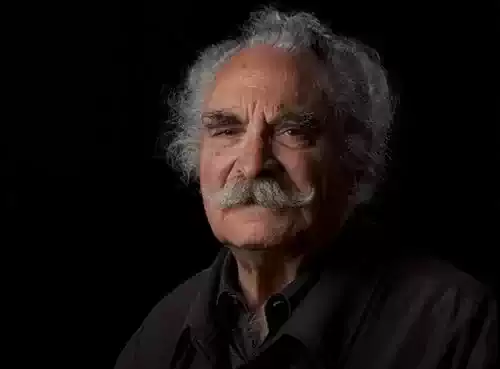
Fernando Echevarría
 ES
ES
Fernando Echevarría was a Chilean poet, essayist, and literary critic, known for his significant contribution to contemporary Spanish-language poetry. His work frequently addresses themes such as memory, identity, the passage of time, and the human condition, with an elaborate and reflective language. Echevarría stood out for his erudition and the depth of his literary analyses, also working as a professor and cultural disseminator. His poetry is marked by imagistic density and a constant search for new forms of expression, dialoguing with tradition and exploring the limits of language.
n. 1929-02-26, Cabezón de la Sal · m. 2021-10-04, Porto
Bio
Identification and basic context
Fernando Echevarría Ruiz was a Chilean poet, essayist, literary critic, and professor. He was born in Santiago, Chile. He was a prominent figure in 20th and early 21st-century Chilean and Latin American literature. His work developed in a context of political and cultural transformations in Chile and Latin America.Childhood and education
Echevarría had a solid academic background. He attended the University of Chile, where he studied Literature and obtained master's and doctoral degrees. His university education was fundamental to the development of his career as an academic and literary critic, as well as influencing his own poetic and essayistic production.Literary career
Fernando Echevarría's literary career was multifaceted. He began his career writing poetry and, in parallel, developed a prolific activity as an essayist and literary critic. He was a university professor, dedicating himself to the study and dissemination of Hispano-American literature. He collaborated with various academic and cultural magazines, consolidating his reputation as a benchmark intellectual.Work, style, and literary characteristics
Echevarría's poetic works, such as "El libro de los cuervos" and "La calle de los amantes," explore themes such as memory, identity, the passage of time, melancholy, and the human condition. His style is marked by erudition, imagistic density, and a carefully crafted language, which sometimes borders on the hermetic, but without losing the ability to evoke deep sensations and reflections. He frequently uses complex metaphors and an elegiac or contemplative tone. His poetry dialogues with literary tradition but also incorporates elements of modernity and experimentation.Work, style, and literary characteristics
Cultural and historical context Fernando Echevarría lived and produced in a period marked by significant events in Chile, such as the military dictatorship and the subsequent redemocratization. These historical experiences, as well as the Latin American cultural context, permeated his work, especially in his reflections on identity and memory. He was a contemporary of important figures in Chilean literature and maintained dialogue with intellectual and literary circles in the country and abroad.Work, style, and literary characteristics
Personal life In addition to his academic and literary career, Echevarría maintained a life dedicated to study and intellectual production. His passion for literature and culture was reflected in his dedication to teaching and research. Detailed information about his personal life is less publicly accessible, but his work demonstrates deep sensitivity and a critical view of the world.Work, style, and literary characteristics
Recognition and reception Fernando Echevarría gained recognition both in Chile and internationally for his poetic and critical work. He received several awards and distinctions throughout his career. His work is studied in universities and is considered a milestone in contemporary Chilean literature, valued by both the public and specialized critics.Work, style, and literary characteristics
Influences and legacy Echevarría was influenced by poets and thinkers from the Hispanic and universal literary tradition, such as Jorge Luis Borges and Octavio Paz. His own work influenced later generations of Chilean and Latin American poets and critics, consolidating his legacy as one of the great names in Spanish-language poetry and essays.Work, style, and literary characteristics
Interpretation and critical analysis Echevarría's work is often analyzed from the perspectives of metaphysics, philosophy of language, and psychoanalysis, given the profound existential and identity reflections present in his texts. His poems invite multiple readings, exploring the complexity of the human experience.Work, style, and literary characteristics
Curiosities and lesser-known aspects An interesting aspect of his career is his dual role as a poet and a rigorous critic, demonstrating remarkable intellectual versatility. His dedication to the study of lesser-known poets also contributed to the appreciation of diverse literary voices.Work, style, and literary characteristics
Death and memory Fernando Echevarría passed away in 2016, leaving a significant literary and academic legacy. His work continues to be published, studied, and inspire new readers and writers, keeping his memory and contribution to literature alive.Poems
0No poems found
Videos
50
Comments (0)
No comments yet. Be the first to comment.