

Awards
Prémio Pessoa
Description
Origin and Objectives of the Prize
The Pessoa Prize, established in 1987 by the Portuguese newspaper Expresso and Caixa Geral de Depósitos, is considered one of the most important awards given to Portuguese-speaking personalities. Its objective is to recognize and distinguish annually a personality who, through their work and activity, has exceptionally stood out in the cultural and scientific landscape, both in Portugal and in the Portuguese-speaking world.
Multidisciplinary Scope
The prize is not restricted solely to literature, encompassing a wide range of disciplines, including visual arts, cinema, music, theater, architecture, science, and thought. This scope gives it unique breadth and relevance, celebrating the diversity and excellence of Lusophone talent.
Selection Process
The jury, composed of renowned figures in various fields of knowledge and culture, has the difficult task of selecting a laureate from among high-quality candidates. The choice generally falls on individuals whose work has had a significant and lasting impact, has contributed to the enrichment of cultural and scientific heritage, and demonstrates a high degree of originality and merit.
Distinguished Laureates
Over the years, the Pessoa Prize has been awarded to key figures in Portuguese-speaking culture and science, such as:
- the writer José Saramago (1995)
- the poet António Ramos Rosa (2004)
- the filmmaker Manoel de Oliveira (2002)
- the fado singer Amália Rodrigues (1997)
- the scientist António Damásio (1997)
The award to José Saramago, for example, was a precursor to the international recognition he would receive with the Nobel Prize in Literature in 1998.
Cultural Relevance and Impact
The relevance of the Pessoa Prize lies not only in the prestige it confers upon its laureates but also in its ability to promote and value Lusophone cultural and scientific production globally. It is a beacon that illuminates and celebrates creativity, intelligence, and innovation, encouraging continuity and excellence.
The prize award ceremonies are highly visible events that attract media and public attention, reinforcing the importance of culture and science in society. The longevity and recognition of the Pessoa Prize solidify its position as one of the pillars for the promotion and celebration of Lusophone talent, a true reflection of the richness and diversity of the Portuguese-speaking world.
Winners
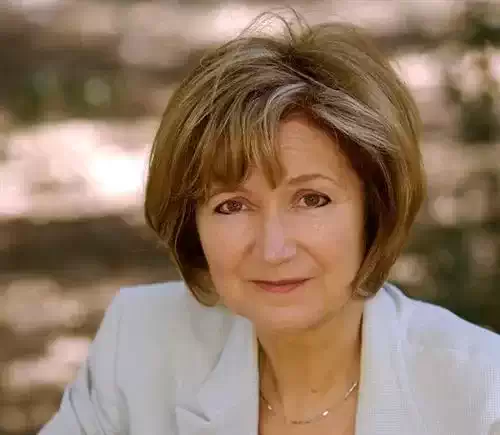
Lídia Jorge

Lídia Jorge is one of the most prominent and celebrated contemporary Portuguese writers, with a vast body of work that spans poetry, novels, and short stories. Her writing is often characterized by psychological depth, the exploration of themes such as memory, identity, the female condition, the history of Portugal, and the complexity of human relationships. With a rich and evocative language, Lídia Jorge has been building a significant literary legacy, marked by sensitivity, intelligence, and a critical look at society. Recognized with multiple national and international awards, her work is translated into several languages, attesting to her importance in the global literary scene. Lídia Jorge is an indispensable voice in Portuguese-language literature, whose work continues to captivate and provoke reflection in its readers.

José Tolentino Mendonça
José Tolentino Mendonça is a Portuguese poet, essayist, and theologian, recognized for the depth and reflection on existential and spiritual themes in his work. His poetry, marked by a refined language and a strong dialogue with the philosophical and literary tradition, explores the human condition, faith, and the search for meaning in a complex contemporary world. With a vast body of work that includes poetry, essays, and academic articles, Tolentino Mendonça is a prominent figure in Portuguese culture, distinguished by his ability to reconcile intellectual rigor with refined lyrical sensitivity. His contribution extends beyond literature, with an active role in cultural and religious debate.

João Luís Barreto Guimarães
João Luís Barreto Guimarães is a Portuguese writer and poet, known for his lyrical work and introspective approach. His poems explore themes such as memory, identity, the passage of time, and the individual's relationship with the world.

Frederico Lourenço
Frederico Lourenço is a Portuguese poet, essayist, translator, and university professor. Recognized for his poetic work that explores language, memory, and the human condition, he also has extensive activity as a translator of classical and contemporary texts, being an unavoidable reference in the field. His writing is marked by erudition, philosophical reflection, and profound musicality.

Richard Zenith

Eduardo Lourenço
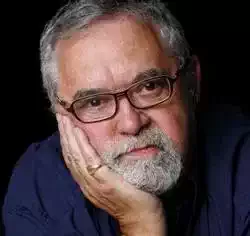
Mário Cláudio
Mário Cláudio is a contemporary Portuguese writer, known for his engaging prose and his ability to explore the complexity of the human condition, memory, and identity. His works, which often delve into the past and its reverberations in the present, are distinguished by their stylistic richness and psychological depth. With a consolidated literary career, Mário Cláudio is a prominent name in Portuguese literature, whose books invite reflection on universal themes, presented through narratives that captivate the reader with their intelligence and sensitivity.
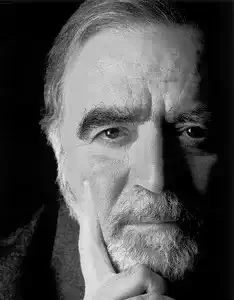
Manuel Alegre
Manuel Alegre is a prominent figure in contemporary Portuguese literature, known for his engaged, lyrical, and deeply human poetry. His work is marked by a strong connection to Portugal's recent history, particularly the period of dictatorship and the struggle for freedom. With a style that combines the power of the word with the subtlety of feeling, Alegre explores themes such as identity, memory, justice, and hope. His poetry, with great popular reach and critical recognition, is a testament to his journey through political life and his experience of the ideals of democracy and civic engagement.

José Cardoso Pires
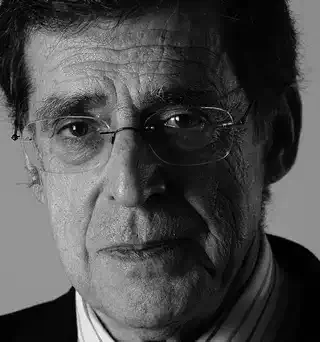
Vasco Graça Moura
Vasco Graça Moura was a multifaceted figure of Portuguese culture, excelling as a poet, essayist, literary critic, and translator. His poetic work is recognized for its erudition, rigorous formal construction, and exploration of complex themes, frequently interlinking history, mythology, and contemporaneity. With a dense and evocative language, Graça Moura addressed the human condition, memory, identity, and the individual's relationship with time and space. His vast culture and profound intelligence lent his writing a unique dimension, establishing him as one of the great names in Portuguese literature of the second half of the 20th century and early 21st century.
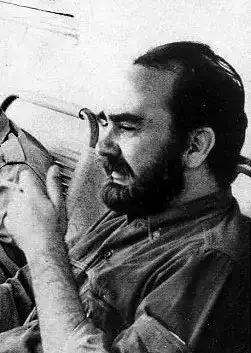
Herberto Helder
Herberto Helder was a singular and enigmatic Portuguese poet, known for his overwhelming and experimental work that defies easy classification. His poetry is a dense and labyrinthine universe, marked by transgressive language, by the visceral exploration of the body, sexuality, death, and transcendence. Helder is considered one of the most original and influential poets in contemporary Portuguese literature, with a body of work that continues to intrigue and fascinate readers and critics with its radicalism and profound reflection on the human condition and the very nature of language and poetry.
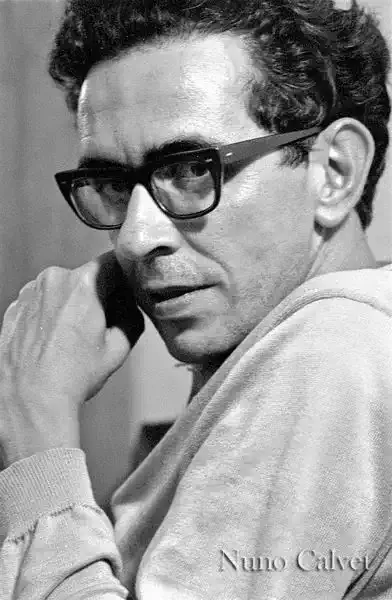
António Ramos Rosa
António Ramos Rosa was one of the most influential Portuguese poets of the 20th century, known for his dense, reflective poetry deeply connected to the human condition and language. His work is marked by a constant search for authentic expression, exploring themes such as existence, death, time, and poetry itself. His writing evolved over decades, maintaining thematic and stylistic coherence, but always open to new formal and lexical explorations. He is considered a pillar of contemporary Portuguese-language poetry.