
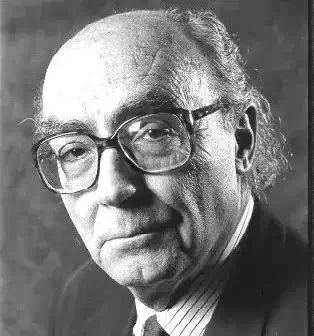
José Saramago
 PT
PT
José Saramago was a Portuguese writer, awarded the Nobel Prize in Literature in 1998. His work, profoundly humanistic and critical, addresses existential, social, and political issues with a unique narrative style, marked by the absence of conventional punctuation in dialogue and by long sentences. He explored the human condition, memory, identity, and power, leaving a significant literary legacy. His writing is recognized for its complexity, philosophical reflection, and ability to question social structures and human behavior, inviting the reader to a deep immersion in dense and thought-provoking fictional universes.
n. 1922-11-16, Azinhaga · m. 2010-06-18, Lanzarote
Bio
Identification and basic context
José de Sousa Saramago was a Portuguese writer, playwright, journalist, and political activist. He was born in 1922 in Azinhaga, municipality of Golegã, Portugal, and died in 2010 in Tías, Lanzarote, Canary Islands. He is the only Portuguese-language author to receive the Nobel Prize in Literature, in 1998. His work is translated into over 40 languages.Childhood and education
Of humble origins, he moved with his family to Lisbon in 1925. He attended the Industrial and Commercial School of Lisbon but did not complete secondary education due to financial difficulties. A self-taught individual, his vast culture was acquired through reading and life experience.Literary career
After various professional activities (mechanic, draftsman, civil servant, translator, editor), he published his first novel, "Terra do Pecado" (Land of Sin), in 1947, which had little impact. This was followed by a long period of literary silence, during which he worked as a journalist and editorial director. He returned to fiction in the 1970s with "Manual de Pintura e Caligrafia" (Manual of Painting and Calligraphy) (1977), "Levantado do Chão" (Blessed Are the Fruitful) (1980), and "Memorial do Convento" (Baltasar and Blimunda) (1982), a work that brought him international recognition.Work, style, and literary characteristics
Work, style, and literary characteristics Saramago's work is marked by philosophical depth, social criticism, and humanism. He explores themes such as memory, identity, power, oppression, religion, and the human condition. His narrative style is unmistakable, characterized by the absence of conventional punctuation in dialogues (speeches are integrated into the narrator's discourse, separated only by commas), by the long duration of sentences, and by the fluidity of discourse. He frequently uses irony, allegory, and the deconstruction of historical and biblical narratives.Work, style, and literary characteristics
Cultural and historical context Saramago lived and wrote during a period of great political and social transformations in Portugal and the world, from the dictatorship of the Estado Novo to democracy. His work reflects his life experiences and his left-wing political stance, with strong criticism of authoritarianism and social inequalities. He was a member of the Portuguese Communist Party.Work, style, and literary characteristics
Personal life He was married twice. His second wife, the Spanish journalist Pilar del Río, was his translator and inseparable companion, with whom he lived in Lanzarote, Canary Islands. His life experiences, including living under the dictatorship and emigration, shaped his worldview and his writing.Work, style, and literary characteristics
Recognition and reception He received numerous awards and distinctions throughout his career, culminating with the Nobel Prize in Literature in 1998. His work is widely translated and studied worldwide, being considered one of the pillars of contemporary Portuguese-language literature.Work, style, and literary characteristics
Influences and legacy Saramago profoundly influenced contemporary literature, both in Portuguese and internationally. His unique style and his reflections on the human condition continue to inspire readers and writers. He is seen as a master of narrative and a social thinker.Work, style, and literary characteristics
Interpretation and critical analysis Saramago's work is the subject of constant debates and critical analyses, exploring its complex philosophical, political, and existential layers. The relationship between the individual and society, the construction of history, and the nature of reality are recurring themes in his works.Work, style, and literary characteristics
Curiosities and lesser-known aspects He began his literary career late, after having worked in various professions. He was an avid reader and an attentive observer of society. He adopted the surname "Saramago" (a type of wild lupine) as his literary name in homage to his humble origins.Work, style, and literary characteristics
Death and memory He died in 2010, victim of pneumonia. He left a vast literary collection, which continues to be published and studied. His memory is celebrated as that of one of the greatest writers of the 20th century and a tireless defender of human values.Poems
0No poems found
Videos
50
Comments (0)
No comments yet. Be the first to comment.