Dylan Thomas
Author of the day

Dylan Thomas

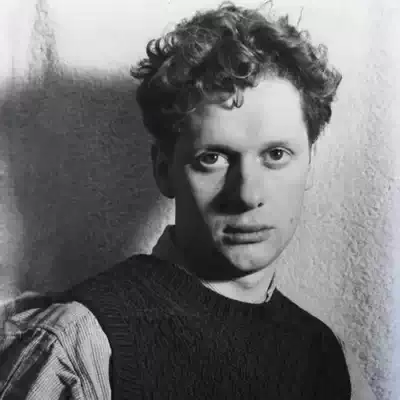
Dylan Thomas was a celebrated Welsh poet whose vivid imagery, lyrical intensity, and unique use of language captivated readers worldwide. His work, often characterized by its passionate exploration of life, death, love, and nature, combined a deep connection to his Welsh heritage with a modernist sensibility. Despite a tragically short and often tumultuous life, his poems possess an enduring power and musicality that have secured his place as one of the 20th century's most important poets.

Poem of the day

Grass

Carl Sandburg
Pile the bodies high at Austerlitz and Waterloo.
Shovel them under and let me work
-I am the grass; I cover all.

And pile them high at Gettysburg
And pile them high at Ypres and Verdun.
Shovel them under and let me work.
Two years, ten years, and the passengers ask the conductor:

What place is this?
Where are we now?

I am the grass.
Let me work.
Read full poem

Born on this day

11
António José Forte

António José Forte was a Portuguese poet known for his work linked to surrealism and the exploration of the unconscious. His poetry often explores themes such as desire, the body, fragmented identity, and social criticism, using bold and imagistic language. His work is marked by profound originality and a rejection of literary conventions, seeking a freer and more authentic expression of the human experience.

Carlos Vogt

Carlos Vogt is a Brazilian poet, essayist, and translator, known for his work that explores poetic language in an experimental and reflective way. His literary production spans various forms, from poetry to literary criticism, always with a sharp eye on the possibilities of the word. With a career marked by research and the constant search for new forms of expression, Vogt has established himself as an important figure in contemporary literature, dialoguing with traditions and proposing innovative paths for poetry.

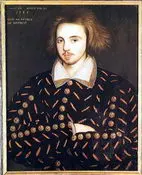
Christopher Marlowe

Christopher Marlowe (baptised 26 February 1564 – 30 May 1593) was an English playwright, poet and translator of the Elizabethan era. Marlowe is the foremost of the short-lived generation of playwrights who were Shakespeare's contemporaries. He was the greatest tragedian of his day and, along with William Shakespeare, was one of the few English playwrights of the period to gain a reputation for both great dramatic skill and literary merit.

Our swords shall play the orators for us.
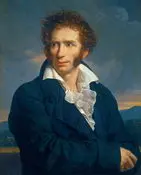
Évariste Parny

Charles-Évariste de Parny, known as Évariste Parny, was a French poet famous at the end of the 18th and beginning of the 19th century. His poetry, often marked by a sentimental and elegiac tone, explored themes of love, nature, and melancholy. He gained fame for his "Élégies", which resonated with the spirit of pre-Romanticism, and also for lighter, satirical poems. His life was equally notable for his relationships and his time as tutor to Catherine the Great's son.

Ugo Foscolo

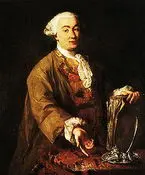
Ugo Foscolo was an Italian neoclassical poet, writer, and revolutionary, born on the island of Zante (then under Venetian rule) in 1778. His most famous work is "Le ultime lettere di Jacopo Ortis" (The Last Letters of Jacopo Ortis), an epistolary novel that expresses romantic and nationalist sentiments. Foscolo is also known for his sonnets and for his political activity and exile.

Domingos Maximiano Torres

Domingos Maximiano Torres was a poet of significant relevance in his time, known for his poetry that oscillates between lyricism and existential reflection. His work, though sometimes less celebrated than that of some contemporaries, carries a unique depth in its approach to universal themes such as love, the ephemerality of life, and the search for meaning. The density of his language and his formal mastery give his verses a timeless quality, inviting the reader to immerse themselves in inner landscapes rich in symbolism and emotion.

Cláudia Mira

Cláudia Mira is a contemporary Portuguese writer and poet. Her poetic work is marked by a strong lyrical and introspective component, exploring themes such as identity, memory, human relationships, and the ephemerality of life. Her writing is characterized by sensitivity in approaching complex emotions and by the search for a particular perspective on the world. With careful and evocative language, Cláudia Mira constructs verses that resonate with contemporary experience, inviting reflection on the deepest aspects of existence and the human condition.

Craig Santos Perez

Craig Santos Perez is a Chamorro poet, activist, and scholar (born in Guam) whose work focuses on the interconnections between ecology, colonialism, and Pacific culture. His poetry, often engaged and experimental, addresses environmental threats, the history of colonization, and the resilience of indigenous cultures.

Rafael de León

Rafael de León was a prominent Spanish poet and lyricist, known for his deep connection with copla and flamenco. His work, rich in imagery and emotion, explores love, disillusionment, and the essence of the Andalusian soul, often through direct and evocative language. He was a key figure in the renewal of copla, endowing it with greater lyrical and literary depth, and his legacy endures as one of the great poetic chroniclers of Andalusian and Spanish identity.

Died on this day

12
José Craveirinha

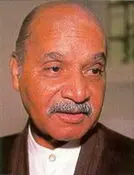
José Craveirinha was a Mozambican poet, considered one of the greatest names in Portuguese-language African literature. His work, strongly marked by Mozambican identity, the fight against colonialism, and the celebration of Mozambique's culture and people, is characterized by a vibrant and expressive language that mixes Portuguese with elements of local languages. He is known as the "Poet of the People".

Tomás Ribeiro

Tomás Ribeiro was a Portuguese poet and politician, a prominent figure in the poetry of the second half of the 19th century. His work, marked by late Arcadianism and the transition to Romanticism, explores themes such as love, nature, saudade, and patriotism, with a careful style and refined musicality. He stood out not only for his literary production but also for his political activity and dedication to public service. His poetry reflects a lyrical sensibility and a concern for form, consolidating him as an important name in Portuguese literature of his time.

Rubén Darío

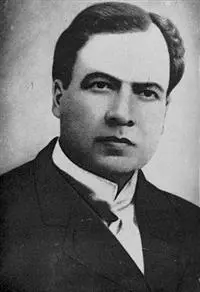
Rubén Darío was a Nicaraguan poet, journalist, and diplomat, considered the father of literary modernism in the Spanish language. His work revolutionized Spanish poetry, introducing new metrical forms, a rich and exotic vocabulary, and unparalleled musicality. Darío explored universal themes such as love, death, time, and the pursuit of beauty, with a language that combined the classic and the modern. His influence extended throughout Latin America and Spain, profoundly marking Spanish-language literature.

Emilio De Marchi

Emilio De Marchi was an Italian tenor, famous for his interpretations of operas from the verismo and late-Romantic repertoire. He is particularly known for being the first to perform the role of Cavaradossi in Puccini's opera 'Tosca'.

Robert Brasillach

Robert Brasillach was a French writer, journalist, and film critic, born in Perpignan on March 31, 1909. Associated with the far-right movement, Brasillach was a controversial figure in the 20th-century French intellectual scene. Known for his elegant prose and his talent as a literary and film critic, he collaborated with various publications, including "L'Action Française" and "Je suis partout." During World War II, Brasillach adopted collaborationist and antisemitic positions, which would lead to his conviction and execution after the liberation of France. He died in 1945.

Gérard D’houville

Gérard d'Houville was a French writer, journalist, and literary critic, known for his active participation in the cultural and literary life of his time. His work, although less known internationally, reflects an interest in the nuances of society and reflections on art and literature. As a journalist and critic, d'Houville had the opportunity to interact with various artistic and intellectual movements, contributing to the cultural debate of his time. His writing seeks to explore the complexities of human relationships and literary trends, presenting a keen insight into the French cultural scene.

Jaime Ferrán

Jaime Ferrán is a Spanish poet, literary critic, and translator whose poetic work is characterized by a deep reflection on time, memory, and the human condition, often tinged with restrained lyricism and formal elegance. His career, spanning several decades, has been recognized for its intellectual rigor and mastery of verse. Ferrán has cultivated poetry, essayistic prose, and translation, establishing himself as a relevant figure in contemporary Spanish literature.

Liliana Bodoc

Liliana Bodoc was a prominent Argentine writer, recognized for her deep connection with children's and young adult literature, as well as for her poetic and narrative work for adults. Her writing is characterized by a powerful voice and a great ability to evoke complex worlds and memorable characters, often exploring themes of identity, memory, and social justice. She was an influential figure in the Latin American literary landscape, leaving a legacy of works that continue to inspire readers and writers alike. Her commitment to the written word and her ability to transcend genres established her as one of the most important voices of her generation.

Jorge Guillén

Spanish poet, one of the central figures of the Generation of '27 and one of the most important representatives of pure poetry in the Spanish language. His work is characterized by a celebration of existence, light, and formal perfection, seeking a poetry stripped of anecdotes and excessive sentimentality. Throughout his extensive production, Guillén explored the beauty of the world and the fullness of being through a refined language and constant aesthetic rigor.