Poem of the day

Do Not Go Gentle Into That Good Night

Dylan Thomas
Do not go gentle into that good night, 
Old age should burn and rave at close of day; 
Rage, rage against the dying of the light. 

Though wise men at their end know dark is right, 
Because their words had forked no lightning they 
Do not go gentle into that good night. 

Good men, the last wave by, crying how bright 
Their frail deeds might have danced in a green bay, 
Rage, rage against the dying of the light. 

Wild men who caught and sang the sun in flight, 
And learn, too late, they grieved it on its way, 
Do not go gentle into that good night. 

Grave men, near death, who see with blinding sight 
Blind eyes could blaze like meteors and be gay, 
Rage, rage against the dying of the light. 

And you, my father, there on that sad height, 
Curse, bless, me now with your fierce tears, I pray. 
Do not go gentle into that good night. 
Rage, rage against the dying of the light.
Read full poem

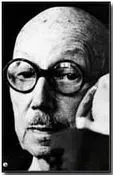
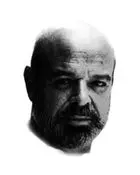
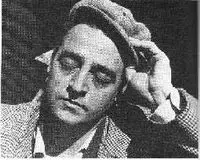
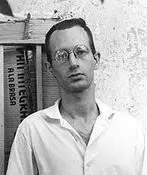
Born on this day

7
Gerardo Mello Mourão

Gerardo Mello Mourão was a Brazilian poet, journalist, and literary critic, a prominent figure in 20th-century poetry. His work is marked by dense language and a profound reflection on the human condition, time, and memory. With an erudite yet accessible style, Mello Mourão left a significant poetic legacy, exploring universal themes with singular sensitivity.

Gaston Miron

Gaston Miron was a Canadian poet and political activist known for his influence on Quebec literature. His work frequently explored themes of national identity, resistance, and the human condition.

Vassyl Symonenko

Vassyl Symonenko was a Ukrainian poet, journalist, and activist considered one of the most important figures of the Ukrainian 'Shistdesiatnyky' (Sixtiers) generation. He stood out for his lyrical and patriotic poetry, which expressed a strong desire for freedom and self-determination for Ukraine during a period of strong Soviet repression. His work, often written in secret or published posthumously, became a symbol of resistance and Ukrainian national identity. Symonenko died young due to health complications.

Died on this day

12
Ary dos Santos

Ary dos Santos was a Portuguese poet, known for his intense lyrics, marked by musicality, amorous lyricism, and reflection on themes such as time, saudade, and the human condition. His work, although often associated with protest songs and fado, transcends these genres, revealing a poet of great sensitivity and formal rigor. He is considered one of the most important Portuguese poets of the second half of the 20th century.

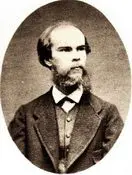
Paul Verlaine

Paul Verlaine was a French poet, a central figure of symbolism, known for his musicality and exploration of themes such as melancholy, love, and spirituality. His life, marked by turmoil and intense passions, was often reflected in his work, which oscillates between the spiritual and the carnal, the sublime and the degraded. Verlaine is celebrated for his ability to evoke atmospheres and sensations through carefully crafted language, influencing later generations of poets.

Aníbal Nazaré

Aníbal Nazaré was a Portuguese poet known for his introspective and melancholic lyricism. His work explores themes such as the passage of time, memory, and the human condition, often tinged with a serene pessimism. Nazaré stood out for the musicality of his verses and the depth of his reflections, establishing himself as a unique voice in Portuguese poetry of his generation.

Francisco Inácio Peixoto

Francisco Inácio Peixoto was a Brazilian poet whose works explore themes such as nature, love, and religiosity, often with a language that refers to the Brazilian poetic tradition. His poetry is marked by lyrical sensitivity and a search for beauty and transcendence. Although not a widely known name in the dominant literary canon, his work represents a valuable contribution to regional poetry and the expression of more intimate and contemplative sensibilities.

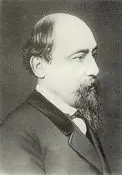
Nikolai Alekseevich Nekrasov

Nikolai Alekseevich Nekrasov was a Russian poet, writer, and editor, widely regarded as the greatest Russian poet of the 19th century, after Pushkin. His work is marked by strong lyricism, social themes, and a deep sense of patriotism, portraying the lives of the Russian people with realism and compassion.

Pierre Jean Jouve

Pierre Jean Jouve was a French poet, novelist, and literary critic, born in Arras in 1887. His poetic work, often marked by the exploration of suffering, sensuality, and spirituality, is considered one of the most important in 20th-century French poetry.

Jaime Gil de Biedma

Jaime Gil de Biedma was a Spanish poet, a prominent figure of the Generation of the 50s, known for his lyrical and confessional poetry that addresses themes such as love, death, the passage of time, melancholy, and identity. His work, characterized by clear language, formal precision, and deep emotional honesty, had a notable influence on later Spanish poetry. Despite a relatively scarce poetic output, largely published posthumously, his impact on literature is undeniable.

Kenneth Patchen

Kenneth Patchen was an American poet and novelist, a prominent figure in beat poetry and one of the pioneers of spoken word poetry. Known for his experimental approach and strong social criticism, his work explores themes such as war, injustice, love, and spirituality. Patchen developed a unique style, combining visual poetry, performance, and direct, passionate language, making him an influential name for generations of artists.

Pedro Casariego Córdoba

Pedro Casariego Córdoba was a poet, writer, and translator whose work is notable for its formal experimentation and exploration of themes such as identity, memory, and the relationship between the individual and society. Born in Spain and with a strong connection to Portugal, his poetry reflects a cosmopolitan sensibility and a deep reflection on the human condition. His writing, often marked by an ironic tone and dark humor, engages with the literary avant-gardes of the 20th century, particularly surrealism and concretism. Casariego Córdoba left a multifaceted legacy, encompassing not only poetry but also prose and translation, consolidating his position as a unique figure in the Iberian cultural landscape.

Carmen Conde

Carmen Conde was a Spanish poet, narrator, and professor, one of the most relevant figures of the Generation of 1927, although often marginalized by traditional anthologies. Her poetic work is characterized by a deep connection with nature, the sea, the earth, and the human condition, expressed with language of great sensitivity and plasticity. She was a pioneer in the field of literary criticism and cultural promotion, as well as a tireless advocate for education and culture for all. Her life and literary trajectory is a testament to perseverance and commitment to the arts and ideas.