Poem of the day

Grass

Carl Sandburg
Pile the bodies high at Austerlitz and Waterloo.
Shovel them under and let me work
-I am the grass; I cover all.

And pile them high at Gettysburg
And pile them high at Ypres and Verdun.
Shovel them under and let me work.
Two years, ten years, and the passengers ask the conductor:

What place is this?
Where are we now?

I am the grass.
Let me work.
Read full poem

Born on this day

8
António Quadros

António Quadros was a Portuguese poet and essayist known for his introspective work, deeply marked by reflection on time, memory, and the human condition. His poetry explores the ephemerality of existence and the search for meaning in a constantly changing world. In addition to his literary activities, he stood out as a professor and researcher, dedicating himself to the study of Portuguese literature and culture. His writing is characterized by careful language, a melancholic tone, and an unparalleled ability to transfigure the everyday into universal poetic matter.

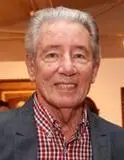
Giselda Medeiros

Giselda Medeiros is a contemporary Brazilian writer whose work stands out for its versatility and for how she addresses social and existential themes with an often poetic and imagistic language. Her writing moves between novels, chronicles, and other genres, exploring the complexities of urban life, human relationships, and the search for identity. With keen sensitivity, Medeiros captures the nuances of everyday life and the depths of the human soul, offering the reader thought-provoking reflections and a rich and engaging literary experience.

Salomé Queiroga

Salomé Queiroga was a Portuguese writer whose work belongs to modern prose. Her work often addresses the female condition, interpersonal relationships, and the complexities of daily life, with a direct style and a refined sensitivity to the psychological nuances of her characters.

Ildefonso Falcão

Ildefonso Falcão was a poet whose work is predominantly from the 19th century in Portugal. His poetry, although sometimes less prominent in general anthologies, reflects the spirit and themes of his time, often addressing nature, feelings, and the human condition.

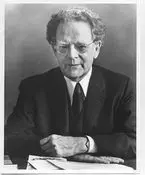
Northrop Frye

Northrop Frye was an influential Canadian literary critic and literary theorist, known for his seminal approach to archetype and myth-based literary criticism. He posited that all literature can be understood through a set of universal structures and patterns, often explored in his works on mythology and symbolism. Frye revolutionized the study of literature, arguing that its deep understanding requires an analysis of its symbolic and imaginative aspects, rather than focusing solely on historical or biographical contexts. His work remains fundamental to literary scholars worldwide, influencing various schools of critical thought.

Carlos Soulié do Amaral

Carlos Soulié do Amaral was a Portuguese poet, whose verses explore melancholy, the ephemeral nature of time, and existential introspection. His work, although less known on a large scale, is valued for its lyrical sensitivity and the depth with which it addresses universal themes. His poetry, often associated with a more intimate and reflective aesthetic, invites contemplation and communion with the deepest human feelings.

Eduardo Lizalde

Eduardo Lizalde was a Spanish poet, essayist, and literary critic, whose work is marked by a profound reflection on existence, art, and the human condition. His poetry, often enigmatic and philosophical, invites introspection and questioning. Lizalde also stood out for his activity as a critic, incisively analyzing literature and culture.

Natalia Ginzburg

Natalia Ginzburg was a renowned Italian writer, playwright, and journalist. Her work, characterized by a direct and intimate style, explores the complexities of family relationships, memory, and social transformations in 20th-century Italy. Ginzburg is admired for her ability to capture the essence of everyday life and human emotions with profound empathy and clarity.

Died on this day

7
Trajano Galvão

Trajano Galvão is a name that resonates in the panorama of contemporary poetry, known for his exploration of universal themes such as love, loss, time, and the search for transcendence. His writing is characterized by careful language, full of evocative poetic imagery, and a confessional tone that establishes an intimate connection with the reader. Galvão's work demonstrates a deep reflection on the human condition, navigating between melancholy and hope, fragility and strength. His poetry, while firmly rooted in the lyrical tradition, presents a modernity that makes it relevant and accessible to today's readers, consolidating his place as an important voice in literature.

Caetano Ximenes Aragão

Caetano Ximenes Aragão was a Brazilian poet, whose work is characterized by a strong connection to the lyrical tradition and by the exploration of themes such as love, nature, and spirituality. His poetry, although sometimes associated with more conservative currents, reveals a refined sensibility and a technical mastery of poetic form.

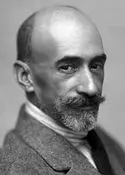
Jacinto Benavente

Jacinto Benavente was a Spanish dramatist and novelist, widely regarded as one of Spain's leading playwrights of the early 20th century. He was awarded the Nobel Prize in Literature in 1922.

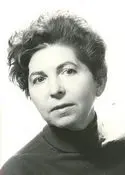
Maria Banus

Maria Banuș was a Romanian poet, known for her lyrical and intimate poetry, often exploring themes such as nature, love, and the passage of time. Her work is distinguished by its musicality and the delicacy of its imagery.

Rafael Soto Vergés

Rafael Soto Vergés is a Spanish writer and poet. His work spans various literary genres, with a style that frequently explores the human condition and contemporary society. He is known for his ability to create engaging and poetic narratives that resonate with readers through his expressive language and universal themes. His contribution to Spanish literature is marked by the depth and originality of his writing.

Community birthdays

1