Poem of the day

Do Not Go Gentle Into That Good Night

Dylan Thomas
Do not go gentle into that good night, 
Old age should burn and rave at close of day; 
Rage, rage against the dying of the light. 

Though wise men at their end know dark is right, 
Because their words had forked no lightning they 
Do not go gentle into that good night. 

Good men, the last wave by, crying how bright 
Their frail deeds might have danced in a green bay, 
Rage, rage against the dying of the light. 

Wild men who caught and sang the sun in flight, 
And learn, too late, they grieved it on its way, 
Do not go gentle into that good night. 

Grave men, near death, who see with blinding sight 
Blind eyes could blaze like meteors and be gay, 
Rage, rage against the dying of the light. 

And you, my father, there on that sad height, 
Curse, bless, me now with your fierce tears, I pray. 
Do not go gentle into that good night. 
Rage, rage against the dying of the light.
Read full poem

Born on this day

12
Luiz Fernandes da Silva

Luiz Fernandes da Silva was a Brazilian poet whose work stands out for its lyrical depth and exploration of universal themes such as love, nature, and the passage of time. His poetry, marked by carefully crafted language and unique sensitivity, has earned a special place in Brazilian literature. Although he did not achieve the notoriety of other figures of his time, his poetic contribution is undeniable, offering readers an introspective and touching view of the human condition.

Nascimento Moraes Filho

Nascimento Moraes Filho was a poet whose work stands out for its strong connection to Brazilian literary tradition, especially Parnassian and Symbolist poetry. He explored themes such as the homeland, love, nature, and spirituality with a style marked by formal perfection, rich vocabulary, and musicality. His poetry seeks aesthetic beauty and the expression of elevated feelings, reflecting a deep knowledge of language and classical poetic forms.

Claudia Pastore

Claudia Pastore is a poet whose work is part of the rich tapestry of contemporary poetry. Her writing is characterized by sharp sensitivity and a deep exploration of the human soul, addressing themes such as memory, identity, and the passage of time with evocative and imagistic language. Pastore builds bridges between the intimate and the universal, inviting readers on an introspective and emotionally resonant journey through her verses.

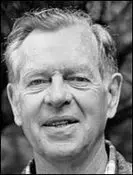
Joseph Campbell

Joseph John Campbell was an American mythologist, writer, and lecturer. He is best known for his work on comparative mythology and comparative religion. Campbell's most famous work, 'The Hero with a Thousand Faces', introduced the concept of the monomyth, or the archetypal hero's journey, which has had a significant influence on literature, film, and popular culture.

As a white candle In a holy place, So is the beaut
Ugo Ojetti

Ugo Ojetti was an Italian writer, journalist, and art critic, born in Rome in 1871. He was an influential figure in the Italian cultural scene of the early 20th century, known for his prolific activity as a journalist and for his writings on art and literature. He founded and directed important publications, contributing to the dissemination of culture and criticism in Italy.

Francisco de Andrade

Francisco de Andrade was a Portuguese poet whose works explore the depths of the human soul, the fleeting nature of time, and the intrinsic beauty of existence. His poetry, marked by careful language and keen sensitivity, invites reflection on the great themes of life. His poetic legacy lies in his ability to touch the reader with the universality of his feelings, consolidating him as an important voice in Portuguese-language literature.

Rodolfo Enrique Fogwill

Rodolfo Enrique Fogwill was a prominent Argentine writer and literary critic, known for his provocative prose and his sharp observation of social and political reality. His work, which spans narrative and poetry, is characterized by direct, often raw language, and a deep irony that exposes the hypocrisies of his time. Fogwill explored themes such as marginality, violence, and the complexities of Argentine identity, leaving an indelible mark on his country's contemporary literature.

Ramón Díaz Eterovic

Ramón Díaz Eterovic is a prominent Chilean writer, mainly known for his narrative work, especially his detective novels featuring the detective Heredia. His writing is characterized by a direct, agile style and a keen sense of social observation, which allows him to portray the reality of Chile with rawness and often with black humor. His work has received numerous awards and recognitions, consolidating him as a fundamental figure in contemporary Spanish-language literature, both in Chile and internationally.

Died on this day

10
Joaquim Pimentel

Joaquim Pimentel was a poet whose work is distinguished by its lyrical expressiveness and exploration of universal themes such as love, longing, and the human condition. His poetry, often marked by rich and evocative language, invites reflection on the depths of the soul and the complexities of interpersonal relationships. With a poetic voice that aligns with the literary tradition, Pimentel offers a tender and, at times, melancholic view of life, the passage of time, and the search for a higher meaning. His work is an invitation to contemplation and rediscovery of the beauty inherent in the human experience.

Conceição da Costa Neves

Conceição da Costa Neves was a Portuguese poet whose work was distinguished by its uniqueness and exploration of profound themes. Her writing, marked by a strong lyrical and reflective component, addressed the human condition with particular sensitivity, leaving a relevant poetic legacy. Her poetic voice contributed to the diversity and richness of Portuguese literature.

Juana de Ibarbourou

Juana de Ibarbourou, also known as Juana de América, was a Uruguayan poet of great renown, whose work is marked by a delicate lyricism and an accessible style. She explored themes such as love, nature, childhood, and the passage of time, with a language that combined sensuality and simplicity. Her poetry achieved great popularity, making her one of the most beloved voices in Latin American literature.

Oscar Acosta

Oscar Acosta is a poet whose work stands out for its profound connection with reality and human experience. His poetry, often marked by poignant lyricism and sharp social observation, addresses themes such as love, loneliness, injustice, and the search for meaning. Acosta is recognized for his ability to translate complex feelings and reflections into accessible and impactful verses.

Alphonsus de Guimaraens

Alphonsus de Guimaraens, artistic name of Afonso Henriques de Lima Barreto, was a Brazilian poet, considered the greatest representative of Symbolism in Brazil. His work, marked by profound lyricism, mysticism, and an intense exploration of subjectivity, addresses themes such as death, idealized love, lost childhood, and the search for the transcendent. His poetry is characterized by musical language, full of symbols and ethereal images, which evoke a dreamlike and spiritual universe.

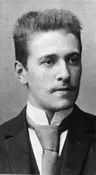
Hugo Von Hofmannsthal

Hugo von Hofmannsthal was a prominent Austrian poet, playwright, and novelist, and one of the most important representatives of literary modernism in Austria. His work is characterized by lyrical elegance, philosophical themes, and a deep interest in beauty and decay. He is particularly known for his collaborations with the composer Richard Strauss, for whom he wrote the librettos for several famous operas, such as "Der Rosenkavalier" and "Salome". Hofmannsthal was also one of the founders of the Salzburg Festival, a world-renowned cultural event.

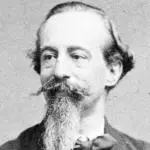
José Zorrilla

José Zorrilla was a Spanish poet and playwright, a towering figure of Romanticism in his country. His most famous work, "Don Juan Tenorio", became a classic of Spanish theater and a popular tradition performed every year. He was characterized by his vigorous style, his overflowing imagination, and his ability to evoke the legendary past and human passions. Despite his personal and financial ups and downs, he left an indelible legacy in Spanish literature.

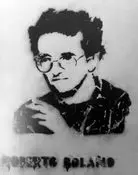
Roberto Bolaño

Roberto Bolaño was an influential Chilean writer, whose work, marked by a hypnotic prose and a deep darkness, explored the labyrinths of identity, memory, violence, and literature itself. His life, spent between Chile, Mexico, and Europe, was reflected in a narrative that often fused autobiographical elements with fiction and social criticism. Bolaño became a post-mortem cult figure, acclaimed for his stylistic audacity, his vast imagination, and his ability to capture the complexity of the contemporary world through unforgettable characters and absorbing plots.

Community birthdays

1