Poem of the day

Do Not Go Gentle Into That Good Night

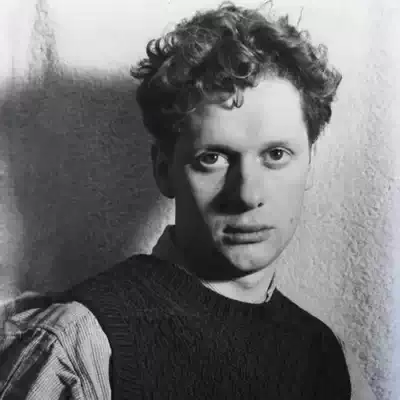
Dylan Thomas
Do not go gentle into that good night, 
Old age should burn and rave at close of day; 
Rage, rage against the dying of the light. 

Though wise men at their end know dark is right, 
Because their words had forked no lightning they 
Do not go gentle into that good night. 

Good men, the last wave by, crying how bright 
Their frail deeds might have danced in a green bay, 
Rage, rage against the dying of the light. 

Wild men who caught and sang the sun in flight, 
And learn, too late, they grieved it on its way, 
Do not go gentle into that good night. 

Grave men, near death, who see with blinding sight 
Blind eyes could blaze like meteors and be gay, 
Rage, rage against the dying of the light. 

And you, my father, there on that sad height, 
Curse, bless, me now with your fierce tears, I pray. 
Do not go gentle into that good night. 
Rage, rage against the dying of the light.
Read full poem

Born on this day

6
Emílio Moura

Emílio Moura is a poet whose work stands out for its introspection and exploration of the human condition. His poetry navigates between the everyday and the transcendent, addressing themes such as the passage of time, the ephemerality of life, and the search for meaning in a constantly changing world. With careful language and refined sensitivity, he constructs verses that resonate with their depth and ability to evoke universal emotions.

Lago Burnett

Lago Burnett was a Portuguese poet whose work stood out for its exploration of themes such as solitude, the passage of time, and the ephemerality of human existence. His writing is marked by careful language and deep lyrical sensitivity, exploring the nuances of the soul and the complexities of interpersonal relationships. His poetry invites reflection on the human condition and the mysteries of life.

Maria de Lourdes Farias

Maria de Lourdes Farias was a notable figure in contemporary poetry, whose work stands out for its sensitivity and depth in exploring universal themes. Her writing, though sometimes discreet in terms of mainstream recognition, resonates with an authenticity that captivates readers attentive to the beauty and complexity of the human experience. Her contribution to literature, marked by a unique lyrical voice, offers valuable perspectives on the human condition.

Lúcio Cardoso

Lúcio Cardoso was a Brazilian writer whose work deeply explored the complexity of the human soul, addressing themes such as incommunicability, existential boredom, and the anxieties of the modern condition. His writing stood out for its psychological introspection and its melancholic atmosphere, often set in high society or intellectual circles. He excelled in both prose and theater, leaving a legacy of works that continue to provoke reflection on human nature and interpersonal relationships.

Louis Brauquier

Louis Brauquier was a French poet and writer known for his lyrical and introspective work. His poetry frequently explores themes of love, nature, and the passage of time, with a rich and musical language. He stood out in the literary scene for his sensitivity and the depth of his reflections. His contribution to French poetry lies in his ability to evoke emotions and landscapes with great delicacy. Brauquier left a legacy of verses that continue to resonate with readers who appreciate beauty and sincerity in poetic expression.

Sergio Mondragón

Sergio Mondragón is a Mexican poet and essayist, whose work is characterized by formal experimentation and the exploration of existential and social themes. His poetry seeks to break with established canons, using language inventively to express critical and singular visions of the world.

Died on this day

15
Murillo Mendes

Murilo Mendes was one of the most original and influential poets in 20th-century Brazilian literature. His work is marked by the fusion of the sacred and the profane, the erudite and the popular, humor and melancholy. He went through various stylistic phases, from early lyricism to avant-garde experimentation. His poetry is an invitation to contemplate the mystery of existence, to celebrate beauty, and to reflect on faith, love, and time, all with an inventive and surprising language.

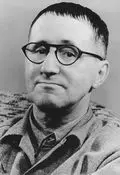
Bertolt Brecht

Bertolt Brecht was a highly influential German playwright, poet, and theatre director. He is renowned for his pioneering work in epic theatre, which aimed to provoke critical thought rather than emotional immersion. His writings often carried strong political and social messages, critiquing capitalism, war, and injustice. Brecht's innovative techniques, such as the alienation effect (Verfremdungseffekt), revolutionized modern theatre.

A Worker Reads History
Ângelo de Lima

Ângelo de Lima was a Portuguese poet, whose work, although less known to the general public, possesses intrinsic value for its lyrical depth and its ability to evoke the beauty and melancholy of existence. His poetry is marked by an introspective tone and careful language, exploring themes such as love, nature, the passage of time, and the transience of life. Despite having had a more discreet literary career, Ângelo de Lima left a poetic legacy that deserves to be rediscovered and appreciated for its sensitivity and its contribution to Portuguese poetry of his time.

Antônio Augusto de Mendonça

Antônio Augusto de Mendonça was a Brazilian poet known for his lyrical and reflective writing. His work delves into the complexities of human feeling, the ephemerality of life, and the search for transcendence. With a style that blends tradition with experimentation, Mendonça captured the essence of emotions in verses that resonate for their depth and beauty. His poetry invites introspection and contemplation, leaving a legacy of sensitivity and existential questioning.

Ribamar Feitosa

Ribamar Feitosa is a poet known for his exploration of deep and universal themes. His work is characterized by rich and imagistic language, evoking sensations and reflections on the human condition. With a writing that oscillates between the lyrical and the philosophical, the author builds bridges between the inner self and the outer world, inviting the reader on an introspective journey. His poetry is often marked by an intrinsic musicality and a depth that resonates with collective experience.

Mariazinha Congílio

Mariazinha Congílio is a Brazilian poet, whose work stands out for its sensitivity and exploration of themes such as nature, memory, and the passage of time. Her writing, often lyrical and evocative, seeks to capture the essence of moments and landscapes, with a language that moves between delicacy and depth. Congílio represents a poetic voice dedicated to scrutinizing the subtleties of human experience and its relationship with the natural world.

José Angel Buesa

José Ángel Buesa was a Spanish poet, known for his passionate and deeply lyrical style, often focused on the themes of love, death, and melancholy. His poetry, with a strong influence of romanticism and symbolism, captivated readers with its expressiveness and its ability to evoke intense emotions. With a vast and diverse production, Buesa explored different facets of human feeling, from the celebration of love to the contemplation of the finitude of life. His work is an invitation to introspection, to the appreciation of ephemeral beauty, and to reflection on the great questions of existence.

Jaime Cortesão

Jaime Cortesão was a Portuguese historian, university professor, and politician. He stood out for his vast historiographical work, centered on the history of Portugal and Brazil, and for his active role in the country's political and cultural life. His historical research addressed topics such as the Portuguese Discoveries, the formation of Brazilian identity, and the Portuguese-Brazilian relationship. He was also an advocate for democratization and social progress.

Czesław Miłosz

Czesław Miłosz was a Polish-Lithuanian poet, prose writer, translator, and diplomat, awarded the Nobel Prize in Literature in 1980. Born into a Polish family in Lithuania, then part of the Russian Empire, Miłosz spent most of his adult life in Poland and later in the United States, where he became a university professor.

The purpose of poetry is to remind us how difficul
Jules Romains

Jules Romains, pseudonym of Louis Farigoule, was a prominent French novelist and playwright, primarily known for his work "Les Hommes de bonne volonté" (The Men of Good Will). His writing often explores collective psychology and social dynamics.

Manuel Bernardo Maciel

Manuel Bernardo Maciel is a name associated with poetry, whose work is characterized by reflective depth and the exploration of existential themes. His poetry, often imbued with a strong lyrical and introspective charge, invites meditation on the human condition, the passage of time, memory, and the search for meaning in a constantly changing world. His poetic language, while it may vary in complexity, tends to favor expressiveness and the ability to evoke strong images and emotions in the reader. His literary journey is marked by a dedication to the art of the word, seeking, through verses, to unveil the nuances of feeling and thinking. Manuel Bernardo Maciel contributes to the poetic landscape with a voice that, while personal and intimate, reaches a universal dimension, touching on issues that resonate with the experience of many. His work represents an invitation to contemplation and the rediscovery of the beauty and complexity of life.

António Domingues

António Domingues was a Portuguese poet whose works explore the depth of the human condition, the mysteries of the universe, and the search for a transcendent meaning. His poetry is characterized by a language rich in imagery and symbolism, which invites reflection on life, love, and the ephemerality of time. Through verses that combine musicality and formal rigor, Domingues left a poetic legacy that continues to resonate for its authenticity and the strength of its emotions.

Teresa Ferrer Passos

Portuguese poet whose work is recognized for its lyrical depth and exploration of themes such as identity, memory, and human relationships. Her writing is marked by evocative language and a unique sensibility in approaching the female universe and its complexities.

Jomi García Ascot

Jomi García Ascot was a Spanish poet, translator, and professor, exiled in Mexico after the Spanish Civil War. His poetic work is marked by longing for his lost homeland, reflection on exile, and the search for a language that would express the complexity of his existential experience. He was also an important promoter of Hispanic culture in Mexico.