
15 de March
Born on this day
14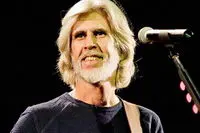
Oswaldo Montenegro is a multifaceted artist, primarily known as a Brazilian musician, composer, and filmmaker. His work is marked by a strong poetic vein and by an often allegorical and critical approach to reality. With a career spanning several decades, he stands out for his originality and his ability to move between different forms of artistic expression, always with a peculiar look at the human condition.

Gomes de Sousa was a poet whose work is distinguished by its lyrical depth and exploration of universal themes such as love, saudade, and the ephemerality of life. His writing, often marked by a subtle melancholy and intrinsic musicality, captivates with its ability to express the complexities of the human soul in an accessible and moving way. Sousa left a poetic legacy that continues to resonate through its formal beauty and genuine exploration of the human condition.

Henrique Castriciano was a Brazilian poet and writer, a notable figure in the literature of Rio Grande do Norte. His work is often associated with regionalism, but it transcends local boundaries by exploring universal themes such as identity, land, and the human condition. Castriciano stood out for his rich poetic language and his ability to portray the soul of the northeastern sertão.
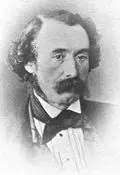
Robert Mallet was an Irish civil engineer and seismologist. He is best known for his pioneering work in the study of earthquakes, including the development of a seismograph and the investigation of the causes and effects of seismic events.
How many pessimists end up by desiring the things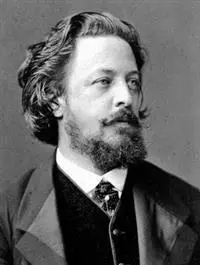
Paul Heyse was a prominent German writer, known for his vast body of work in poetry, prose, and drama. He was a central figure in German literary life of the 19th and early 20th centuries, and was awarded the Nobel Prize in Literature in 1910. His writing covered a wide range of themes, often exploring human psychology and the complexities of social relationships. Heyse is remembered as a representative of the Munich School, associated with a certain academicism and refined aesthetics.

Actor, director, playwright, cultural producer, and dental surgeon

Augusto do Souto Barreiros, full name Augusto Manuel Serrão de Faria do Souto Barreiros.

Blas de Otero was one of the most relevant Spanish poets of the second half of the 20th century, a key figure of the so-called "social poetry." His work is characterized by a deep human and ethical commitment, addressing themes such as injustice, solidarity, hope, and the search for freedom. With a direct and emotional language, Otero managed to connect with a wide audience, becoming the voice of many who longed for a more just world. His poetry, marked by formal simplicity and expressive force, remains a reference for committed poetry in Spanish.

Enrique Lihn was a Chilean poet, essayist, and critic, a central figure in 20th-century Latin American literature. His work is characterized by a profound reflection on the human condition, history, memory, and identity, often tinged with irony, skepticism, and sharp lucidity. He addressed universal themes with complex and experimental language, exploring the possibilities of language and poetic form. His poetry is a constant dialogue with literary tradition and the social and political reality of his time, marked by dictatorship and disillusionment. Lihn is remembered as one of Chile's most important and influential poets, whose work continues to challenge the contemporary reader with its depth and relevance.
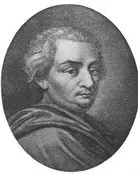


Died on this day
7
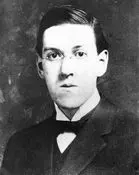
Howard Phillips Lovecraft was an American writer, best known for his horror and science fiction stories. His most famous works include the Cthulhu cycle, which explores cosmic themes and the insignificance of humanity in the face of ancient and indescribable forces.
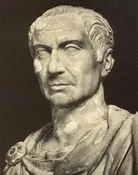
Gaius Julius Caesar was a Roman general and statesman who played a crucial role in the events that led to the end of the Roman Republic and the rise of the Roman Empire. He became a prominent figure through his military conquests, especially in the Gallic Wars. Caesar formed a political alliance known as the First Triumvirate with Crassus and Pompey. After the death of Crassus and the subsequent falling out with Pompey, Caesar crossed the Rubicon, triggering a civil war from which he emerged as the supreme leader of Rome. He was appointed dictator for life but was assassinated in 44 BC by a group of senators.


João Peres de Aboim was a troubadour of the Middle Ages, known for his contribution to Galician-Portuguese lyric poetry. His work is part of the troubadour poetry context, marked by themes such as courtly love and amorous vassalage. His compositions reflect the lyrical conventions of the time and the social and cultural environment in which the poet was situated. His poetic output, although integrated into a broader corpus of contemporary authors, stands out for its expressiveness and the way it portrays the feelings and social relations of his time, leaving an important legacy for the study of Peninsular medieval literature.

William S. Merwin was a prolific American poet, translator, and environmental activist, recipient of the Pulitzer Prize for Poetry. His work is marked by the exploration of themes such as memory, nature, spirituality, and language, often with an introspective and innovative style.

Humberto Vinueza is an Ecuadorian poet and playwright, whose work is characterized by the exploration of social and existential themes with an often incisive and provocative language. His writing seeks to reflect the complexities of contemporary life, social tensions, and the search for meaning in a constantly changing world. With a trajectory marked by experimentation and social criticism, Vinueza has established himself as a relevant voice in Ecuadorian literature. His poems and plays invite reflection and questioning, using the power of language to illuminate often-overlooked aspects of the human experience.