Juan Ramón Jiménez
Author of the day

Juan Ramón Jiménez

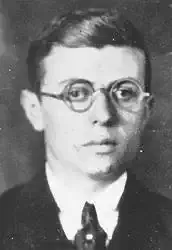
Juan Ramón Jiménez was a Spanish poet, awarded the Nobel Prize in Literature in 1956. His work, profoundly marked by symbolism and the desire for "pure poetry," evolved towards an incessant search for beauty and transcendence. His poetry explores themes such as nature, spirituality, love, and the very essence of poetry, with a refined, musical, and visionary style. He is considered one of the great renovators of 20th-century Spanish poetry.

Poem of the day

Grass

Carl Sandburg
Pile the bodies high at Austerlitz and Waterloo.
Shovel them under and let me work
-I am the grass; I cover all.

And pile them high at Gettysburg
And pile them high at Ypres and Verdun.
Shovel them under and let me work.
Two years, ten years, and the passengers ask the conductor:

What place is this?
Where are we now?

I am the grass.
Let me work.
Read full poem

Born on this day

9
César Vallejo

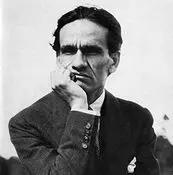
César Vallejo was one of the most important poets in Spanish-language literature, whose work is marked by profound humanity and innovative linguistic experimentation. His poetry addresses universal themes such as pain, social injustice, loneliness, and death, but with a unique sensitivity that makes him universal. His writing reflects human anxieties in the face of the world, history, and his own destiny, using language that sometimes deviates from the norm to more intensely express the human condition.

Antonio Ferreira dos Santos Júnior

Antonio Ferreira dos Santos Júnior was a poet whose work, although less prominent in the general literary landscape, expressed sensibilities and recurring themes in regional or intimate poetry. His writing was characterized by a particular approach to language and everyday matters, reflecting an attentive gaze upon the reality that surrounded him. His contribution, within a specific context, demonstrates the diversity of poetic voices that make up the literary landscape.

Lupe Cotrim Garaude

Lupe Cotrim Garaude was a Brazilian writer, known for her participation in the modernist movement and for her poetic work that explored sensitivity and introspection. Her writing is characterized by lyrical language and an exploration of themes such as nature, identity, and human relationships, reflecting the cultural effervescence of Brazil in the early decades of the 20th century. Despite a less extensive literary production than that of other contemporaries, she left a mark on Brazilian poetry with her authentic voice and her ability to express the complexity of the female universe.

Camilo Castelo Branco

Camilo Ferreira de Almeida Castelo Branco was a prolific Portuguese writer, novelist, poet, playwright, and critic. He is one of the most important figures of Romanticism in Portugal, known for his turbulent life and vast literary work.

René Daumal

René Daumal was a French writer and poet, a singular figure linked to surrealism and mysticism. His work, although relatively scarce, is profoundly marked by spiritual seeking and literary experimentation. Daumal explored the limits of language and consciousness, leaving an intriguing legacy for contemporary literature and thought.

Sully Prudhomme

Sully Prudhomme was a French Parnassian poet, known for his poetry that explored philosophical, scientific, and psychological themes with a rigorous style and precise language. His works reflect a melancholic pessimism and a fascination with reason, science, and the human condition. He was the first poet to receive the Nobel Prize in Literature, in 1901, in recognition of his lyrical work which demonstrated a high artistic ideal, a profound humanity, and a rare combination of the qualities of a keen heart and mind.

Fernando Madureira

Fernando Madureira is a Portuguese poet whose work belongs to the line of contemporary poetry, exploring the complexities of the human condition and the anxieties of the soul. His writing is marked by refined language and a keen sensitivity to universal themes, such as love, loss, and the search for meaning. His poetic compositions invite introspection and dialogue with the reader.

Died on this day

9
Natália Correia

Natália Correia was a Portuguese writer, poet, and political activist, known for her transgressive, sensual, and engaged work, which addressed themes such as love, death, freedom, and female identity. Her poetry, marked by expressive force, humor, and social criticism, made her an iconic figure of the counterculture in Portugal. She was also an ardent defender of democracy and human rights.

Gunnar Ekelöf

Gunnar Ekelöf was one of the most important Swedish poets of the 20th century, known for his innovative work and his deep exploration of the human condition. His poetry is characterized by rich language, complex symbolism, and a constant search for meaning in a fragmented world. Ekelöf is considered a central figure in Swedish modernism.

José Gorostiza

José Gorostiza was a Mexican poet, essayist, and diplomat, born in Villahermosa, Tabasco, on November 10, 1901. He is considered one of the central figures of 20th-century Mexican poetry, known for his work "Epitalamio del insomne" and his participation in the "Contemporáneos" group. His poetic work is marked by philosophical reflection, the search for meaning, and the exploration of the human condition. In addition to his literary career, Gorostiza played an important role in Mexican diplomacy, serving in various representations abroad.

Selma Lagerlöf

Selma Ottilia Lovisa Lagerlöf was a Swedish writer and the first woman to receive the Nobel Prize in Literature. Her work is known for its deep connection to Swedish folklore, fairy tales, and legends, featuring narratives rich in detail and with strong emotional appeal. Lagerlöf explored themes such as faith, love, sacrifice, and the search for identity, often setting her stories in rural Swedish landscapes.

He who is sorrowful can force himself to smile, bu
Augusto do Souto Barreiros

Augusto do Souto Barreiros was a Portuguese poet and professor, whose poetic work is predominantly inserted in the context of modernism. His writing, often marked by subtle irony and careful observation of reality, explores themes such as daily life, the human condition, and the ephemerality of time. As an intellectual, he also dedicated himself to teaching, transmitting his knowledge and appreciation for literature to generations of students, leaving a legacy of rigor and passion for culture.

Antero Alberto Ervedosa de Abreu

Antero Alberto Ervedosa de Abreu, better known as Antero de Abreu, was a Portuguese poet and professor. His poetic work, although less extensive, is notable for its lyrical depth and exploration of existential and transcendence themes, with careful language and a sometimes introspective tone.

Andrée Crabbé Rocha

Andrée Crabbé Rocha was a multifaceted figure, excelling as a poet, essayist, and translator, with a body of work marked by intellectual depth and aesthetic sensibility. Her writing moves between lyricism and critical reflection, exploring universal themes such as identity, memory, art, and the human condition, often under the influence of a vast European culture. Through careful and rigorous language, Crabbé Rocha left an important legacy in Portuguese-language literature, building bridges between different cultural and artistic traditions.

Juan de Dios Peza

Juan de Dios Peza was a Mexican poet and playwright recognized for his poetry of a popular and sentimental nature. His work, often centered on themes such as love, the homeland, and daily life, deeply connected with the feelings of the Mexican people of his time. He is considered one of the representative poets of late Romanticism in Mexico, although his style also incorporated elements of costumbrismo and accessible language that facilitated its dissemination. His facet as a playwright was also relevant, contributing to Mexican theater with works that reflected the customs and values of society. Peza left a legacy of verses that endure for their emotionality and their ability to evoke national identity, being remembered as a poet of the people.

Juan Pablo Forner y Segarra

Juan Pablo Forner y Segarra was a Spanish lawyer, writer, and politician, known for his active participation in public life and his satirical and critical writings. His work ranges from legal treatises to literary and political works, always with a sharp and often combative tone. He was a relevant figure in the turbulent political and intellectual landscape of late 18th and early 19th century Spain.