Poem of the day

Grass

Carl Sandburg
Pile the bodies high at Austerlitz and Waterloo.
Shovel them under and let me work
-I am the grass; I cover all.

And pile them high at Gettysburg
And pile them high at Ypres and Verdun.
Shovel them under and let me work.
Two years, ten years, and the passengers ask the conductor:

What place is this?
Where are we now?

I am the grass.
Let me work.
Read full poem

Born on this day

8
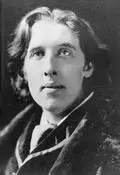
Oscar Wilde

Oscar Wilde was an Irish poet and playwright, celebrated for his wit, flamboyant style, and epigrammatic brilliance. He became one of the most famous figures of the late Victorian era, known for his advocacy of aestheticism, the belief that art exists for beauty's sake. Despite his literary success, his personal life was marked by scandal and legal troubles, leading to imprisonment.

A Vision
Cruz Filho

Cruz Filho, artistic name of José da Cruz de Paula, was a Brazilian poet and intellectual whose work is part of the context of Minas Gerais modernism. His poetry is marked by a strong regional identity, with themes that explore the landscape, culture, and daily life of Minas Gerais, especially the Viçosa region. With accessible language and a sensitive eye for the particularities of his time and place, Cruz Filho left a legacy of poems that celebrate the identity and life in his homeland. His work is an important record of literary production in Minas Gerais in the 20th century, valuing local roots and traditions with a modernist touch.

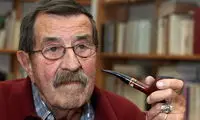
Günter Grass

Günter Grass was a German writer, born in 1927 and died in 2015, winner of the Nobel Prize in Literature in 1999. He is one of the most influential and recognized German-language authors of the post-war period, known for his works that address German history, guilt, and collective memory.

Students who don’t want to get anywhere are sure t
Dan Pagis

Dan Pagis was an Israeli poet and scholar, known for his lyrical and introspective poetry, often marked by a melancholic tone and reflection on the human condition, memory, and the passage of time. His work is celebrated for its delicacy, depth, and ability to evoke vivid images.

Maria Brites

Maria Brites is an emerging figure in contemporary poetry, whose work stands out for its exploration of introspective themes and careful language. Her poetry navigates between human fragility and the search for meaning in a constantly changing world. With keen sensibility, Brites addresses the complexities of interpersonal relationships and the individual's experience in modern society, using a poetic voice that is simultaneously personal and universal. Her writing is marked by an atmosphere of reflection and a deep empathy with human feelings. Through evocative imagery and a rhythm that invites contemplation, the author establishes an intimate dialogue with the reader, inviting them to delve into their own emotions and confront their existential anxieties. Maria Brites' work has been winning an attentive audience, consolidating her as a promising voice in the literary landscape.

Tomás Jorge

Tomás Jorge is a poet who stands out for his exploration of the depths of the human soul and for his ability to transfigure the everyday into poetic art. His work is an invitation to reflect on existence, love, and the passage of time, expressed in a language that oscillates between melancholy and the celebration of life. Jorge asserts himself as a singular voice in contemporary poetry.

Died on this day

7
Gaston Bachelard

Gaston Bachelard (27 June 1884 – 16 October 1962) was a French philosopher. He was known for his work in the philosophy of science and the philosophy of poetry, and for his analyses of the imagination and the "poetic rêverie" of the elements.

So, like a forgotten fire, a childhood can always
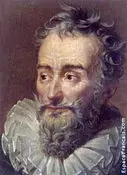
François De Malherbe

François de Malherbe was a French poet considered one of the reformers of the French language in poetry. His work marked a transition from the Renaissance style to a more rigorous classicism, valuing clarity, precision, and order. He had a significant influence on later French poetry.

Leonoreta Leitão

Leonoreta Leitão is a figure associated with poetry, with a work that stands out for its ability to express the complexity of human emotions and the beauty of the world. Her writing is marked by evocative language and deep sensitivity, exploring themes such as identity, nature, and the passage of time. Her poetic voice offers a unique and introspective perspective on the experience of being in the world.

José Augusto Cabral de Melo

José Augusto Cabral de Melo is a figure in the field of literature, associated with poetic production in Portuguese. His work, although it may not have achieved massive notoriety, is part of a tradition of writing that values reflection on existence, human feelings, and the art of language itself. His poetry is an invitation to introspection, exploring the nuances of individual experience. With a style that seeks authenticity and expressiveness, Cabral de Melo addresses recurring themes in poetry, such as the passage of time, the nature of relationships, and the search for deeper meaning in life. His literary contribution represents a unique voice in the poetic landscape, enriching the legacy of Portuguese literature with his distinct perspective.

Maria José Fraqueza

Maria José Fraqueza is a Portuguese poet whose work is characterized by lyrical depth and the exploration of universal themes such as love, absence, and the passage of time. Her writing, marked by careful language and intrinsic musicality, reflects a refined sensitivity to the nuances of human experience. Through poetry that moves between the personal and the universal, Fraqueza invites the reader to reflect on the human condition, its joys and its sorrows.

Joaquim Magalhães

Joaquim Magalhães was a Portuguese poet whose work is situated in a transitional context between Romanticism and Realism, demonstrating refined lyrical sensitivity and an attentive eye on society. His poetry explores themes such as nature, love, and saudade, often with a particular musicality and a careful vocabulary, reflecting the influence of the literary currents of his time and a personal style that sought expressiveness and formal beauty.

Rufino Blanco Fombona

Rufino Blanco Fombona was a prominent Venezuelan writer, essayist, and politician, a key figure of modernism and the Generation of '98 in Hispanic America. His work is characterized by a deep reflection on Latin American identity, criticism of imperialism, and the exaltation of Hispanic culture. He was an intellectual committed to his time, whose vibrant and passionate prose addressed themes such as history, politics, and literature with a penetrating and often polemical gaze. As a public figure, Blanco Fombona played an important role in Venezuelan diplomacy and politics, which allowed him to interact with various intellectual and political circles of the era. His legacy lies in his vigorous defense of Hispanicity and his tireless work for the preservation and dissemination of culture, as well as in his influential literary work that continues to be studied and debated.