Poem of the day

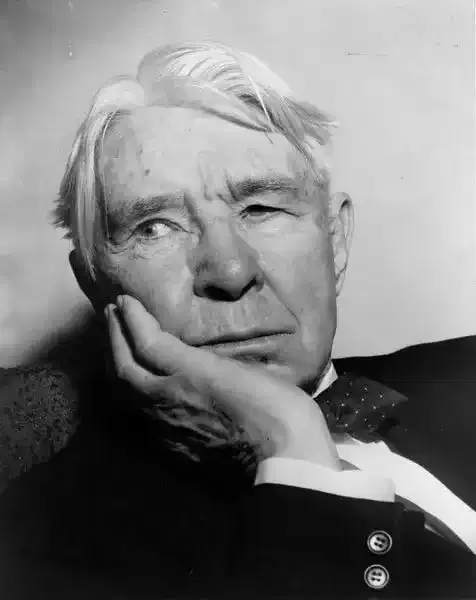
Do Not Go Gentle Into That Good Night

Dylan Thomas
Do not go gentle into that good night, 
Old age should burn and rave at close of day; 
Rage, rage against the dying of the light. 

Though wise men at their end know dark is right, 
Because their words had forked no lightning they 
Do not go gentle into that good night. 

Good men, the last wave by, crying how bright 
Their frail deeds might have danced in a green bay, 
Rage, rage against the dying of the light. 

Wild men who caught and sang the sun in flight, 
And learn, too late, they grieved it on its way, 
Do not go gentle into that good night. 

Grave men, near death, who see with blinding sight 
Blind eyes could blaze like meteors and be gay, 
Rage, rage against the dying of the light. 

And you, my father, there on that sad height, 
Curse, bless, me now with your fierce tears, I pray. 
Do not go gentle into that good night. 
Rage, rage against the dying of the light.
Read full poem

Born on this day

15
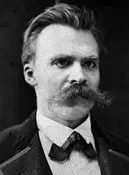
Friedrich Nietzsche

Friedrich Nietzsche was an influential German philosopher, philologist, and cultural critic. His work addresses themes such as morality, religion, truth, art, and the human condition, with a radical critique of traditional Western values. He is known for concepts such as the "death of God", the "superman" (Übermensch), and the "will to power" (Wille zur Macht). His writing is marked by an aphoristic and provocative style, which challenges the reader to rethink their beliefs and values.

Agustina Bessa-Luís

Agustina Bessa-Luís was a renowned Portuguese writer, whose work stood out for its psychological depth, exploration of complex themes, and vigorous and innovative narrative style. Throughout her extensive career, she masterfully addressed the human condition, family relationships, the social dimension, and the history of Portugal, establishing herself as one of the most important voices in contemporary Lusophone literature.

Manuel da Fonseca

Manuel da Fonseca was a Portuguese writer whose work was distinguished by its raw realism and profound attention to the living conditions of the rural populations of Alentejo, especially the working class and peasants. His writing, marked by a language steeped in the land and social denunciation, portrays the struggle for survival, exploitation, and human dignity amidst adversity. He was also a poet, with a lyrical work that complements his prose, exploring existential themes and the relationship between man and nature and the land.

Carla Bianca

Carla Bianca is an emerging figure in contemporary poetry, whose work stands out for its deep exploration of subjectivity and the human condition. Her poetic work weaves a tapestry of complex emotions, addressing themes such as memory, identity, and the ephemerality of existence with lyrical and imagery-rich language. The author demonstrates a notable ability to move between the intimate and the universal, inviting the reader to introspect on their own experiences. With an approach that combines aesthetic sensibility and formal rigor, Carla Bianca has been consolidating her space in the literary landscape, offering a poetic voice that resonates with its originality and expressive force. Her writing is marked by delicate introspection, exploring the nuances of feeling and being.

Ricardo León

Ricardo León was a Spanish writer, primarily known for his novel "Casta "", a work that portrays Spanish society in the early 20th century with a realistic and detailed style. His writing is characterized by the exploration of themes such as family, tradition, and social conflicts, reflecting a deep understanding of human psychology and the cultural nuances of his time.

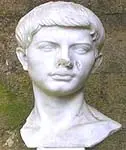
Virgílio

Publius Vergilius Maro, known in Portuguese as Virgil, was a poet of Ancient Rome, celebrated for his epic work "The Aeneid". Considered one of the greatest poets of Latin literature, his works had a profound and lasting influence on Western literature. Besides "The Aeneid", he wrote the "Bucolics" and the "Georgics", which explore pastoral and agricultural themes, respectively. His poetry is marked by technical mastery, lyrical beauty, and thematic depth, addressing themes such as destiny, homeland, love, and man's relationship with nature.

Arma virumque cano, Troiae qui primus ab oris Ital
Fernando Mendonça

Fernando Mendonça was a Portuguese poet whose work stands out for its originality and exploration of themes such as identity, memory, the passage of time, and social criticism. His writing is marked by a dense and imagistic language, with a strong sense of rhythm and musicality, which invites reflection on the human condition and the contemporary world. With an approach that transitions between the lyrical and the interventionist, Mendonça addresses the complexity of human relationships and the contradictions of society, using poetry as a vehicle for the expression of existential anxieties and a critical look at reality.

Esperanza Ortega Martínez

Esperanza Ortega Martínez is a Spanish writer whose work is part of the panorama of contemporary literature. Her literary contributions are marked by careful prose and the exploration of relevant themes. She is dedicated to creating narratives that invite reflection, addressing aspects of society and the human condition from a unique perspective.

Eugenio Florit

Eugenio Florit was a Cuban poet whose work is characterized by his deep lyricism and formal mastery. His poetry, often imbued with a reflective melancholy, explores universal themes such as love, the transience of time, and the search for transcendence. He is associated with the Generation of the '20s in Cuba, a group of writers who sought to renew poetic expression and address the complexities of the human and national experience.

Francisco Villaespesa

Francisco Villaespesa was a Spanish poet, prolific and very popular in his time, known for his romantic and modernist poetry, with themes centered on love, melancholy, and exoticism. His style is characterized by musicality, sensory richness, and careful metric form. Although his work had a great impact in his time, his legacy has been subject to later critical debate.

Died on this day

12
Altemar Pontes de Oliveira

Altemar Pontes de Oliveira is a Brazilian poet whose works frequently explore the relationship between memory, identity, and landscape, both geographical and interior. His poetry is marked by imagistic language and a sensitivity that captures the nuances of everyday life and human emotions. With a body of work that delves into the poetic reflection of existence, Pontes de Oliveira constructs a literary universe that resonates with its authenticity and its ability to evoke deep feelings in the reader.

Antônio Maria

Antônio Maria was a Brazilian poet, composer, and journalist, renowned for his lyrical work and his era-defining songs in Brazilian popular music. His poetry, often transformed into lyrics for samba and other musical genres, reveals a unique sensitivity to themes of love, longing, and everyday life. With a multifaceted career, Antônio Maria left a significant legacy, being remembered for his contributions to both literature and music. His ability to merge poetry with melody created a unique, accessible, and profoundly touching style that resonates to this day.

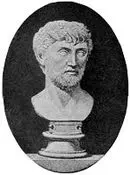
Lucrécio

Titus Lucretius Carus was a Roman poet and philosopher. He is believed to have lived in the 1st century BC. His most famous work is "De rerum natura" (On the Nature of Things), an epic poem that expounds the Epicurean philosophy. He discusses physics, ethics, and religion, seeking to free humanity from the fear of death and the gods through reason and understanding of nature.

Teresa de Ávila

Teresa of Ávila, born Teresa Sánchez de Cepeda y Ahumada, was a Spanish Carmelite nun, mystic, and writer, considered one of the most important figures of the Counter-Reformation. She dedicated her life to the reform of the Carmelite Order, founding numerous convents throughout Spain. Her spiritual works, such as "The Book of Life" and "The Interior Castle," are landmarks of mystical literature, describing her experiences of prayer and union with God with remarkable clarity and depth. Her writing is characterized by authenticity, direct language, and profound religious experience. Teresa of Ávila is venerated as a saint by the Catholic Church and is a Doctor of the Church, a title awarded to theologians and mystics whose writings are considered of great importance to Christian doctrine and spirituality.

Cândido José Xavier

Cândido José Xavier was a Portuguese intellectual and writer, a notable figure of his time for his participation in various spheres of cultural and civic life. His work, in both prose and verse, reflects sharp thinking and a concern with social and existential issues. Xavier stood out not only as an author but also as an intervenor in the debates of his time, leaving a legacy of critical reflection and artistic expression.

Mário Castrim

Mário Castrim was a Portuguese poet and writer whose works explored the complexity of the human condition, interpersonal relationships, and the ephemerality of life. His writing is marked by dense and imagistic language, often combining a confessional tone with profound existential reflection. Castrim's poetry reveals a refined sensitivity to the nuances of the soul and the contrasts of existence, leaving a unique testimony of his worldview.

Alfredo Pimenta

Alfredo Pimenta was a Portuguese poet, professor, and politician, whose work is distinguished by its lyrical depth and reflection on identity and the human condition. Although recognized for his contribution to poetry, his multifaceted career as an educator and public figure also marked the cultural and social landscape of his time. His writing is often associated with introspective lyricism and a concern for moral and spiritual values.

Andrés Bello

Andrés Bello was a Venezuelan humanist, philologist, jurist, and poet, considered one of the most influential intellectual figures in Latin America during the 19th century. His work spanned fields as diverse as law, grammar, history, philosophy, and poetry, leaving an indelible legacy on Hispanic American culture and thought. He was a passionate advocate for the linguistic unity of Spanish and a promoter of education and science in the region.