
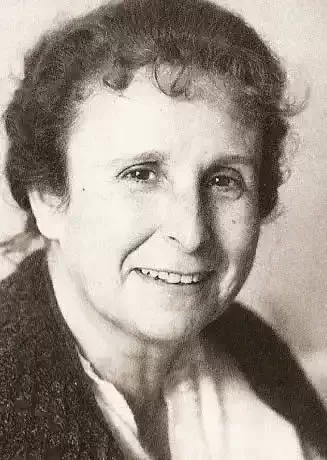
Agustina Bessa-Luís
1922–2019
· lived 96 years
 PT
PT
PT
Agustina Bessa-Luís was a renowned Portuguese writer, whose work stood out for its psychological depth, exploration of complex themes, and vigorous and innovative narrative style. Throughout her extensive career, she masterfully addressed the human condition, family relationships, the social dimension, and the history of Portugal, establishing herself as one of the most important voices in contemporary Lusophone literature.
n. 1922-10-15, Vila Meã · m. 2019-06-03, Porto
72
Views
Bio
Identification and basic context
Agustina Bessa-Luís, artistic name of Agustina de Teleuta de Jesus Bessa-Luís, was born in Vila Meã, Amarante. She distinguished herself as a novelist, short story writer, columnist, and essayist, being a prominent figure in Portuguese literature of the 20th and 21st centuries. Her work is marked by a profound reflection on identity, power, and the female condition, set within a historical and social context of great transformation in Portugal.Childhood and education
She grew up in a rural environment, which influenced her worldview and her writing. Her education was marked by a strong inclination for reading and contact with popular and erudite culture. She showed an unusual talent for writing from an early age, developing a singular literary voice.Literary career
Her literary career began with the publication of "O Conto da Ilha Verde" in 1953. Over the following decades, she consolidated her position as one of the most important Portuguese writers, with a vast and diverse body of work. She published novels, short stories, chronicles, and essays, exploring different genres and themes.Work, style, and literary characteristics
Her major works include "A Sibila" (1956), "O Beco do Atapou" (1958), "A Casa da Paixão" (1962), "As Pessoas Felizes" (1963), "Oaccording to the Portuguese" (1964), "Emily" (1968), "A Revolução dos Bichos" (1977), and "Júlia Romeu" (1979). Her style is characterized by the psychological depth of her characters, the complexity of human relationships, and the exploration of themes such as power, ambition, loneliness, and the search for identity. Her language is rich and elaborate, with a great ability to create vivid images and dense atmospheres. She is often associated with a writing that transcends specific literary movements, due to its originality and strength.Work, style, and literary characteristics
Cultural and historical context Agustina Bessa-Luís lived and wrote during a period of profound changes in Portugal, from the Estado Novo to democracy. Her work reflects the social, political, and cultural tensions of the country, engaging with the challenges of modernity and national identity. She maintained relationships with other intellectuals and artists, contributing to the Portuguese cultural landscape.Work, style, and literary characteristics
Personal life Agustina Bessa-Luís's personal life was marked by her dedication to writing and her strong personality. Her experiences and observations of the world were crucial to the construction of her characters and narratives.Work, style, and literary characteristics
Recognition and reception Recognized nationally and internationally, Agustina Bessa-Luís received several awards and distinctions throughout her career, including the Vida Literária Prize from the Portuguese Writers' Association. Her work has been the subject of academic study and is widely translated, consolidating her place in the literary canon.Work, style, and literary characteristics
Influences and legacy Although her work is markedly original, influences from authors of the Portuguese and universal literary tradition can be identified. Her legacy lies in her ability to create complex fictional universes and her profound understanding of the human soul, inspiring generations of writers.Work, style, and literary characteristics
Interpretation and critical analysis Agustina Bessa-Luís's work has been interpreted from various perspectives, notably the analysis of her exploration of female psychology, power dynamics, and social criticism. The complexity of her themes and characters continues to provoke debates and critical studies.Work, style, and literary characteristics
Curiosities and lesser-known aspects Agustina Bessa-Luís was known for her discretion and passion for writing, dedicating a large part of her life to the literary craft. Her rigor and her demanding standards for her own work are frequently mentioned aspects.Work, style, and literary characteristics
Death and memory Agustina Bessa-Luís passed away in Lisbon. Her memory endures through her vast body of work, which continues to be read, studied, and admired, remaining alive in Portuguese and universal literature.Poems
0No poems found
Videos
50
Comments (0)
Log in
to post a comment.
No comments yet. Be the first to comment.